

Tjentište is not an abandoned monument in the wilderness. It is a memorial landscape, a national-park base and a Yugoslav leisure project whose different lives are still sitting on top of each other.
Where it is — and how to get there
Tjentište is in south-eastern Bosnia and Herzegovina inside Sutjeska National Park, 27 km from Foča and directly on the M20 road towards Gacko and Montenegro. It is a valley settlement and national-park base, not a city with a central station and a monument on the edge.
Road is the realistic way in. Most independent visitors arrive by car or transfer via Foča from Sarajevo, or from the Montenegro side through the mountain-road network; there is no useful rail connection or local airport. The park itself places the Tjentište camping/recreation area beside the M20, so treat the journey as part of the Sarajevo–Montenegro road rather than a separate city break.
The internet has done something very efficient to Tjentište.
It has turned it into two white concrete wings.
They appear in brutalist architecture accounts, Yugoslav memorial lists, road-trip reels and the endless online category usually described as “abandoned communist monuments”.
The photograph is excellent.
The description is often wrong.
Tjentište is not an abandoned object you sneak through a fence to find.
The memorial sits openly in the Valley of Heroes, inside Sutjeska National Park, beside a main road that has carried people through this valley for centuries. Around it are a museum, memorial house, ossuary, hotel and pavilion accommodation, campsites, sports infrastructure, an enormous outdoor pool and one of Bosnia and Herzegovina's most important mountain landscapes.
For most of the year, it can feel strangely quiet.
For a few days every summer, OK Fest turns the same valley into a music festival with after-parties until morning.
That contradiction is the article.
Before the concrete: what this valley is actually remembering
The official Sutjeska National Park memorial history places the Battle of Sutjeska — the Fifth Enemy Offensive, or Operation Schwarz — between 15 May and 15 June 1943.
This was not a decorative episode later chosen because a sculptor needed a valley.
Axis forces attempted to encircle and destroy the Yugoslav Partisans across a large and difficult mountain area. The fighting, losses and eventual breakout became central to the post-war Yugoslav narrative of resistance.
The main Tjentište monument by sculptor Miodrag Živković was completed in 1971.
Its two enormous forms open towards the valley like a breakthrough made physical.

You do not need to be an architecture obsessive for the placement to work.
Walk up from the lower memorial area.
Look back.
The concrete is not competing with the mountains. It is using them.
That is why photographs isolate the monument badly even when the resulting image looks dramatic.
The landscape is part of the design.
Do not call everything here “a spomenik”
“Spomenik” simply means monument.
Online, the word has become shorthand for a very specific fantasy: giant futuristic Yugoslav concrete, forgotten somewhere in the Balkans.
It is visually convenient and historically sloppy.
The official park description makes clear that Tjentište is a memorial complex, not one sculpture. It includes the Battle of Sutjeska monument, the ossuary, a small brigade amphitheatre, the battle museum, the memorial house and additional memorial sites across the surrounding landscape.

This matters because the complex was designed to interpret a battle across a landscape, not to provide one brutalist selfie.
If the museum or memorial house is open during your visit, use it.
If access is limited, do not pretend the concrete alone explains the history.
And if you know almost nothing about Yugoslavia, do not worry.
Ten minutes of context before climbing the steps will do more for the visit than a hundred photos of the monument with no idea what it is for.
The memorial house is still a conservation problem in 2026
The site is not frozen in the 1970s.
It is also not fully restored.
In April 2026, the park announced Sutjeska ReConnect, a conservation project focused on the leaking roof of the Battle of Sutjeska Memorial House and the protection of its thirteen interior frescoes by Krsto Hegedušić. The park says the building dates from 1975 and records the names of 7,454 fallen fighters. The project description is here.
That is useful context before visiting.
It also means the site is not a frozen museum object in 2026. Conservation work is part of the current experience, and access to individual interiors can be more variable than the monument itself. The sensible move is to check with the park before building a day around one specific interior rather than assuming every component of the memorial complex will be accessible exactly as an older article describes it.
The slight friction of the place — parts looking monumental, parts functional, parts tired, parts under repair — is not an inconvenience to edit out of the article.
It is the current state of Tjentište.
Do not expect the seamless interpretation system of a newly opened national museum.
Do expect one of the most significant memorial landscapes in former Yugoslavia to be living through another phase of maintenance, funding and reinvention.
The pool tells you what memorial tourism alone does not
Then there is the swimming pool.
It is huge.
Not “large for a hotel”.
Huge.

The official park still lists the outdoor pool as part of Tjentište's sports and recreation zone. The site describes a period during socialist Yugoslavia when Tjentište received enormous visitor numbers and functioned as a place for rest, recreation and collective memory, not as a solemn monument isolated from ordinary life.
This is one of the details that makes the place much more interesting than the internet version.
People came to remember.
They also came to swim.
Eat.
Sleep.
Bring children.
Walk in the mountains.
That mixture can feel strange if your idea of a memorial site comes from quieter Western European models.
Here, the leisure infrastructure was part of how the valley was used.
The enormous pool makes that history impossible to ignore.
Stay here only if you want the park to become part of the trip
Tjentište is roughly the opposite of Sarajevo.
You do not stay because you want restaurants, neighbourhoods and a choice of bars after 23:00.
You stay because waking up inside Sutjeska National Park changes what is practical the next day.
The park currently lists Hotel Mladost, Pavilion A, villas Maglić and Volujak, camping and other accommodation around Tjentište. Pavilion A, for example, sits close to the M20 and the park says guests can arrange guides and transport deeper into the national park. Current park accommodation information is here.
Do not read that as a promise that every room is freshly renovated or every facility feels contemporary.
The park's own current page says Hotel Mladost is a two-star hotel with 63 rooms and roughly 40% of the property renovated, while Pavilion A and the newer Maglić/Volujak villas sit in the same Tjentište cluster. Hotel Mladost's current park listing is here. The newer villas are described here.
That is unusually honest official information. Use it. If the room itself matters, check exactly which building and room type you are booking rather than assuming “inside the national park” means one consistent accommodation standard.
Tjentište has a long history of ambitious infrastructure followed by uneven decades.
Check recent room photographs and current reviews before paying.
A place can be historically fascinating and still have a mattress you do not want to spend eight hours on.
Perućica is not a forest you casually wander into
The other internet simplification is to write “Europe's last primeval forest” and then move on.
Perućica is a strictly protected reserve within Sutjeska National Park.
That means access is controlled — and in 2026 the park makes the distinction very explicit. The current Perućica entrance fee is 70 KM per adult, 20 KM for visitors under 18, with children under eight free. That is separate from the general national-park entry. Sutjeska National Park publishes the current 2026 fees here.
The ordinary national-park fee is currently 10 KM per person for the wider park. The park also sells guided hikes and transport-based excursions separately; for example, its published Gornje Bare route is €48 per person plus the park entry fee. Current park excursion information is here.
That price gap is useful information. “I’ll just pop into Perućica” is not the same plan as “I’ll stop at Tjentište and look at the memorial”.
The park's tourism organisation describes the road towards Dragoš Sedlo as roughly ten kilometres of macadam from Tjentište, followed by a short walk to a viewpoint above the forest and Skakavac waterfall. Current viewpoint information is available through the regional tourism organisation.
The distinction matters.
Seeing Perućica from an authorised viewpoint is not the same thing as independently hiking through a strict reserve because a map showed a green area.

If you want guided access or a deeper national-park day, arrange it with the park.
The road conditions, weather and rules matter more here than a generic sentence saying “4x4 recommended”.
Ask what is current.
Then believe the person who manages the park rather than a travel reel shot in 2022.
The mountain landscape is too large for the memorial to carry alone
Sutjeska contains Maglić, Zelengora, mountain lakes, deep valleys, forest and routes that can easily turn Tjentište into a multi-day base.
This is where the destination splits.
Some visitors should stop for two hours.
Some should stay two nights.
The right answer depends almost entirely on whether the mountains are part of the trip.

If you are driving from Sarajevo towards Montenegro and simply want to understand the memorial, a half-day can work.
If you want Dragoš Sedlo, a guided Perućica experience, serious hiking or the Zelengora lakes, the memorial becomes the entry point rather than the destination.
That is a much better use of Tjentište than inventing five minor attractions around the main monument.
The road is beautiful enough to make timetable confidence dangerous
Tjentište lies on the M20, on the inland route between Foča and Gacko before roads continue towards eastern Herzegovina and Montenegro.
On a map, distances look manageable.
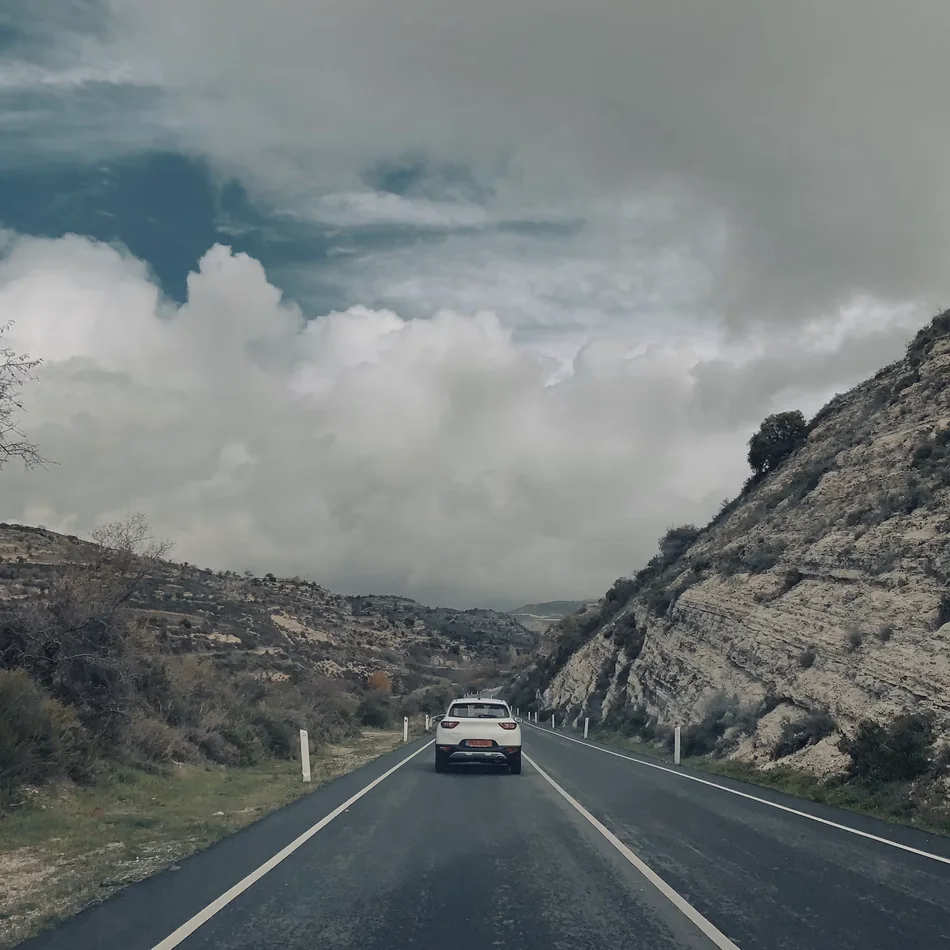
In practice, this is mountain-road country.
Traffic, roadworks, narrow sections, weather and slow vehicles can all change the rhythm.
Do not build a Balkan road trip that assumes every 80 kilometres behaves like Belgium.
That lesson matters particularly if the next night is Nikšić or the Montenegrin coast.
You are not simply transferring between hotel pins.
The road is part of the day.
Our Balkans Without the Coast route is built around exactly that idea: inland Bosnia, Serbia, Montenegro and North Macedonia become more interesting when the road is allowed to decide where the stops belong.