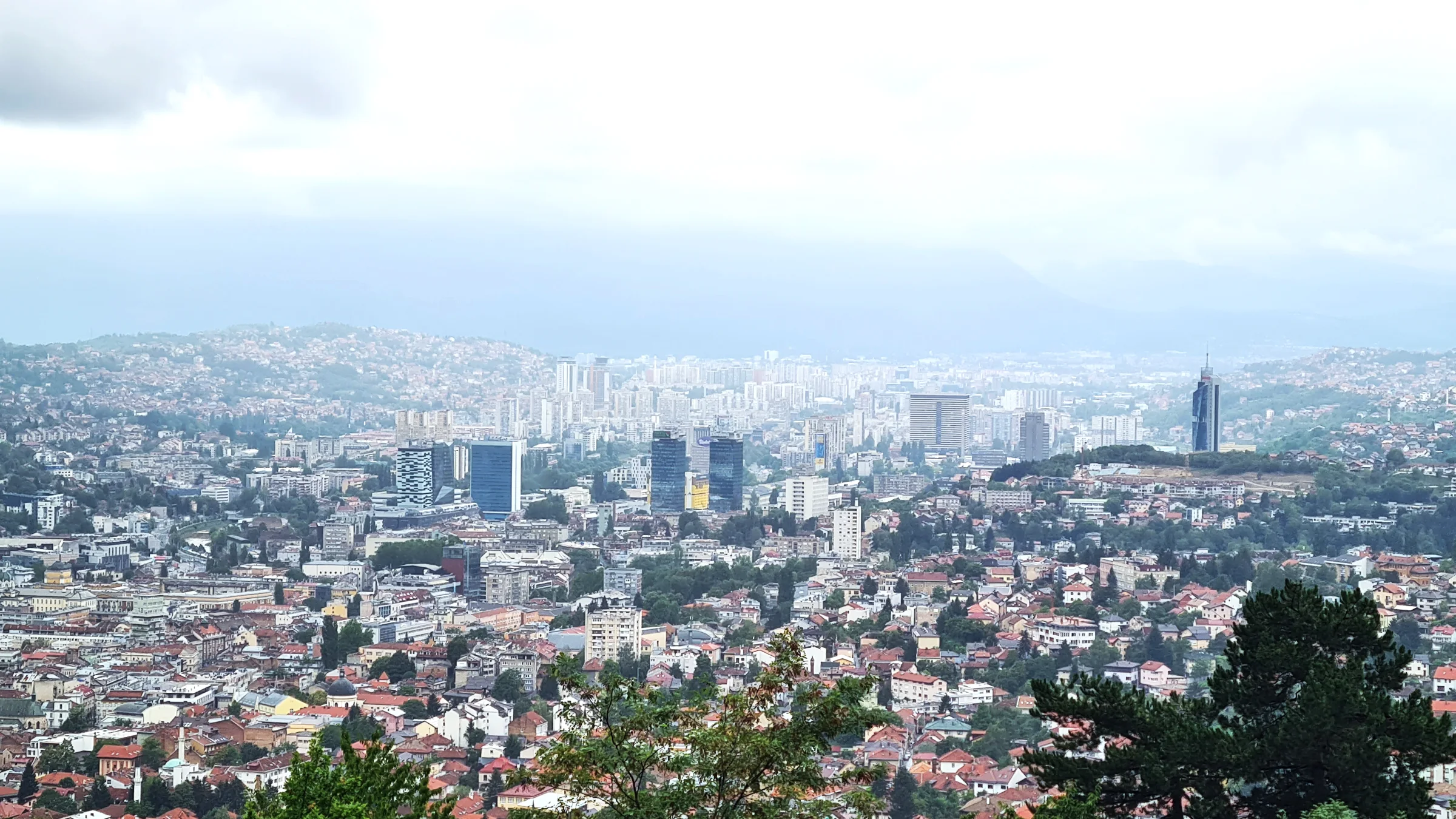
The Balkans Without the Coast: Six Countries, Eight Days and Two Days That Are Mostly Road.
This eight-day loop leaves Sofia for Belogradchik, Niš, Sarajevo, Tjentište, Nikšić, Shkodër, Kruševo and Skopje. It crosses six countries, gives two days mostly to driving and never needs the Adriatic to justify the route.
Balkans · Road guideThe Balkans16 min read
The coast is not the problem. The problem is treating it as the only line through the Balkans.
Where this sits
This inland Balkan loop runs from Sofia through north-western Bulgaria, southern Serbia, Bosnia and Herzegovina, inland Montenegro, northern Albania and North Macedonia before returning to the wider Balkan road network. It deliberately avoids making the Adriatic coast the organising spine.
The Balkans are very good at selling one edge of themselves.
The Adriatic makes the job easy.
You can build a road trip from Dubrovnik to Kotor, continue past Budva, cross into Albania, put a drone above a blue bay and let the coastline explain why every kilometre was worth driving.
That route is not fake.
The coast really is that good in places.
It is simply too successful at organising how outsiders imagine the entire region.
Move inland and the logic changes. The distances stop being scenic continuity. Borders become part of the day rather than punctuation. A capital can lead to a rock fortress, then to an Ottoman military city, then to six hours of ordinary road, then to Sarajevo. A Yugoslav war memorial can sit inside a national park before the same asphalt carries you into a Montenegrin industrial city that most visitors bypass for Kotor. Albania can mean Shkodër without requiring a beach. North Macedonia can mean a 1974 monument above Kruševo before Skopje starts arguing with itself in concrete and bronze.
That is the route here.
It is not designed to prove that inland travel is morally superior to the coast.
It is designed because the Balkans become more legible when the road is allowed to connect places that do not already belong to one tourism product.
There are six countries in eight days.
There are several borders.
Two days are mostly road.
That is not a scheduling failure.
It is the premise.
The route in 60 seconds
Use eight days and seven nights as the compact version.
Day 1:Sofia. Arrive, walk the city and leave the rental car at the rental company.
Day 2: Sofia → Belogradchik → Vrashka Chuka border → Niš. Fortress, border, Serbian evening.
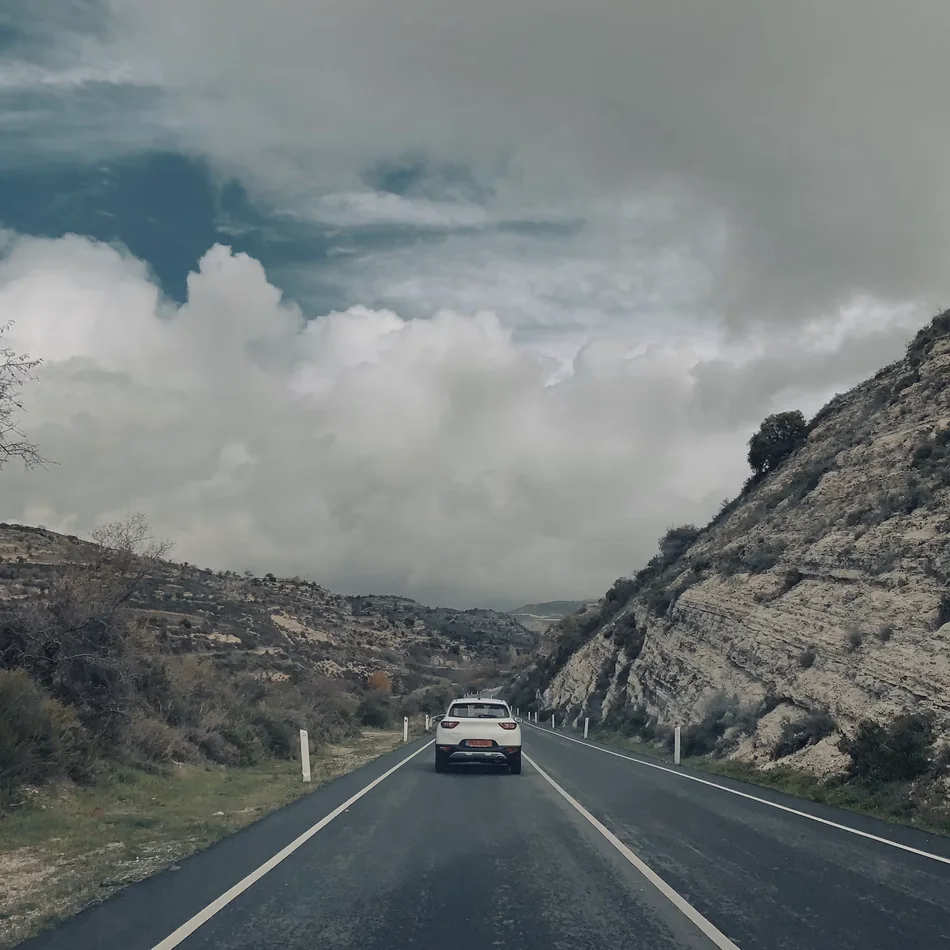
Day 3: Niš → Sarajevo. Roughly 410–430 kilometres and six to seven hours of driving before meaningful breaks and border uncertainty. This is a road day.
Day 4: Sarajevo. No driving beyond whatever the city actually requires.
Day 5: Sarajevo → Tjentište → Nikšić. A shorter mileage day with the route’s strongest single stop and slower mountain roads.
Day 6:Nikšić → Shkodër. Deliberately light. Cross the border, recover, use the evening in northern Albania.
Day 7:Shkodër → Kruševo → Skopje. The second long transfer day, with Makedonium as the interruption that earns its place.
Day 8: Skopje → Sofia. Close the loop with enough border buffer to avoid turning a flight into a wager.
Depending on the exact border approaches, accommodation and detours, expect roughly 1,750–1,850 kilometres.
That number is not extreme.
The geography is what makes it feel larger.
Six countries create six sets of road rules, currencies or payment habits, mobile-network behaviour, border assumptions and opportunities to discover that a rental company interpreted the phrase “cross-border allowed” differently from you.
The route is easy only after those things have been solved.
Before the route: solve the car, not the hotels
Sofia has plenty of rental cars.
That does not mean Sofia has plenty of rental cars you may legally drive through Bulgaria, Serbia, Bosnia and Herzegovina, Montenegro, Albania and North Macedonia.
The difference matters more than the model of car.
Current supplier rules make the problem unusually clear. SIXT Bulgaria’s published cross-border terms currently permit Greece, Romania, Serbia and North Macedonia only. That makes this route impossible under that contract.
Enterprise at Sofia Airport currently lists Albania, Bosnia and Herzegovina, Montenegro, Serbia and North Macedonia among its permitted countries, but requires approval at least five working days before pickup and a cross-border fee. Its current policy also says replacement-car roadside assistance is not available while driving in Albania, Bosnia or Montenegro.
Neither company is being unreasonable.
They are demonstrating the rule.
A rental car is not cross-border because the road crosses a border. It is cross-border because the written contract says it is.
Before paying, send the full country list and ask for written confirmation of:
every permitted country;
the required Green Card or other third-party insurance documentation;
cross-border fees;
roadside-assistance territory;
whether a replacement vehicle is supplied abroad;
any vehicle-category restrictions;
what happens if the car becomes undriveable outside Bulgaria.
An owned car with valid international cover removes much of this friction.
A rental keeps the fly-in loop practical, but the paperwork has to come before the cheap rate.
Plan this trip
Solve the borders before the car.
Compare the practical parts of a trip to Sofia, Bulgaria.
Start with Sofia because it has the airport, rental supply and enough substance to justify arriving a day before the road begins.
Do not collect the car simply because the desk is in the terminal.
Central Sofia is easier without it. Metro, tram and walking cover the useful core while parking zones, hotel garages and traffic make a rental vehicle into paid luggage.
sleep in Sofia, collect the car when leaving, and keep the first driving day fresh.
If this already sounds like too many borders, there is an easier alternative. The other Bulgaria road keeps the car inside one country while still connecting Buzludzha, Dimitrovgrad and the Eastern Rhodopes.
This route is for the moment when one national loop feels too contained.
Day two: Belogradchik to Niš — the map is not the border authority
Belogradchik is the right first stop because it looks like a fantasy without requiring fantasy logistics.
The fortress uses the red rock formations as part of its defensive structure. Roman fortification came first; medieval Bulgarian and Ottoman phases expanded what the geology had already provided. The Bulgarian Ministry of Tourism lists road access and parking at the site and describes the three fortified yards occupying more than 10,000 square metres. Check the official Belogradchik Fortress information before departure.
It is about 180 kilometres from Sofia, depending on your route.
Leave early.
Give the fortress enough time to climb rather than treating it as a photograph taken between two car parks.
Then pay attention to the border.
Belogradchik works because the fortress and the rock formations share the same defensive geometry. The route problem comes after the visit: use an official border crossing, not the shortest line a map happens to draw. Photo: Ymblanter / Wikimedia Commons, CC BY-SA 4.0.
A route planner may make a small road towards Serbia look seductively direct from this corner of Bulgaria.
Do not convert a thin line on a map into a legal border crossing.
For this itinerary, Vrashka Chuka is the useful northwestern crossing after Belogradchik before continuing through eastern Serbia towards Niš.
That detour is not wasted distance.
It is the route that actually exists.
Niš earns the night without pretending to be Belgrade
Niš is not included because every road trip needs a second Serbian city.
It works because the city carries several periods in unusually compact form.
The fortress visible today is largely an eighteenth-century Ottoman military structure built over older Roman and medieval layers. Skull Tower is more uncomfortable: a monument incorporating human skulls after the 1809 Battle of Čegar, later enclosed by a chapel.
The Serbian national tourism organisation gives both places useful context in its current Niš overview.
Choose one substantial historical stop if arrival time allows.
Do not race through both at closing time to justify the hotel.
Niš also gives the trip something less dramatic: a real Serbian evening before the following day becomes mostly asphalt.
Niš does not need Belgrade scale to earn the night. Skull Tower is small, specific and difficult to flatten into generic sightseeing. Photo: Kulmalukko / Wikimedia Commons, CC BY-SA 3.0.
Day three: Niš to Sarajevo — let a transfer day be a transfer day
This is the day itinerary writers usually attack with extra pins.
Do not.
Niš to Sarajevo is roughly 410–430 kilometres by the practical road options and can require around six to seven hours of driving before a serious meal, fuel stops, border formalities or road delays.
That is enough.
The useful plan is:
breakfast before leaving Niš;
fuel early rather than at the final bar of the gauge;
one proper rest stop;
one meal that is allowed to take longer than twelve minutes;
daylight for as much of the slower road as possible;
arrival in Sarajevo without a museum ticket waiting to punish a delay.
A long road day does not need a “hidden gem” every ninety minutes.
Sometimes the regional change is the attraction.
Serbia gives way to Bosnia and Herzegovina. The road surface, signing, valley geometry, settlement pattern and driving rhythm change. You notice the border because you have to stop at it, then keep noticing it long after the booth disappears.
That is more useful than manufacturing three compulsory detours.
Arrive.
Park.
Eat.
Let Sarajevo begin tomorrow.
Day four: Sarajevo — the route stops moving on purpose
Giving Sarajevo one full day is the minimum correction to what a road trip naturally wants to do to it.
The city is too easy to reduce to one historical sequence: assassination, siege, war tunnel, Baščaršija, coffee, leave.
The existing Sarajevo guide is built around refusing exactly that compression.
Use it.
Spend the morning on the historic centre if this is your first visit, but let the day continue west along the tram line and into the ordinary city. Sarajevo’s war history matters because it happened here. It does not require everything that happened before or after it to disappear.
The car can stay parked.
That is the point.
A good road trip needs days when the road loses the argument.
If you would rather join an organised route than build every border yourself, DriveBeyond’s Balkan Odyssey follows a different line through the region and also includes Sarajevo. The overlap is the route-first instinct, not the itinerary.
Sarajevo gets a full day because a road trip should not turn a living city into a historical fuel stop. Photo: Julian Nyča / Wikimedia Commons, CC BY-SA 4.0.
Day five: Sarajevo to Tjentište to Nikšić — this is why the route exists
The mileage drops.
The concentration rises.
From Sarajevo, drive southeast through Foča towards Tjentište in Sutjeska National Park.
The main Battle of Sutjeska memorial was erected in 1971 and designed by sculptor Miodrag Živković. It sits inside a much larger protected memorial landscape — the Valley of Heroes — containing the ossuary, amphitheatre, museum and Memorial House as well as other structures associated with the 1943 battle. The national park’s own heritage page explains the complex and its protected status.
The two huge fractured forms are the image everybody recognises.
The useful experience is larger than the image.
You arrive through a mountain valley. The memorial sits against the terrain rather than on an urban square. The route away continues through the same geography that made the wartime campaign so brutal.
Give the site real time.
Stay on established visitor areas and paths. A national park and memorial landscape is not an invitation to improvise an off-road archaeology expedition.
Tjentište is not a monument dropped beside a road. The memorial, valley and mountain route are the same stop. Photo: Budzak2 / Wikimedia Commons, CC BY-SA 4.0.
From Tjentište, continue towards Montenegro and Nikšić.
This is not motorway driving.
The roads through the border region can be slower, narrower and more attention-intensive than their kilometre count suggests. Weather, roadworks and the queue at the crossing can move the arrival time substantially without anything having gone wrong.
That is why the day contains one major stop rather than four.
Nikšić is the Montenegro most coastal itineraries edit out
Montenegro’s international tourism image is spectacularly coastal and mountainous.
Nikšić is neither Kotor nor Durmitor.
It is a working city associated with industry, brewing, students, a planned central grid and ordinary urban life. That makes it useful after Tjentište. The day moves from one of Yugoslavia’s most theatrical memorial landscapes into a city where the twentieth century is not a monument but part of the operating system.
Walk the centre.
Eat somewhere that does not have to explain Montenegro to you.
Use the local tourism organisation at niksic.travel for current events and practical information rather than treating the city as only a bed between borders.
Do not add Kotor in the evening.
Kotor is excellent.
It is also exactly how this route accidentally becomes another coast trip.
Nikšić is useful precisely because Montenegro is usually marketed away from cities like this: planned centre, industry, students and ordinary evening life. Photo: Janusz Recław / Wikimedia Commons, CC BY-SA 4.0.
Day six: Nikšić to Shkodër — use the easy day as recovery
The shortest day arrives when you need it.
From Nikšić, head towards Podgorica and the Božaj / Hani i Hotit crossing into Albania, then continue to Shkodër.
Allow around half a day once food, fuel and the border are included rather than calculating the distance as if countries were neighbourhoods.
This is where a route can breathe.
You do not need a second major attraction before lunch.
Reach Shkodër with enough daylight for Rozafa Castle.
The fortress rises above the entrance to the city at the meeting point of river and lake geography. Its origins are Illyrian, while Roman, Byzantine, Venetian and Ottoman phases all left material behind. The current Albanian national tourism site gives the official Rozafa overview.
The best reason to climb is not one wall.
It is the view.
From above, Shkodër makes sense as a junction: lake to one side, rivers around it, Montenegro behind you and the roads towards central Albania and North Macedonia still ahead.
Rozafa makes Shkodër’s geography legible in one view: city, lake, rivers and the roads that keep pulling north and east. Photo: Artemiss.B / Wikimedia Commons, CC BY-SA 4.0.
Stay in the city.
Do not continue south merely because Albania triggers a reflex to search for the sea.
If the Albanian coast is what you actually want, stop pretending otherwise and use the SH8 Albanian Riviera route. That road deserves its own trip rather than a 300-kilometre appendix to this one.
Day seven: Shkodër to Kruševo to Skopje — 400 kilometres is not a moral failure
This is the second day that is mostly road.
Leave early.
The practical line heads across Albania towards the Qafë Thanë / Kjafasan border with North Macedonia, then turns north-east towards Kruševo before finishing in Skopje.
The distance depends on the exact road and current border routing, but the combination is roughly a full seven-hour driving day before a meaningful visit, food and border delay.
Do not add Ohrid because you pass near it.
Ohrid deserves more than a lunch queue and one photograph of a church above the lake.
The route already has a reason to stop.
Makedonium looks like the future that 1974 expected history to need
Kruševo sits high enough to turn the approach into part of the visit.
Above the town, the Ilinden Monument — Makedonium was inaugurated in 1974. The official Kruševo Museum describes the complex as a sequence beginning with symbolic broken chains, continuing through the crypt and amphitheatre and ending at the white sculptural dome at 1,320 metres. Check current Makedonium visitor information before driving up.
The museum currently lists daily visitor hours, but this is precisely the sort of place where conservation, ceremonies or seasonal operations can change access.
Build the day so the exterior complex still works if an interior is unavailable.
That is not a consolation prize.
The building was designed to occupy the hill.
Then continue to Skopje.
You will arrive tired.
That is a feature to plan around, not an emotion to overcome.
Check into a hotel with straightforward parking. Walk for dinner. Leave the statues, bridges and architectural argument for the evening and following morning if your schedule allows.
The Skopje guide explains why the centre becomes more interesting once you stop asking whether it is authentic enough.
Day eight: Skopje to Sofia — finish like borders can delay you
Skopje to Sofia looks like an easy final transfer.
It usually is.
That is not permission to book the timing as if the border were an automatic toll gate.
The direct road is roughly 230–240 kilometres, using the North Macedonia–Bulgaria crossing around Deve Bair / Gyueshevo. The Bulgarian Border Police lists Gyueshevo as an official crossing with North Macedonia, but an official crossing can still have a queue.
Leave a real buffer before a flight.
If you are returning a rental car, add time for fuel, inspection and whatever the rental company considers “return procedure” that day.
It is a three-country chain of assumptions wearing a timetable.
If the flight is early, sleep in Sofia on night eight and fly on day nine.
The route becomes better by admitting that borders are infrastructure rather than decoration.
The boring things become important after country three
The visual stops are easy to remember.
The administrative ones are what decide whether you reach them.
Your EU roaming does not currently cover this whole loop
Bulgaria is inside the EU roaming area.
Serbia, Bosnia and Herzegovina, Montenegro, Albania and North Macedonia are not yet automatically part of EU Roam Like at Home. In 2026 the EU opened negotiations to extend the regime to the Western Balkans, but the European Commission still says there is no fixed deadline for completion. Check the current EU roaming status before departure.
Your mobile operator may voluntarily include some or all of these countries.
“May” is not a data plan.
Check the tariff.
If your plan does not include the Western Balkans, a regional eSIM is the cleaner fallback than collecting a new local SIM at each border.
Check Yesim’s Balkans eSIM options before departure and compare the actual country list, data allowance and validity against the route. One plan is useful only if it really covers the countries you will drive through.
That is an affiliate link. The decision remains practical: use your normal roaming if it already works at a sensible price; use an eSIM if it solves the gaps.
Download offline maps before leaving Sofia.
Do not discover the price of background photo backup halfway through Bosnia.
Tolls are not one system
This route moves between vignette, toll-road and largely non-motorway road environments.
For Bosnia and Herzegovina, Montenegro and Albania, the exact route here spends substantial time away from a simple motorway spine anyway.
The practical rule is to keep a payment card and a modest cash fallback available rather than expecting every booth, fuel station and small-town car park to behave like the previous country.
Insurance documentation is not a screenshot
Carry the actual documents required by the vehicle owner, insurer and rental company.
That usually means the original or accepted official versions of registration, rental authority, cross-border permission and insurance documentation rather than a gallery of phone screenshots assembled at the hotel breakfast table.
Border rules can change.
Rental-company rules can change faster.
Check both again shortly before departure.
When to drive it
Late May, June and September are the easiest first choices.
You get useful daylight without automatically combining the route with peak coastal traffic and the heaviest summer heat.
July and August remain possible, but border queues become more consequential when the entire region is moving for holidays and the car is hot before the road becomes interesting.
Winter changes the route more substantially.
Belogradchik, the Bosnia–Montenegro mountain roads and Kruševo all introduce elevation. Snow, ice, fog and short daylight can convert a normal eight-day loop into a different planning problem.
This is not written as a winter itinerary.
If you drive it in winter, re-plan it as one.
Who should not drive this route
Skip this itinerary if the main objective is to maximise famous old towns per day.
Skip it if every night needs a major entertainment district.
Skip it if border paperwork makes you resent the holiday before it begins.
Skip it if you are using a rental company that has not explicitly authorised every country.
And skip it if what you really want is the Adriatic.
There is no prize for resisting the coast.
Use the Albanian Riviera road, build a Montenegro route around the Bay of Kotor, or do both properly.
This inland loop works for a different reason.
It lets Belogradchik, Niš, Sarajevo, Tjentište, Nikšić, Shkodër, Kruševo and Skopje exist on the same map without pretending they belong to the same tourism campaign.
The long transfers expose the distance between them.
The borders expose the politics and infrastructure between them.
The smaller cities expose what the postcard routes leave outside the crop.
The coast is not the problem.
The problem is asking it to organise a region much larger and stranger than its most photographed edge.
Hero image: Zavičajac / Wikimedia Commons, CC BY-SA 4.0. Inline image credits are included in the captions.