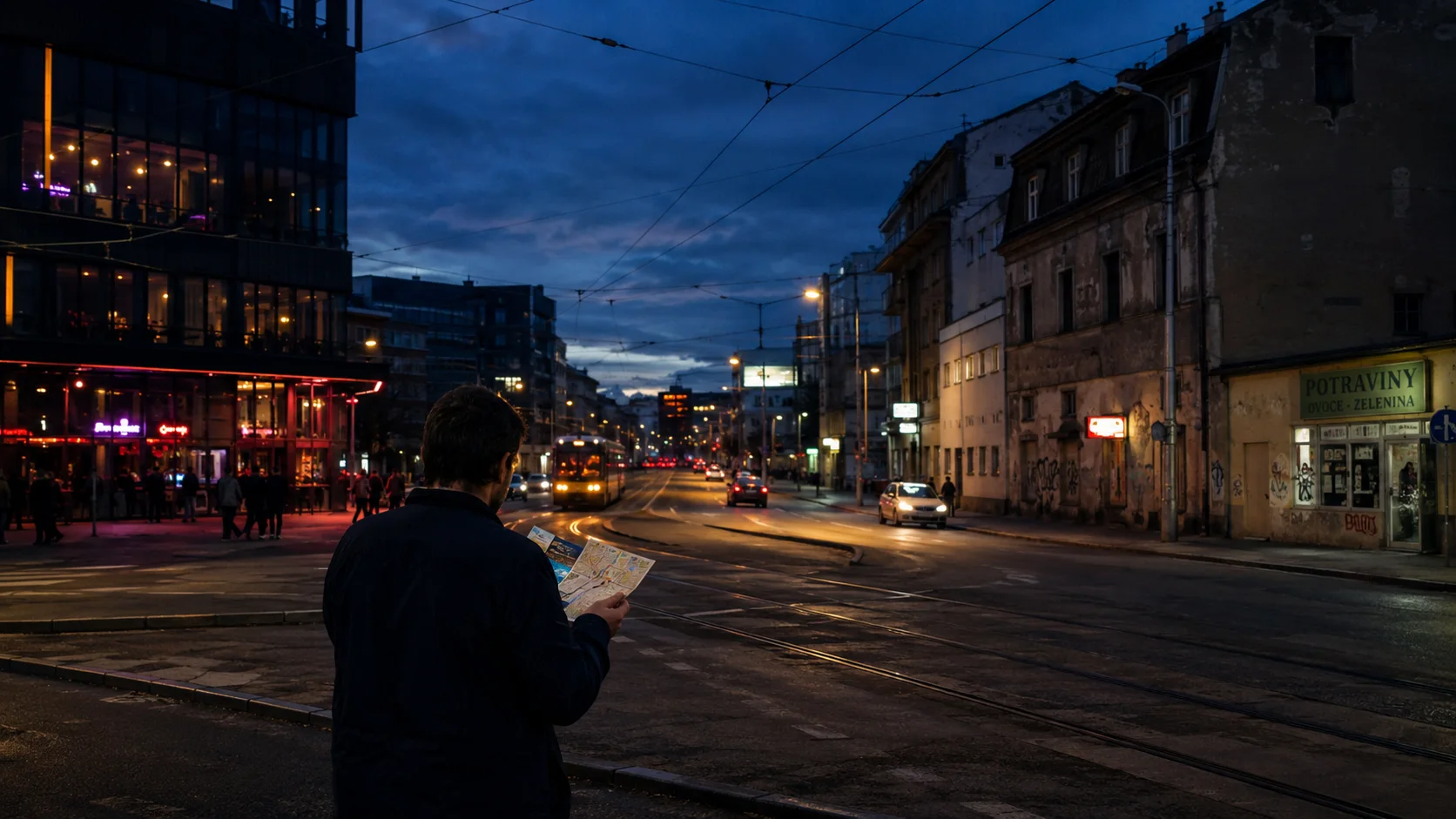


A second city is not more authentic because fewer tourists found it. It is useful when it reveals something the capital structurally cannot.
There is a travel sentence so normal that nobody notices how much work it does.
“I’ve been to Hungary.”
Where?
“I’ve done Czechia.”
“We went to Latvia.”
Riga.
That is not dishonesty.
You did go to the country.
The problem begins when the capital becomes evidence for what the country is.
A capital is often the easiest place to reach, the easiest place to research, the easiest place to photograph, the easiest place to sell and the easiest place to convert into a three-night itinerary. Airlines reinforce it. Search engines reinforce it. Hotel inventory reinforces it. Tourism boards reinforce it. Travel media reinforce it because everybody already understands the place name in the headline.
Then recommendation systems learn from the demand those systems helped create.
The result is not a conspiracy.
It is an extremely efficient feedback loop.
And it can produce very repetitive travel.
The numbers are not subtle
European tourism is heavily concentrated in major urban destinations.
Eurostat’s 2025 regional overview found that tourism density was highest in capital regions and other major urban regions. In 2024, Brussels, Vienna and Prague were among the only EU regions recording more than 30,000 tourist-accommodation nights per square kilometre; Budapest was also above 20,000. Eurostat’s regional tourism overview puts the concentration in context.
The European Commission’s tourism dashboard makes the urban problem more explicit: when visitors concentrate in a limited part of a city, crowding, housing pressure, pollution and competition for land can follow. Current Commission overview of unbalanced tourism.
At the same time, EU tourism keeps growing. Eurostat recorded another record in 2025, with almost 3.1 billion nights spent in tourist accommodation across the Union. Current 2025 tourism-night data.
This does not prove everybody should flee capitals.
It proves the choice is not neutral.
The most connected places have enough demand to become even more connected, documented and bookable.
The rest of the map has to work harder to enter the conversation.
Capital-city bias begins before you search
Imagine you want a three-night trip somewhere in Europe next month.
You open a flight search.
The direct routes from your nearest airport already remove most of the country.
Then price sorts the surviving cities.
Then hotel inventory removes more friction from the biggest market.
Then you search “things to do in…” and the capital returns ten years of accumulated articles, maps, lists, videos and reviews.
At no point did anybody force you to choose the capital.
The capital simply won every friction contest.
This is why “be more adventurous” is useless advice.
People do not need to become morally superior travellers.
They need better information about what the extra friction buys.
A train after the flight might buy you a radically different region.
A rental car might buy you industrial history, coastline, borderlands or a road that matters more than another old square.
Or it might buy you three hours of motorway and a mediocre town whose only advantage is fewer tourists.
The distinction matters.
“Hidden gem” is usually the next bad shortcut
Travel media discovered the problem and invented an irritating solution.
Hidden gems.
Europe’s most underrated cities.
The places tourists haven’t discovered yet.
Go before everybody else does.
This language has several problems.
First, residents are aware their city exists.
Second, a city is not automatically better because international tourism is lower.
Third, the phrase treats low visitor numbers as a temporary defect that content creators are heroically about to fix.
Fourth, it often replaces one shallow comparison with another.
Brno becomes “Prague without the crowds”.
Kaunas becomes “the real Lithuania”.
Košice becomes “Bratislava but cheaper”.
Liepāja becomes “Riga nobody knows about”.
That is still capital-city thinking.
The capital remains the reference point even after you supposedly escaped it.
Kaunas is useful when Vilnius stops being the measuring stick
The Kaunas guide exists because Lithuania changes when you stop asking whether Kaunas is better or worse than Vilnius.
Kaunas was the country’s temporary capital between the world wars. That period produced a major body of modernist architecture now recognised by UNESCO. The city also carries industrial, Soviet and post-Soviet layers that sit differently from Vilnius’s large Baroque old town and national-capital institutions.

That is the reason to go.
Not because fewer stag groups are there.
Not because a café feels “more local”.
Not because somebody on TikTok has not ruined it yet.
Kaunas supplies different evidence about Lithuania.
That is a durable editorial argument.
Liepāja changes Latvia because Riga cannot be a port city in the same way
Riga is already a port city.
That sounds like it should destroy the argument.
It does the opposite.
Liepāja’s relationship with the Baltic, military infrastructure and Karosta creates a completely different urban structure. Imperial Russian naval history, Soviet military use, industrial decline, music culture, beach tourism and an ordinary regional city overlap on a scale Riga cannot reproduce simply by having a harbour.

The Liepāja guide is useful because it explains that difference.
A capital can contain almost every national story in institutions.
It cannot physically become every region.
That sentence is the strongest case for leaving capitals.
Košice makes Slovakia longer
Bratislava sits at Slovakia’s far western edge, close enough to Vienna that the relationship shapes how outsiders imagine it.
Košice sits across the country in the east.
That distance is not merely logistical.
Economic geography, Roma communities, Hungarian and Ruthenian influences, industrial history, proximity to Ukraine and the different structure of eastern Slovakia all change the context.
_-_Hlavn%C3%A9_n%C3%A1mestie_(Main_Square)_-_View_of_St_Urban_Tower_and_the_Cathedral_of_Saint_Elisabeth_from_the_city_park_(December_2025).jpg?width=1800)
The Košice guide should therefore not be read as “what to do after Bratislava”.
The four-hour journey is the point where the national map stops behaving like the capital.
A country can be narrow on a screen and long in lived geography.
Brno proves second cities can be polished too
Brno is a useful corrective to the hidden-gem fantasy because it is not some raw undiscovered place waiting behind Prague.
It is a prosperous university city with major institutions, modernist architecture, conferences, restaurants and tourism infrastructure of its own.

The Brno guide explicitly refuses the “Prague alternative” framing because Moravia deserves more than comparison by subtraction.
This is important.
Leaving the capital does not guarantee roughness, authenticity, lower prices or spontaneous encounters with residents who are grateful you arrived.
Sometimes the second city is elegant, expensive and fully aware of its appeal.
Good.
The goal was never to find people unprepared for tourism.
Niš is valuable because the road explains why it exists
Niš works best inside movement.
Roman Naissus, Ottoman military history, the 1809 Skull Tower, the railway/road position in southern Serbia and the city’s role on routes toward Bulgaria and North Macedonia all make more sense when Niš is encountered on the way through the Balkans.

The Niš guide does not need to claim the city is better than Belgrade.
It performs another function.
It turns a national road network into history.
This is where the “only fly to capitals” habit becomes especially limiting for road travel.
A capital-first itinerary tends to create loops around airport convenience.
A road-first itinerary can let intermediate cities earn nights because they explain the route.
That is a much stronger reason than collecting lesser-known destinations.
Constanța changes Romania because Bucharest has no Black Sea
This sounds painfully obvious.
Travel planning often needs obvious facts restored to importance.
Bucharest can explain Romanian politics, architecture, state history, contemporary culture and urban life.
It cannot explain the Black Sea, Dobruja, port infrastructure or the relationship between an old city and the enormous seasonal tourism economy next door in Mamaia.

The Constanța guide exists precisely because “Romania = Bucharest + Transylvania” leaves a large part of the country conceptually blank.
A train east does more to change the national picture than another Bucharest museum can.
That is not because museums are bad.
It is because geography eventually requires geography.
Capitals are still often the correct answer
This article would become useless if it turned into a rule against capitals.
Prague is extraordinary.
Budapest deserves several days.
Sarajevo is one of the most specific city trips in Europe.
Belgrade has enough metropolitan substance for repeat visits.
Bucharest is not an airport with parliament attached.
The capital is the correct choice when:
- the institutions you care about are there;
- the direct flight turns a short break from impossible into realistic;
- you have two days and cannot waste six hours in transfers;
- the capital’s particular history is the reason for travelling;
- you want a major nightlife, museum or food ecosystem;
- this is the first trip and broad national context is useful before regional detail.
Convenience is a legitimate travel value.
So is fame.
A place does not become less worthy because millions of people correctly concluded it was good.
The real problem is using the capital as the country’s executive summary
Capitals overrepresent certain things by design.
National institutions.
Money.
Universities.
Media.
Migration.
International restaurants.
Large museums.
Political memory.
Headquarters.
They often underrepresent others.
Ports that sit elsewhere.
Industrial regions.
Border economies.
Agriculture.
Minority geographies concentrated away from the centre.
Regional architecture.
Resort culture.
Declining towns.
Secondary universities.
Different labour markets.
This does not make a capital fake.
It makes it structurally unrepresentative in predictable ways.
The same is true of almost every national capital on earth.
Search engines make the first trip easier and the second trip harder
Search “three days in Prague” and you receive an established information market.
Search a smaller city and the information gets thinner, older, more promotional or more dependent on one tourism-board source.
That asymmetry changes decisions.
A traveller is more willing to spend money when uncertainty is lower.
So the capital receives more bookings.
More bookings generate more reviews.
More reviews improve future confidence.
The feedback loop continues.
This is one reason InstantTraveling needs smaller-city articles that are as operationally serious as capital guides.
Not inspirational filler.
Actual transport.
Where to stay.
What closes.
What a second night looks like.
Whether a car helps.
Whether the city still works in winter.
Whether the famous industrial site is legally accessible or just photogenic on somebody else’s abandoned-building blog.
The answer to capital dominance is not romantic writing.
It is reducing uncertainty elsewhere.
Flights are part of the editorial problem, not the enemy
EU aviation has recovered to enormous scale: Eurostat counted 6.9 million commercial flights in 2025, close to pre-pandemic levels. Current Eurostat flight data.
The direct route still matters.
A €40 flight to a capital can be the smartest start to a road or rail trip.
The mistake is assuming the airport city must also consume every night.
Fly to Prague and continue to Brno.
Fly to Vilnius and continue to Kaunas.
Fly to Belgrade and drive the Drina toward Sarajevo.
Fly to Bucharest and take the train to Constanța.
The hub can be infrastructure instead of destination hierarchy.
That is a much more useful way to think about low-cost aviation.
The best second-city question is not “is it worth it?”
Almost any city can be made to sound worth it with enough adjectives.
Ask instead:
What does this place add that the capital cannot?
If the answer is only:
- fewer tourists;
- cheaper beer;
- more authentic;
- hidden gem;
- locals go here;
then the article is probably not ready.
A stronger answer looks like:
- a different historical capital period;
- a port or border geography;
- a major industrial story;
- a minority culture concentrated in the region;
- a specific architecture movement;
- a university/student ecosystem;
- a road junction that explains the route;
- a coastline, mountain or river relationship the capital lacks;
- a nightlife form shaped by a different population;
- a national economic contradiction made visible.
That is enough reason to travel.
The second city can disappoint you. Allow it
This matters because travel writing often protects lesser-known places from criticism.
A famous capital is allowed to be expensive, crowded, overrated in parts and still worth visiting.
A secondary city gets treated like a fragile recommendation that must be defended from every flaw.
No.
Kaunas can feel quiet on the wrong night.
Košice can be completed quickly if you refuse to leave Hlavná.
Liepāja can be bleak in bad weather.
Niš is not Belgrade-scale nightlife.
Constanța outside summer can expose exactly how seasonal parts of the coast are.
Brno can feel polished enough to disappoint somebody shopping for gritty Eastern Europe.
Those are not editorial failures.
They are the decisions the article is supposed to clarify.
A better way to build the trip
Start with the experience category, not the flag.
Want modernism?
Kaunas, New Belgrade, Skopje, Bucharest and parts of Sofia become relevant for different reasons.
Want industrial/port geography?
Liepāja, Constanța, Łódź and Gdańsk’s broader region tell stronger stories than generic capital weekends.
Want a road?
Niš can matter more than a famous capital because it sits where the route needs it.
Want nightlife?
Then the capital may still be the correct answer. Scale helps nightlife.
Want museums?
Again, capitals often win because institutions concentrate there.
Want a country?
Then stop asking one city to perform impossible representational labour.
This is not a manifesto for travelling farther
More kilometres do not make a trip better.
More obscure place names do not make a traveller interesting.
A flight, hotel and weekend in Vienna can be a much better journey than a self-conscious seven-town regional itinerary assembled to prove you avoided tourists.
The point is choice.
Know what the capital is good at representing. Know what it is structurally bad at representing. Then decide whether the missing part matters to you.
That is all.
The rest is logistics.
Final note
The phrase “I saw the country” is harmless conversational shorthand.
Keep using it if you like.
Just do not let the shorthand design the next trip.
A capital is a destination.
A country is a geography.
Those are not the same product.
Sometimes three nights in the capital are exactly right.
Sometimes the useful journey begins at the station after them.