

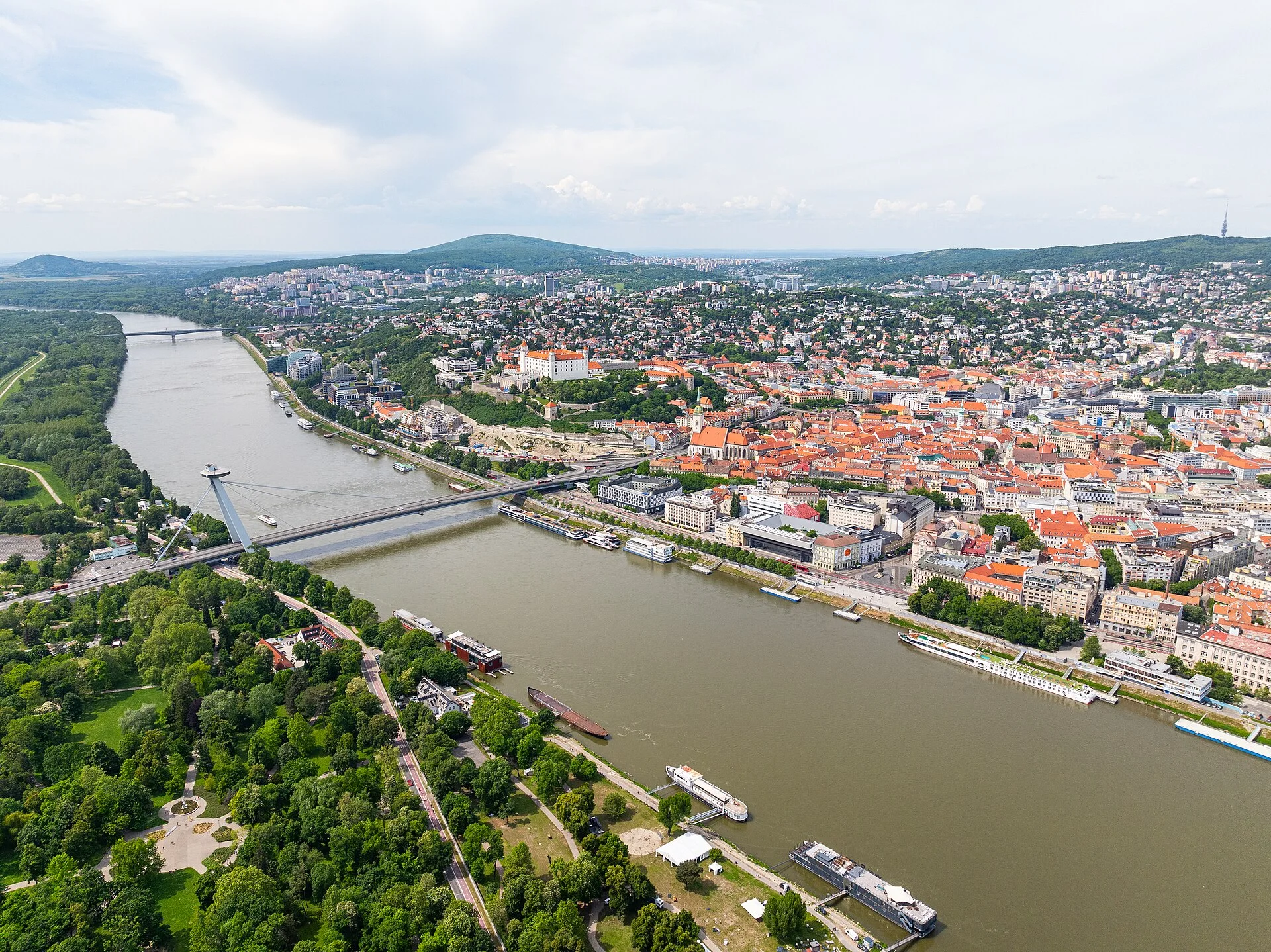
Bratislava is not incomplete because the famous part fits into an afternoon. The famous part is simply unusually easy to finish.
Where it is — and how to get there
Bratislava is Slovakia's capital on the Danube in the far south-west of the country, pressed close to both Austria and Hungary. Vienna is only about 60 km away, which explains both how easy Bratislava is to reach and why it is so often reduced to a side trip.
Direct trains connect Bratislava with Vienna and other Central European cities, and buses run straight from Vienna Airport as well as central Vienna. Bratislava Airport handles a smaller flight network of its own; from there city buses are the practical public connection. Arriving by rail is usually the cleanest introduction because the city starts almost immediately.
Bratislava has one of Europe's most efficient tourism problems.
The railway journey from Vienna is short.
The historic centre is compact.
The castle is obvious.
The Danube is visible.
A visitor can arrive in the morning, eat lunch, walk nearly every famous street and leave with photographic evidence that the capital has been completed.
That is not a bad day.
It is a bad definition of the city.
We already published the argument that Bratislava is not Vienna's cheap side trip. This guide does something different: it assumes you have decided Bratislava deserves its own stay and asks what becomes visible when the train back to Vienna is no longer setting the deadline.
The answer is a capital whose scale is modest but whose twentieth-century urban transformation is enormous relative to the postcard core.
Bratislava in 60 seconds
Give Bratislava two nights if the city itself is the trip. One full day covers the obvious centre; the second lets you cross the river, use public transport and see a resident capital rather than a heritage island.
Stay in or beside Staré Mesto for a first visit, around Nivy / Ružinov if transport and price matter more, or in Petržalka only when you deliberately want the south-bank city and understand the connection.
Public transport is cheap. With the current Tapni sa bank-card system, a 30-minute ticket is €1.09, 60 minutes €1.60, and the daily cap / 24-hour level is €4.85 under the 2026 tariff. DPB explains the current contactless system here.
For nightlife, use Bratislava After Dark. Obchodná, WAX2, river venues, queer events and student nightlife make much more sense once the day-tripper crowds are gone.
The Old Town is genuinely small. Stop apologising for that
Michael's Gate, Hlavné námestie, the Old Town Hall, Primate's Palace and the surrounding lanes form a heritage core you can cross quickly.
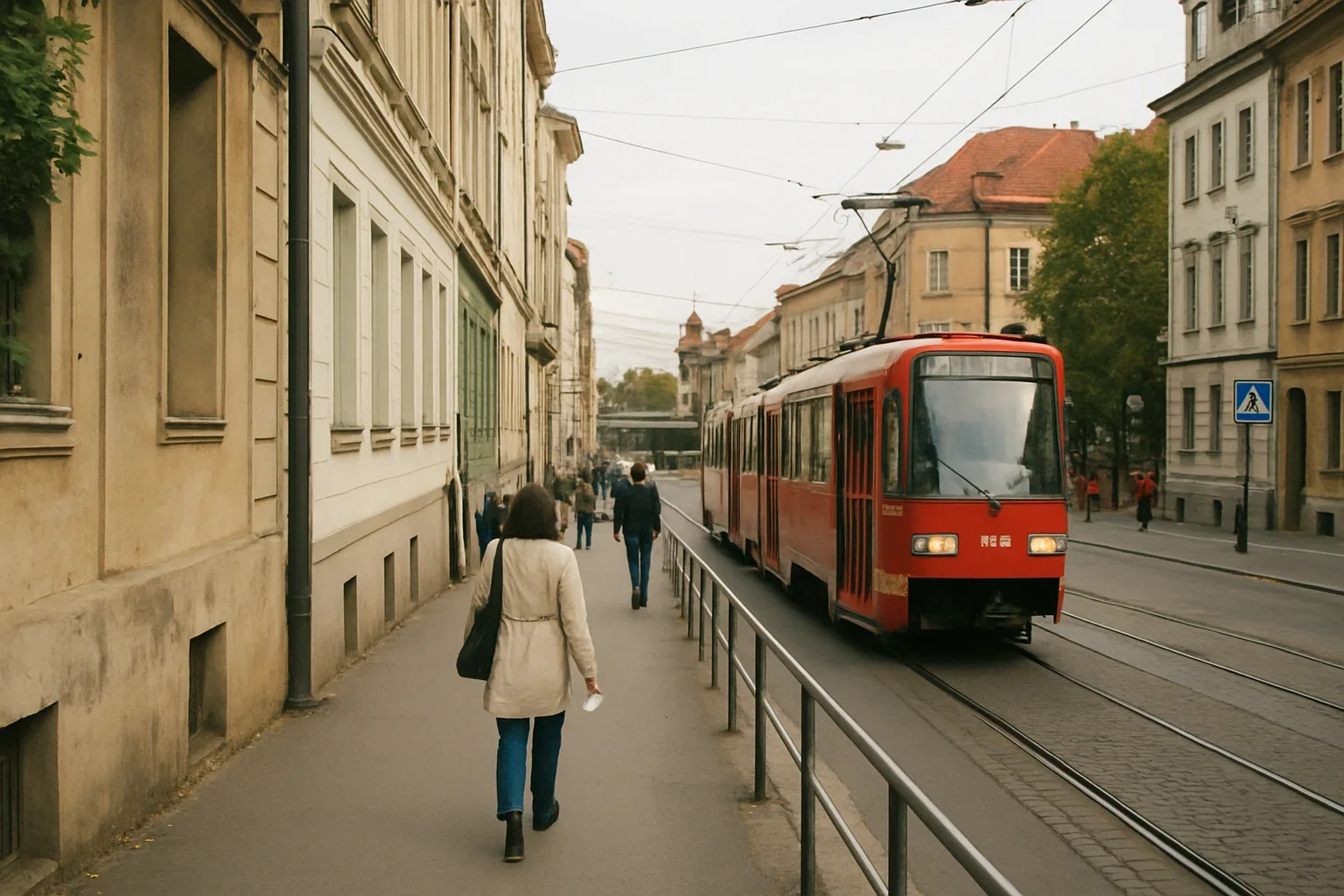
Travel writing often reacts to this by padding Bratislava with unnecessary attractions or pretending every courtyard deserves an hour.
Do not.
Small is operationally useful.
You can look at façades instead of route-planning. You can sit for coffee without sacrificing a monument. You can return to the same square after dinner and notice that the social city has changed around it.
The problem begins only when the boundary of the pedestrian centre becomes the boundary of curiosity.
Our broader field note on why Old Town is usually the worst way to understand a European city applies here almost embarrassingly well.
Bratislava Castle is orientation before it is content
The rebuilt Bratislava Castle sits above the Danube so effectively that it can make the city look more historically coherent than it is.
Go up.

Use the terrace and viewpoints to understand the geography: Old Town below, Austria close to the west, the river, SNP Bridge, Petržalka spreading south and large transport corridors making visible how quickly Bratislava escaped its old walls.
Whether you spend serious time inside the museum depends on your interest in Slovak history and the current exhibitions.
The panorama does the essential urban work even if you never buy a ticket.
The SNP Bridge is not an unfortunate object blocking the castle view
The Most SNP / SNP Bridge and its UFO tower are among the clearest reminders that Bratislava was radically remodelled during the socialist period.

Construction required demolition in the old Jewish quarter below the castle. The result is both engineering landmark and evidence of how modern planning cut through historical urban fabric.
This is exactly the kind of contradiction that polished city-break coverage often avoids because neither 'beautiful bridge' nor 'communist monstrosity' is adequate.
Walk across it.
The transition matters more than the tower restaurant.
On the south side, Bratislava stops looking like a miniature Central European old town almost immediately.
Petržalka is not a concrete safari
Petržalka is enormous relative to historic Bratislava.
Mass housing, wide roads, green strips, later renovations and new development define a district where a large share of the city's residents actually live.
That makes it useful.
It does not make it an attraction designed for people who want to photograph 'communist blocks'.
The city tourism office itself now includes post-socialist Bratislava in its visitor material, explicitly connecting Petržalka and other socialist-era sites to the city's twentieth-century story. Its post-socialist overview is a decent framework.
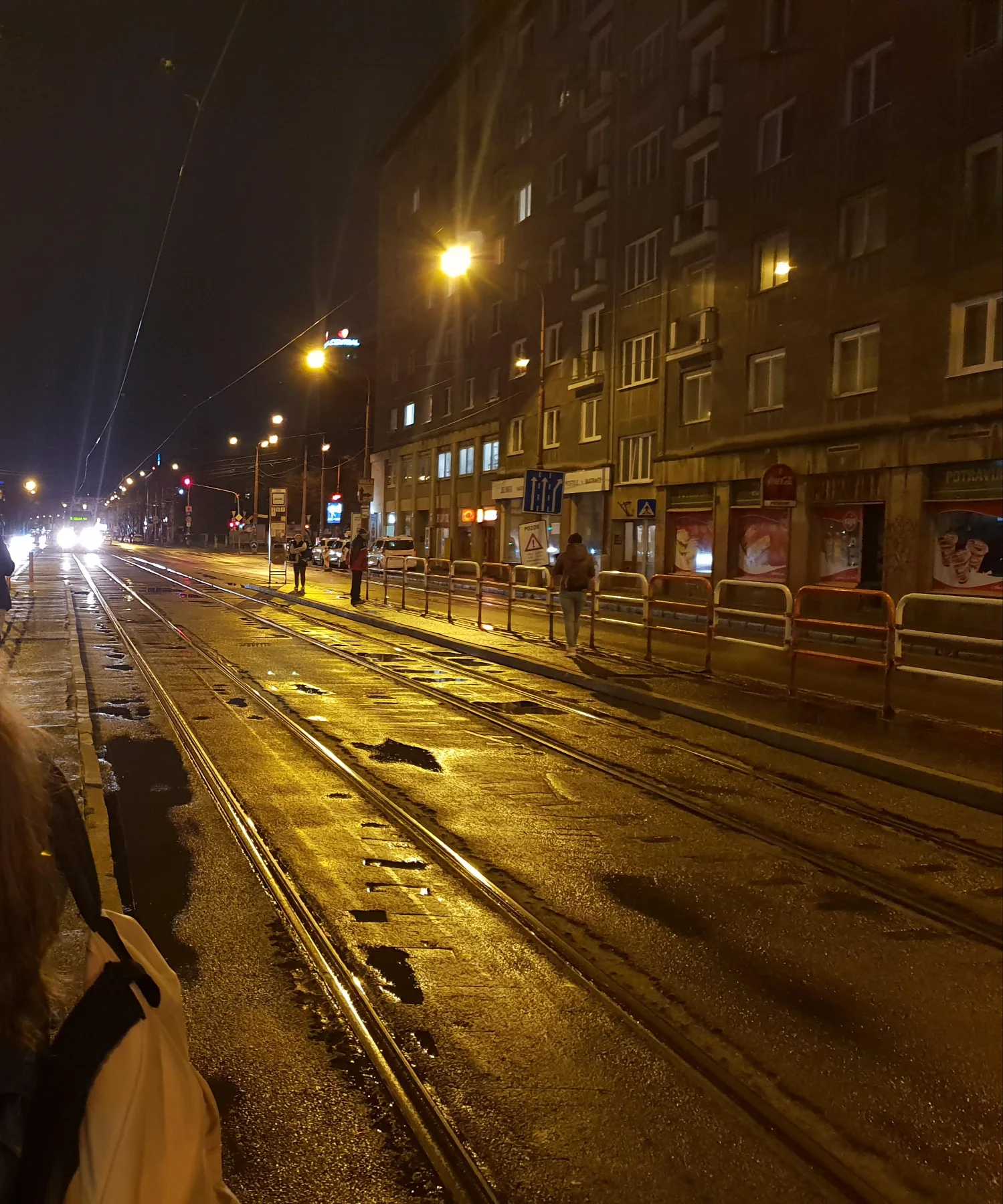
Take a tram or bus south, walk a section and look back toward the old city.
The contrast is the point.
Residents are not exhibits.
The Danube is bigger than the promenade below the castle
Bratislava's riverfront can look like one clean strip of restaurants, offices and new development if you never leave the centre.
Walk further.
Eurovea and the modern waterfront show the capital's contemporary investment city. Older port and industrial geography sits beyond the polished centre. On the opposite bank, floodplain and park spaces pull the river back toward recreation.
The Danube is infrastructure, border history, leisure space and development pressure simultaneously.
That is a much more useful reading than 'nice place for sunset'.
Sunset is still allowed.
Stará tržnica is better when it is functioning
The Old Market Hall / Stará tržnica is one of the city's most useful examples of a historical building remaining part of current urban life.
On Saturdays the current market runs roughly 09:00–15:00, with food and local producers depending on the programme. Check the hall's current listing before the trip.
Go when something is happening.
An empty market hall is architecture.
A working hall tells you more about the city.
This sounds obvious, but travel itineraries are remarkably good at arriving at markets when the market is gone.
Nivy explains contemporary Bratislava better than another baroque room
The Nivy area around the bus station and new development is not beautiful in the inherited-city sense.
That is useful.
Office towers, shopping, transport, apartments and construction show where growth pressure is being absorbed beyond the old core. Nearby parts of Ružinov feel more residential and less visitor-oriented while remaining well connected.
If you are staying more than one night, this part of town helps explain the economic capital Bratislava has become since Slovakia joined the EU and attracted major investment.
You do not need to love a mall-bus-station complex.
You need to recognise that contemporary capitals are partly made of things heritage itineraries delete.
The city is more Slovak once you stop asking it to perform Slovakia
Bratislava has a national-capital problem shared with many small countries.
Visitors want it to summarise the country.
It cannot.
Western Slovakia, the Tatras, eastern Slovakia, Roma communities, Hungarian-majority areas and industrial regions all sit badly inside one compact capital narrative.
That is why Košice becomes more interesting once Bratislava is behind you.
Bratislava is useful as Bratislava: border capital, political centre, university city, EU-connected economy and historically multilingual place at the edge of the country.
It does not owe you the whole national executive summary.
Food: Slovak classics are the start, not the entire menu
Bryndzové halušky will appear in every first-trip food list.
Eat it if you want it.
Then let Bratislava be a current city.
Contemporary Slovak cooking, Central European staples, Vietnamese and Asian restaurants, Balkan influences, bakeries, wine bars and modern café culture all belong to the same capital.
The old centre has visitor-facing pricing and menus because visitors are there.
Moving toward residential districts usually changes value before it produces some magical authenticity upgrade.
Do not spend an hour hunting 'where locals eat' if the restaurant beside you is good.

Where to stay
Old Town / Staré Mesto: easiest first trip. Walk everywhere famous, accept weekend noise and higher rates on the most obvious streets.
Nivy / eastern centre: practical for buses, modern hotels and easy public transport; less romantic and often better operationally.
Ružinov: resident feel, trams/buses and potentially better value; choose exact connections rather than the district label.
Petržalka: strong if you deliberately want the south-bank city or have a reason near the station/event area. Less intuitive for a 24-hour first visit.
Around the main railway station: functional rather than atmospheric. Useful for early Vienna/Prague/Košice trains, but the immediate streets are not Bratislava's prettiest introduction.

_-_Hlavn%C3%A9_n%C3%A1mestie_(Main_Square)_-_View_of_St_Urban_Tower_and_the_Cathedral_of_Saint_Elisabeth_from_the_city_park_(December_2025).jpg?width=1800)