

Vienna does not become less beautiful when the imperial set ends. It becomes easier to understand.
Where it is — and how to get there
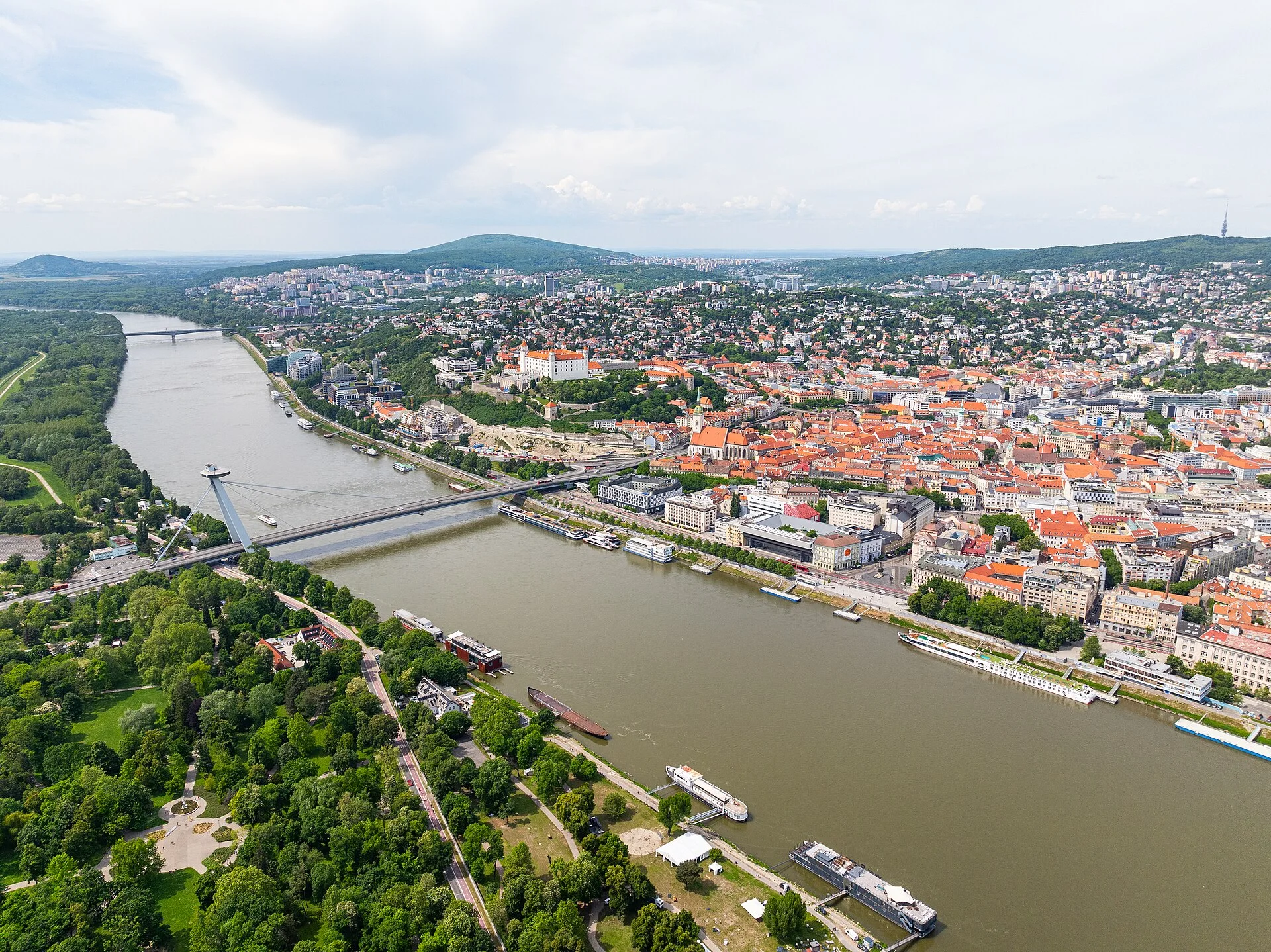
Vienna is Austria's capital in the east of the country on the Danube, close enough to Slovakia that Bratislava is a normal regional connection rather than a distant second city. The historic First District is only the centre of a much larger metropolitan city that spreads well beyond the Ring.
Vienna International Airport lies south-east of the city with several rail and bus options into the centre, including regular ÖBB services as well as the dedicated airport train. Vienna is one of Europe's strongest rail hubs, so arriving from Prague, Budapest, Bratislava, Munich or Ljubljana can be easier than flying. A car is unnecessary for the city.
Vienna is easy to admire and strangely easy to misunderstand.
The city gives you a perfect first argument: cathedral, palace, boulevard, museum, cake, concert hall, another palace.
It is one of the few capitals where the polished version is not mostly marketing. The Habsburg city really is that monumental. The museums really are that strong. The public transport really is that competent. The coffeehouse ritual is not an invention assembled for weekenders.
The problem is what happens next.
A visitor can spend three days inside Innere Stadt, Schönbrunn and the museum belt, leave impressed and still have learned remarkably little about how Vienna became one of Europe's most liveable large cities, what its twentieth century did to housing, where migration changed the street, why ordinary residents do not spend every evening beneath chandeliers, or how quickly the city changes beyond the Ring.
That second Vienna is not more authentic.
It is simply more complete.
Vienna in 60 seconds
Give Vienna at least three full days. Four is easier if museums matter.
Stay in the First District only if the premium is worth being able to walk straight into the postcard. For a better balance, look at Neubau / Josefstadt, Wieden / Margareten, Leopoldstadt, the Gürtel edge or a well-connected part of Ottakring.
Use public transport without overthinking it. In 2026 a standard single journey is €3.20 and the current 24-hour network ticket is €10.20; digital weekly options can be better value for longer stays. Check current Wiener Linien ticket rules before buying.
Do not rent a car for central Vienna.
For nightlife, use Vienna After Dark. It deals with Gürtel rooms, techno, queer Vienna, wine taverns, commercial nightlife and the fact that a city famous for culture does not go to bed after the opera.
Start in the First District. Just do not stay conceptually trapped there
Stephansplatz, Hofburg, Graben, Kohlmarkt and the Ringstraße are not tourist errors.
They are some of Europe's densest concentrations of state, church, imperial and bourgeois power turned into urban form.
Walk them slowly.
Notice how much money, symbolism and government architecture can be packed into a few kilometres.
Then cross the Ring.
That is the moment many city-break itineraries become more useful.
Vienna's centre is so visually dominant that districts outside it can be treated as accommodation zones rather than the city itself. This is exactly backwards. The Ring is not the edge of Vienna's importance. It is where one historical version stops monopolising the view.
The wider argument is the same one made in our field note on why Old Town is usually the worst way to understand a European city: start there, but do not use visitor concentration as a proxy for urban reality.
Schönbrunn is crowded because it deserves to be
There is no editorial merit in pretending Schönbrunn is overrated because everybody goes.

The palace and gardens explain imperial scale better than a paragraph can. What matters is how much of the day you surrender to it.
Book timed entry if you want the interiors. Use the gardens if you care more about the estate and city views. Do not stack Schönbrunn, Belvedere, Hofburg interiors and two art museums into one day merely because a tourism card made it mathematically possible.
Vienna's problem is not lack of material.
It is museum overconsumption.
The museum decision matters more than the museum ranking
The Kunsthistorisches Museum, Belvedere, Leopold Museum, Albertina and dozens of specialist institutions can each justify hours.
The bad Vienna itinerary treats this strength like a challenge.
Pick based on what you actually care about.
The Kunsthistorisches Museum is the obvious choice for old masters and imperial collecting. Belvedere gives the famous Klimt headline and palace setting. Leopold is stronger when Viennese modernism and Schiele matter more than ceremonial grandeur.
Current official visitor information and ticketing are maintained individually; start with Vienna's museum overview rather than trusting an old package price. The tourism office keeps current museum links here.
A four-hour museum you wanted is better than six museums you completed.
Red Vienna is not architecture trivia
Between the wars, socialist municipal government built a huge social-housing programme that still shapes Vienna.
Karl-Marx-Hof is the famous visual shorthand, but the point is not one monumental housing complex.

The point is that housing policy became city form.
Courtyards, communal facilities and municipal ownership are part of why Vienna's international reputation for liveability cannot be explained only through opera, parks and clean trains.
Go north to Heiligenstadt if the subject interests you. Look at the scale. Then remember that Vienna's municipal-housing system is dispersed far beyond this one photogenic project.
This is also where the city stops feeling like a museum and starts looking like an argument about what a capital should provide.
Neubau, Josefstadt and the inner west are the easy second Vienna
The districts west of the centre — especially parts of Neubau, Josefstadt and Mariahilf — are where many visitors first realise Vienna has contemporary street life unrelated to imperial heritage.
Independent shops, cafés, design, bars, student life and dense residential streets sit close enough to the museum quarter that leaving the centre does not require a heroic expedition.
This is the easiest area to choose when you want a first trip to remain convenient but do not want every coffee surrounded by luggage and horse-carriage routes.
The trade-off is obvious: these neighbourhoods are popular, increasingly polished and not some undiscovered local refuge.
Good neighbourhoods are allowed to be known.
Naschmarkt: useful, commercial, still worth understanding
Naschmarkt attracts visitors because it is central, photogenic and full of food.

That also makes it an easy target for travel writing that wants to prove it has moved beyond the obvious.
The useful approach is less dramatic.
Walk it if markets interest you. Eat there if a specific place appeals. Understand that a famous market can be both a functioning urban institution and a visitor economy.
Then compare it with a smaller neighbourhood market such as Karmelitermarkt or markets further from the centre if you want to see how the same city function changes with less tourism pressure.
Do not call the second one 'the real Vienna'.
Both are real. They serve different demand.
Leopoldstadt and the Prater are more than the Ferris wheel
The Wurstelprater gives Vienna one of its strangest tourist images: imperial capital, psychoanalysis, classical music — and a permanent amusement park.
Keep going.

The green Prater and Hauptallee extend the area into major everyday recreation space. Running, cycling, families, beer gardens and long empty stretches coexist with the rides.
The nearby Stuwerviertel and wider Leopoldstadt add residential life, Jewish history, new development and nightlife connections toward the Danube Canal.
Vienna tourism itself increasingly treats these neighbourhoods as distinct city experiences rather than merely the land behind the Riesenrad. Its Stuwerviertel/Prater guide is a useful starting point.

The Gürtel is infrastructure by day and nightlife geography after dark
The belt road and elevated U6 are not beautiful in the Ringstraße sense.
That is why they matter.
Former Stadtbahn arches under the railway have been converted into bars and music venues. The city becomes louder, younger and less ceremonious around them at night.
This is where a first-time visitor who booked 'central Vienna' may discover that nightlife is not concentrated around Stephansplatz at all.
The separate Vienna After Dark guide goes much deeper into the Gürtel, electronic venues, queer parties and late transport.
Vienna is also a wine city, which sounds fake until you see the vineyards
Vienna has roughly 600 hectares of vineyards and around 170 winegrowers within the city. Vienna's current wine overview and annual Wine Hiking Day information are here.
That creates one of the capital's strangest transitions: tram, suburban street, vineyard, city view, wine tavern.
Areas such as Grinzing, Nussdorf and Mauer are famous for Heuriger culture. Some are heavily visited. That does not invalidate the institution.
A genuine Heuriger announces that the year's wine is being served — traditionally with a pine branch and Ausg’steckt signage — and opening periods vary. Vienna explains the current Heuriger system here.
Check opening dates before riding across town for a closed courtyard.
Coffeehouse Vienna is not one famous café
The classic coffeehouse is another area where the institution survives its tourist packaging.
Yes, the famous interiors can involve queues.
Yes, there are cheaper ordinary cafés elsewhere.
No, that does not mean the historical cafés are fraudulent.
The more useful thing to understand is the social licence: a drink buys time. Newspapers, conversation, work and lingering are part of the culture.
If you spend twenty minutes photographing a Melange and leave because the next attraction is scheduled, the problem is not the café.
Where to stay
Innere Stadt (1st): maximum convenience and maximum premium. Good for a first 48-hour culture-heavy visit; unnecessary for most longer stays.
Neubau / Josefstadt (7th/8th): strong first-trip compromise: cafés, bars, museums and walkability without sleeping inside the postcard.
Wieden / Margareten (4th/5th): practical, residential, well connected and often better value; useful around Hauptbahnhof access.
Leopoldstadt (2nd): strong for Prater, Danube Canal and U-Bahn connections; street feel changes block by block.
Ottakring / Gürtel edge: better when nightlife, markets or price matter more than imperial atmosphere. Check exact transit rather than booking by district name alone.
Around Hauptbahnhof: operationally excellent for rail trips, aesthetically less romantic. Sometimes that is exactly what a multi-city journey needs.