A low daily rate is a useful starting point, but the rental contract determines what the trip will cost and what you can actually drive.
Where it is — and how to get there
Albania is a mountainous Adriatic and Ionian country in the western Balkans. Most fly-in rental pickups are at Tirana International Airport north-west of Tirana; driving routes then spread towards Durrës, Berat, Shkodër, Vlorë, the Riviera and mountain areas.
Tirana Airport (TIA) has multiple rental desks and off-airport collection arrangements. Read the actual supplier's location and opening hours, especially for flights arriving late. For a trip centred on Tirana alone, compare a bus or taxi first; for southern coastal or inland driving, choose a vehicle and a rental contract suitable for the precise route.
A rental car advertised at €8 a day in Albania can be a perfectly real offer. The price may buy an actual car for the chosen dates. It does not automatically buy unrestricted driving, zero financial risk, a credit-card-free pickup, an airport night collection or an insurance product that covers every scratch and broken wheel.
That distinction is more interesting than repeating that cheap rentals are scams. Albania is a compelling country to drive: an airport near a large capital, dramatic roads to the Ionian coast, Ottoman towns in the interior, a working Adriatic seafront and mountain scenery that changes the scale of a trip. A rental car can make those experiences fit together beautifully. The aim is to keep that freedom and understand the contract before paying.
For this field note, supplier conditions were reviewed on 21 November 2026. These are named examples, not a claim that every rental company uses the same numbers. Deposit rules and insurance products change by company, vehicle group, pickup station and booking channel. Current written terms for your actual reservation prevail over any general guide, including this one.
An €8 headline is not the same as an €8 operating cost
Imagine a five-day compact-car offer at €8 per day. The rental line is €40. That can be a fair promotional price. Now examine the rest of the booking:
| Component | Illustrative amount | What it represents | | --- | ---: | --- | | Base rental | €40 | Five days at the advertised €8/day | | Optional counter insurance | €60–€175 | If a quoted SCDW product costs €12–€35/day | | Out-of-hours service | €25–€35 | Only when charged by this supplier for your pickup or return | | Airport-location delivery | €25 | A named supplier's published example, not a universal airport tax | | Cross-border permission | €50 | Example supplier charge for up to seven days | | Green Card issuance | €40 | Example insurance-document charge where required | | Refundable card hold | €900–€2,000 | Credit limit tied up, not an automatic rental fee |
The first row is a hypothetical advertised booking; the later price bands are examples drawn from Finalrentals Albania's publicly posted conditions, not a universal package and not all applicable together. The important point is conceptual: a refundable hold is not money paid as a fee, but it still requires usable credit and can affect the trip. Likewise, a quoted upgrade can be optional for a domestic trip and mandatory for a particular cross-border itinerary.
Without a real voucher, inventing one total would be misleading. If that five-day €40 deal does not include insurance upgrades, the traveller who chooses a €12-per-day add-on would reach €100 before any other applicable charge. If their booking needs none of the add-ons, the €40 rental can remain the correct vehicle price. Both outcomes are possible; reading the conditions decides which one you have.
Deposit, excess and insurance are three different numbers
The first financial trap is often vocabulary. A security deposit is a sum blocked or taken as security during the rental; it is intended to be released or refunded subject to the agreement. An insurance excess or deductible is the amount of an eligible loss for which the customer can remain responsible before the insurer or waiver responds. An insurance premium or waiver price is the actual cost of purchasing extra cover.
They interact, but they are not interchangeable. A rental can have a low advertised daily rate, an excess of €1,000, a refundable €1,200 card hold and an optional €18/day waiver. A waiver may lower the excess without eliminating the deposit. It may also exclude parts of the car most vulnerable on rough roads.
Finalrentals Albania lists a refundable security hold of €900–€2,000, varying with vehicle group, with a possible reduction to €400–€1,000 if SCDW is purchased. Its own conditions contain other deposit-reduction language in another section, so a precise amount cannot responsibly be promised from the webpage alone. Request the amount for the exact car category, location and insurance choice in writing.
This ambiguity is not a technicality. Someone with €600 available on a credit card can afford a cheap five-day hire in cash terms but may not be able to collect it when the counter asks to block €900. A booking site may have accepted the prepaid rental payment anyway. The operational question is whether the main driver has enough valid credit at collection.
Ask the provider whether the deposit is pre-authorised or charged, whether a separate excess still applies, what the release process is and how long the issuer normally needs to make the available limit usable again. Do not treat the advertised refund timing as a promise made by your bank.
CDW, SCDW and “full protection” do not necessarily cover the same car parts
Collision Damage Waiver, usually shortened to CDW, can reduce responsibility for damage under specified conditions. SCDW is usually a more comprehensive or lower-excess variation, though product names are marketing labels rather than a single international legal definition.
Two Albanian supplier terms demonstrate why names alone are insufficient. Yours Car Rental's Albania conditions say the basic package includes cover subject to an excess and describe exclusions involving items such as tyres, wheels, glass, roof, underbody and interior. RentPoint Albania's conditions also describe exclusions in optional protection, including categories such as lost keys or incorrect fuel.
That means a gravel scrape underneath a car, a wheel damaged on an uneven roadside, or an interior accident may sit outside the comforting headline “zero excess.” Check the precise exclusions on the voucher. Never assume an expensive counter upgrade grants permission to ignore the ordinary care obligations in the rental contract.
A more subtle distinction concerns broker excess reimbursement. A third-party protection product can be useful, but may operate by reimbursing eligible amounts after the rental company has charged you. It generally does not force the local desk to waive its deposit, accept a debit card or disregard its own exclusions. Ask who makes the initial payment, what documentation reimbursement requires and how claims are handled.
The word “full” should trigger a contract comparison, not a belief that liability has vanished.
Credit card, debit card, prepaid card: why booking and collection can diverge
Finalrentals' posted payment terms require a Visa or Mastercard credit card in the main renter's name at the rental desk and explicitly reject cash, prepaid and debit cards for the rental-desk payment in those terms. Other providers may offer different payment arrangements, including no-deposit or debit-card products, but their offers have to be checked individually.
The checkout screen often hides this distinction. You may prepay a broker with a debit card, PayPal or another method while the local supplier still demands a physical eligible credit card on collection. The fact that the online transaction succeeded is not proof that your card meets the local contract.
Before reserving, identify the actual supplier, not just the booking portal brand. Read the station-specific payment rules and the exact name on the main driver's card. Travelling with a companion who owns a credit card does not automatically solve the problem if the companion is not the named main driver. Adding a driver has its own conditions and may involve a fee.
When a provider advertises “no deposit”, ask whether that means no credit-card hold, a lower deductible, or a compulsory higher daily insurance rate. The offer may genuinely suit you; the missing step is checking the price and exclusions of the full product rather than comparing its headline with a fundamentally different rental type.

Landing late at Tirana Airport changes the arithmetic
Tirana International Airport operates around the clock, but car-rental counters do not all use the same opening hours. An airline flight arriving at 23:30 can therefore produce three different pickup arrangements: an open on-site counter, a supplier representative meeting you outside, or a car that can only be collected the next morning.
Finalrentals' published conditions contain an out-of-hours charge of €25–€35 depending on the pickup or return hour, and an additional €25 in a specific airport-to-city delivery example. These are supplier terms, not automatic charges for everyone collecting at TIA. Another supplier might bundle collection into the rate or use an off-airport shuttle.
The late-flight issue is not merely whether the desk is technically open. The supplier's delayed-flight clause says a customer who provided a flight number may receive more considerate handling, but if the branch has closed, pickup can move to the following morning. Someone who expects to drive to Vlorë at 01:00 should not discover that fact while carrying a suitcase in arrivals.
Before committing, send the flight number, landing time and intended collection time. Ask for written confirmation of the meeting place, office hours, out-of-hours total, delayed-flight policy and whether the first rental day starts before the car is actually collected.
There is a perfectly legitimate alternative: spend the first night in Tirana or near Rinas, collect a car in daylight and start the route rested. The airport's overnight public bus is covered separately in our Tirana Airport after-midnight guide. A car is a tool for the drive, not a compulsory souvenir from the arrival terminal.
The pickup inspection has to document a car, not a sales promise
At pickup, photograph the four sides, bumpers, wheels and tyres, windscreen, roof where possible, dashboard fuel gauge, mileage and visible interior condition. Make a short continuous video in addition to stills if the lighting permits. Look closely at low plastic trim and wheel rims: in places with uneven parking surfaces, these are predictable damage disputes.
Do the inspection in the presence of the supplier's agent. Have existing marks entered onto the contract or digital damage report before leaving. If a mark is obviously visible in your photo but absent from the official sheet, ask for the sheet to be amended or for written acknowledgement.
A rental return should get equal attention. Take time-stamped photographs of the condition, fuel and odometer in the designated return area. Ask for a signed or electronically issued return acknowledgement. An unattended key drop should have written instructions about liability until vehicle inspection; returning keys into a box is not automatically the moment responsibility ends.
This routine is not unique to Albania and not evidence that every supplier is dishonest. It is a sensible process whenever an expensive object is handed over under a contract whose financial consequences are larger than the rental fee.
Albania's best roads still demand the right vehicle and permitted surface
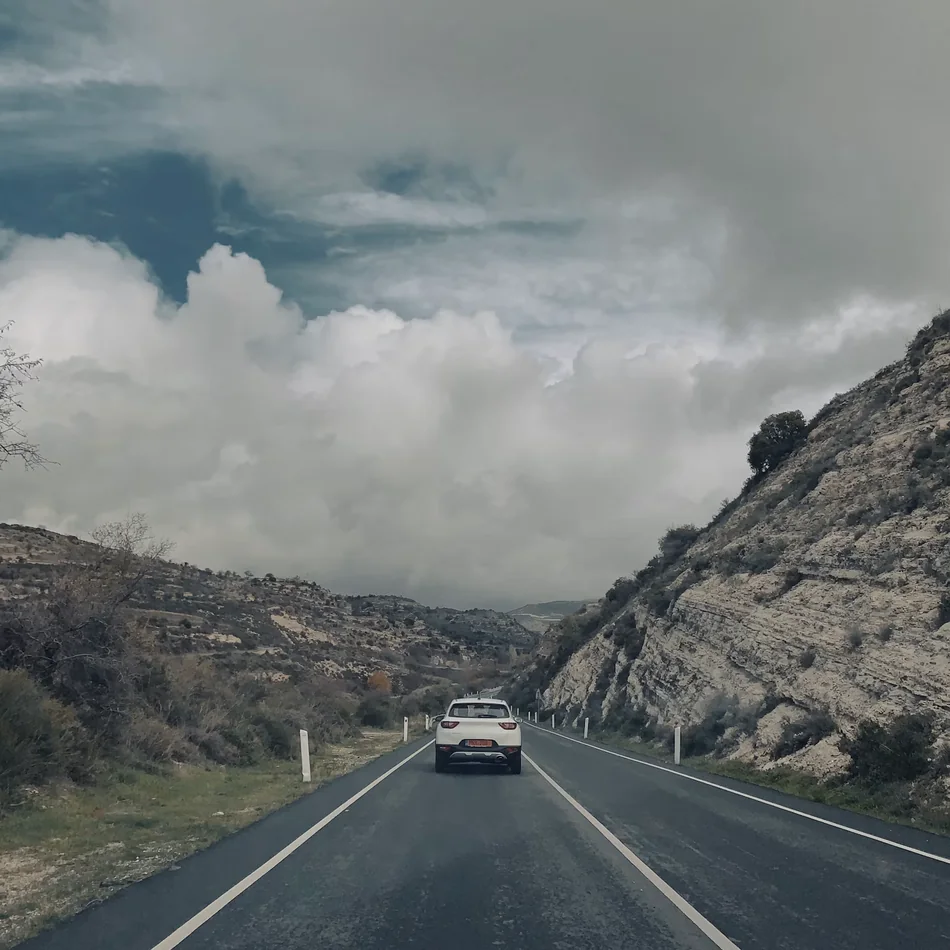
Albania offers genuinely varied road experiences. A drive towards Berat involves a different practical rhythm from the coastal SH8 road or the mountains north of Shkodër. The Llogara Pass can deliver spectacular views, while southern coastal roads can combine tight bends, seasonal traffic and steep access roads. The attraction is real; so is the difference between major asphalt roads and a track a navigation app treats as a minor shortcut.
The provider may prohibit unpaved driving, driving on certain mountain tracks, river crossings, or routes judged unsuitable for the vehicle class. A photograph of a compact car beside a beach says nothing about whether its underbody protection covers the last stony kilometre to the accommodation.
Our Albanian SH8 road guide describes the road experience itself. The contract question to ask alongside it is straightforward: is every road on my planned route explicitly permitted under this rental agreement? A normal two-wheel-drive car can be appropriate for much of the country; the model is not an automatic permit to drive wherever a map displays a line.

Avoid a common insurance misunderstanding: a collision waiver may protect certain accidental damage on an allowed road but exclude damage caused by violating the road-use clause. A cracked windscreen on a paved road and an underside strike on a prohibited dirt track can be treated very differently. The contract, circumstances and police documentation decide, not the scenic beauty of the route.
Cross-border driving is a separate permission, with separate costs
A car collected in Albania is not automatically authorised to travel through Montenegro, Kosovo, North Macedonia, Greece or Bosnia and Herzegovina. Nor is a route from Albania to Serbia merely an extension of the same domestic rental. Our Balkan rental-border guide handles the region-wide permissions and documents in greater depth.
One concrete supplier example shows how quickly the daily price can change. Finalrentals Albania's terms list a €50 cross-border fee for rentals of one to seven days, €80 for seven to fourteen, and €100 for fourteen to twenty-eight, plus a published €40 Green Card insurance-document charge. They also stipulate SCDW at €12–€35/day for permitted cross-border use. Their stated permitted-country list excludes Serbia and Bulgaria, and they prohibit ferries. Even an otherwise drivable road may therefore be outside that particular agreement.
These terms are examples, not instructions to pay the extra charges blindly. If you are not crossing an international border, you should not add cross-border products to the quote. If you are, ask the exact supplier for written permission for each named country, including transit nations, and whether the route involves excluded territory or ferries.
The document a border guard requests and the insurer's protection obligation are separate matters. Having a valid passport does not override a car hire company's prohibition, and buying a Green Card does not automatically authorise travel into an unlisted country.
Police reports and damage claims: the detail travellers discover too late
After an accident or damage incident, a rental agreement may require a police report even if the damage appears minor, and it may insist on immediate supplier notification. Yours Car Rental's terms describe documentation requirements and exclusions that influence the claim. Other companies apply their own reporting windows and proof standards.
The most dangerous assumption is that a photograph and a friendly conversation will automatically be enough. In certain contracts, failing to notify the rental desk or obtain the specified formal report may compromise cover even if the vehicle itself is otherwise eligible. Conversely, demanding police involvement in every trivial mark without asking what the company actually requires is not the answer either.
Have the emergency telephone number and after-hours instructions accessible offline, as well as the rental contract and insurance details. If an incident occurs, prioritise personal safety, call emergency services when required, notify the rental company promptly and follow the reporting procedure that applies to the country and incident. Do not accept an unrecorded cash settlement that might later collide with insurance obligations.
Fuel, mileage and cleaning: small lines with expensive effects
A price comparison should also include ordinary operating conditions. The Finalrentals terms use same-level fuel return and mention a refuelling administration charge where fuel is missing; they also state unlimited mileage for the described product. A supplier with a restrictive kilometre allowance or full-to-empty fuel purchase could produce a different calculation.
Photograph the fuel gauge at collection and return. If the contract says full-to-full, verify that the car actually starts full. If it says same-to-same, document the initial level and avoid guessing. Keep the final petrol receipt where reasonably possible. Albanian petrol station practice varies by location; always verify the fuel type at the pump rather than relying on a driver who waves you forward.
Cleaning conditions are worth reading, particularly after a mountain or beach trip. Ordinary dirt should be distinguished from contract-defined extraordinary cleaning. The Finalrentals conditions specifically mention a €150 smoking-cleaning fee. That does not prove all providers use it, but demonstrates why an overnight beach drive and an eventful vehicle interior should not be treated as contract-free territory.
Should you rent at the airport or in Tirana?
A city pickup may save an airport-service fee or allow you to spend the first night without paying for a parked car. On the other hand, a door-to-door taxi into the city, time to reach a remote rental office and a different return arrangement can offset the saving. Both are valid; the trip determines the choice.
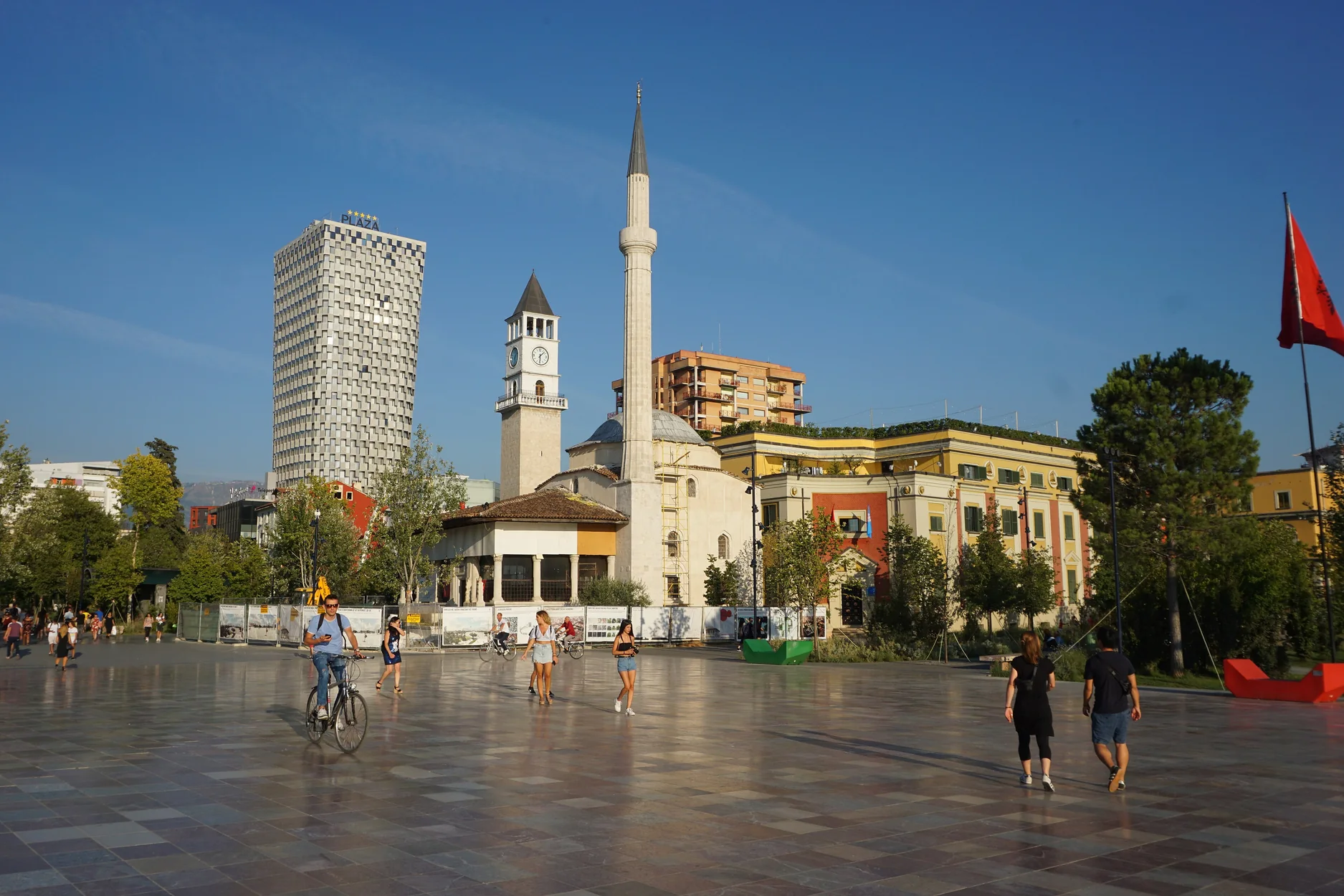
If your plan is primarily Tirana cafés, restaurants, galleries and nightlife, you may not want a car on the first day at all. The Tirana destination guide explains why the capital is worth enjoying rather than treating it as an obstruction between the runway and the coast.
If the itinerary starts with a long afternoon on the road to Durrës, Berat or the southern coast, airport collection can be efficient. But a very late pickup can turn a scenic road trip into fatigue and an extra paid day. For northern mountain destinations, confirm which segments are realistically driveable in your vehicle and in the season.

Travellers should also distinguish a five-day trip from five 24-hour rental periods. A late collection or early return may still incur a full charge under the supplier's accounting. Read the pickup and return times on the contract, not just the calendar dates shown by a search engine.
The written six-question rental check
Before buying, request written answers about (1) the exact refundable deposit and accepted card type; (2) the excess and all SCDW exclusions, especially tyres, glass, roof and underbody; (3) collection time, flight-delay and airport fees; (4) the named permitted countries and road surfaces; (5) police-report and damage procedures; and (6) the fuel, mileage and return conditions.
The answers should refer to your actual car group and station, not a generic marketing page. If a supplier gives a reassuring chat answer that contradicts its published terms, ask it to confirm the exception on the booking voucher. Save that confirmation offline.

A deal is attractive when it survives this exercise. An €8-a-day car may remain the best choice. Another supplier offering €20 a day, a clear deposit and fewer collection complications might be materially better value. Without the contract details, ranking them by the number in a search-card corner is guesswork.
The reward for reading the conditions is not merely avoiding a disputed charge. It is being free to take Albania on its terms: time on the SH8 above the Ionian Sea, a long lunch in Berat, an evening in Shkodër or an unplanned detour that is actually on a road you are permitted to drive. A good rental agreement supports that freedom. It does not need to be the most expensive agreement, only one you have understood.