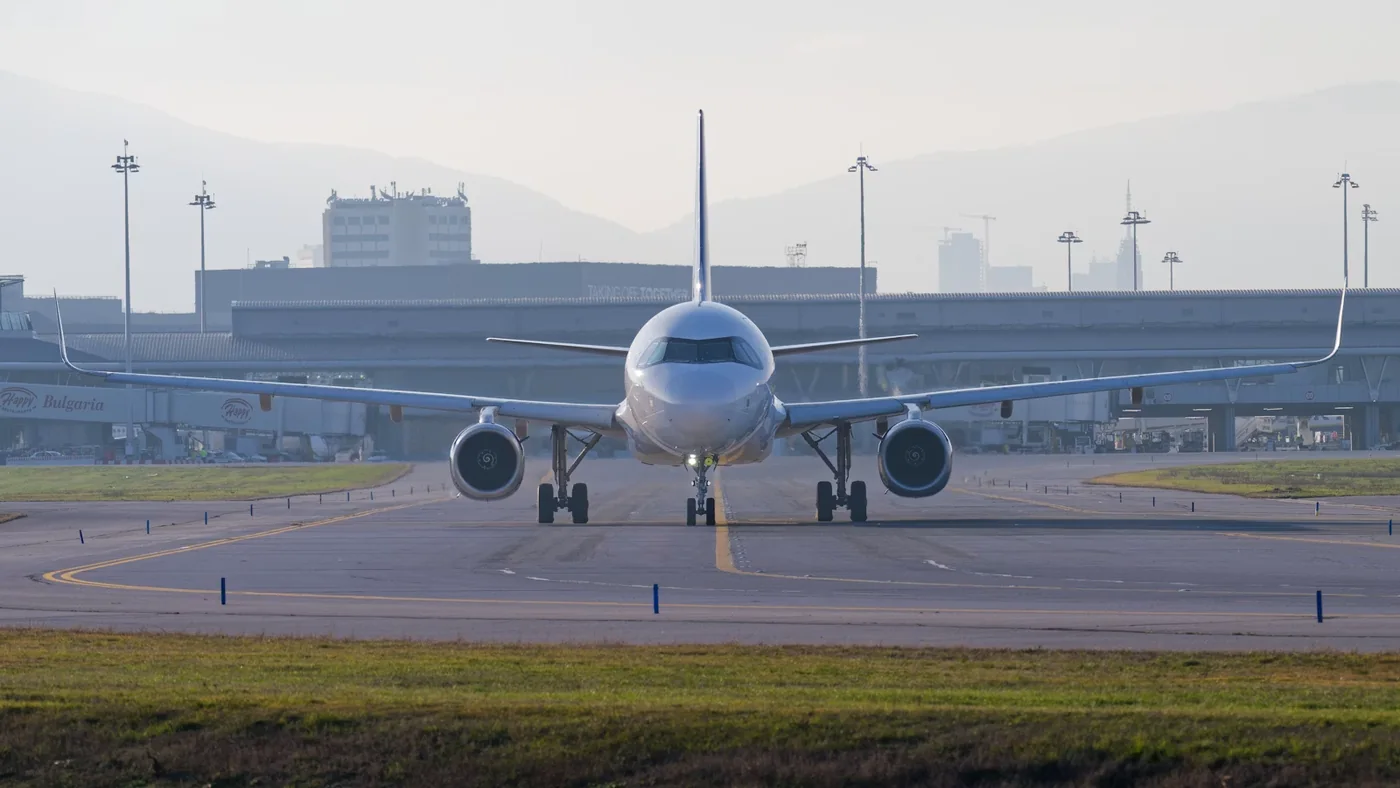
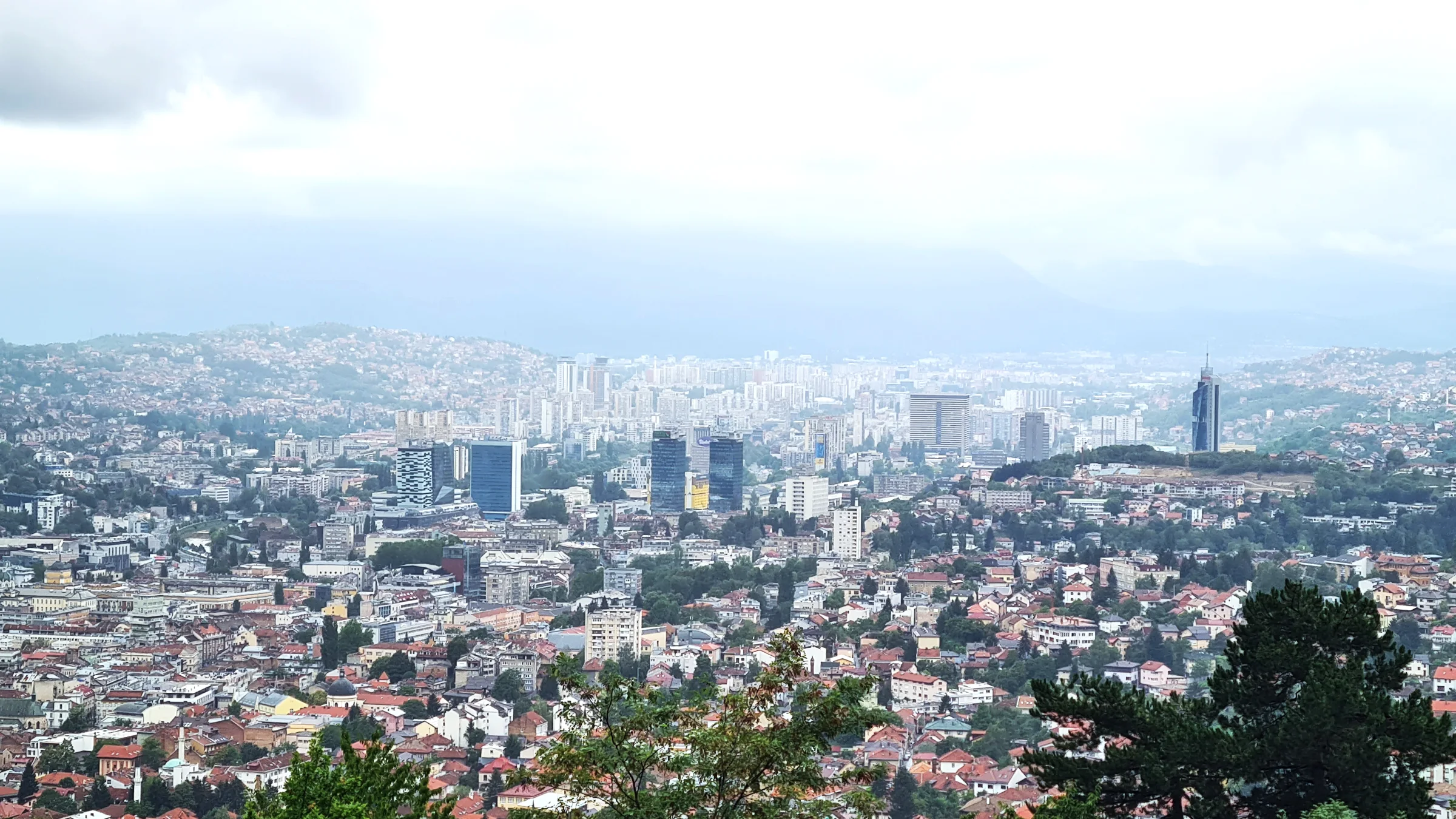
The Drina Is the Trip: Belgrade to Sarajevo Without Racing Between Capitals.
The fastest transfer between Belgrade and Sarajevo is a logistics problem. The better road turns western Serbia, Mokra Gora, the Kotroman–Vardište border and Višegrad into the reason not to fly.
Serbia / Bosnia and Herzegovina · Road guideSerbia and Bosnia11 min read
The point is not to make a short transfer artificially scenic. The point is to notice that the border road already contains enough history and landscape to justify slowing down.
Where this sits
This route links Serbia's capital, Belgrade, with Sarajevo in Bosnia and Herzegovina via western Serbia, the Mokra Gora / Kotroman corridor, Višegrad and the Drina-facing east of Bosnia. The border and mountain roads are part of the route, not a footnote between two capitals.
Road check: 9 September 2026. The Kotroman approach currently has roadworks near Mokra Gora and border waits change hourly. Check AMSS and the Bosnia-side motoring service immediately before departure.
Belgrade to Sarajevo is close enough to tempt bad planning.
On a map, the two capitals look like they should be joined by one obvious road, one coffee and a border stamp.
They are not.
The journey cuts across western Serbia, mountain roads and the Serbia–Bosnia and Herzegovina border before the Drina and eastern Bosnia begin changing the trip’s context. Average speeds fall. Border time is unknowable until the day. A road that is not especially long in kilometres can still consume most of daylight.
That is not a flaw.
The mistake is booking lunch in Belgrade, dinner in Sarajevo and treating everything between them as delay.
There are two good versions:
one long road day via Užice, Mokra Gora, Kotroman/Vardište and Višegrad;
two days with a deliberate Tara / Drina detour and an overnight around Mokra Gora or Višegrad.
The two-day version is better.
The one-day version is still a real road trip if you stop pretending every stop must become an attraction.
The route in 60 seconds
One-day version
Belgrade → Požega / Užice → Kremna → Mokra Gora → Kotroman → Vardište → Višegrad → Rogatica → Sarajevo
Expect roughly 360–400 kilometres, depending on the exact Belgrade exit and local routing.
Allow 7–9 hours door to door with a proper Višegrad stop, food, fuel and border uncertainty.
Google’s clean driving estimate is not the itinerary.
Two-day version
Day 1: Belgrade → western Serbia → optional Tara / Drina viewpoint → Mokra Gora or Višegrad.
Day 2: border if not already crossed → Višegrad → Rogatica → Sarajevo.
This version is for travellers who actually want the road.
It is not necessary for somebody who merely needs to arrive.
First solve the car
If you own the car, confirm insurance validity for both Serbia and Bosnia and Herzegovina and carry the documents required for the vehicle and driver.
If you rent, the important sentence is not “unlimited kilometres”.
It is “cross-border travel to Bosnia and Herzegovina is permitted in writing.”
Ask the rental company about:
Bosnia and Herzegovina permission;
cross-border fee;
insurance / Green Card documentation where required by the contract;
roadside assistance across the border;
one-way restrictions if returning the car in another country;
replacement-vehicle rules abroad.
Do this before paying.
A cheap Belgrade rental that may not cross Kotroman is not cheap.
Plan this trip
Confirm the border permission before choosing the car. Then decide whether this is one road day or a two-day route.
Compare the practical parts of a trip to Belgrade, Serbia / Sarajevo, Bosnia and Herzegovina.
Collect the car on the morning the road starts if the rental logistics allow it.
That avoids paying to store a vehicle while trams and buses do the work.
Start in Belgrade without the car if possible. The vehicle becomes useful when the capital ends and the E761 starts earning the journey. Wikimedia Commons.
Leave early enough that Višegrad happens in daylight.
This is the main one-day timing rule.
If you reach the UNESCO bridge after dark because breakfast became brunch, the road has already told you the itinerary was too optimistic.
Belgrade to Užice: the motorway is allowed to be boring
The first section is not where you need to manufacture romance.
Use the fastest sensible route toward western Serbia and let motorway / main-road kilometres remove distance.
A road article does not need to pretend every service station is a cultural encounter.
The interesting decisions begin as the terrain tightens around western Serbia.
Fuel before the more rural section if needed.
Coffee when you want it.
Do not add a monastery, cave and viewpoint simply because the map offers them.
A route becomes worse when every possibility becomes an obligation.
The Tara detour only belongs in the two-day version
Tara National Park is worth visiting.
That does not mean it belongs inside a same-day Belgrade–Sarajevo transfer.
The national park sits north of the direct Mokra Gora / Kotroman line. Reaching major viewpoints such as Banjska Stena can require slower forest roads and walking, with weather and road condition affecting the value of the detour.
Tara is a deliberate detour, not a waypoint the direct route happens to touch. Add it only when the journey has two days to breathe. Wikimedia Commons.
If you have two days, Tara can transform the route.
If you have one, it can transform arrival in Sarajevo into a tired night drive.
The useful rule:
Tara is a destination, not a scenic rest area.
Check current park access, weather and road conditions before committing.
The Drina becomes landscape before it becomes border history. Tara viewpoints justify extra road only when weather and daylight cooperate. Wikimedia Commons.
In poor visibility, skip it without guilt.
A famous viewpoint inside cloud is still cloud.
Mokra Gora is where the border road starts feeling like the route
The Kremna–Mokra Gora–Kotroman section is the important transition.
Mokra Gora is known for the Šargan Eight heritage railway and nearby tourist development, but you do not need to turn the road day into a railway excursion unless it is the actual reason for stopping.
For this route, the value is geographical.
The road narrows into the border landscape and begins carrying you toward the Drina basin rather than merely away from Belgrade.
There is also a current operational issue.
AMSS reports works from 27 May through 31 December 2026 on the Kremna–Kotroman section near Mokra Gora, with alternating traffic controlled by signals where works affect the road. Check the live AMSS road map before departure.
Do not copy today’s delay into a future itinerary.
Do copy the habit of checking.
Kotroman / Vardište: the border is part of the day
The Serbia-side crossing is Kotroman.
The Bosnia and Herzegovina side is Vardište.
It is an international road crossing roughly 19 kilometres east of Višegrad.
The Serbian government modernised the Kotroman facility, and regional motoring organisations now provide live or near-live traffic information around the crossing. Background on the reconstructed crossing.
As of the 9 September 2026 check, AMSS lists Kotroman as open 24 hours and reports current passenger-car waits of about 30 minutes in each direction. That number is a snapshot, not a planning guarantee. Live AMSS border information.
AMS Republike Srpske added cameras at Vardište/Kotroman in 2025 specifically because the crossing is busy enough to generate regular traffic enquiries. Current crossing information.
On summer weekends and holiday periods, build more margin.
Do not set a Sarajevo restaurant reservation based on a zero-minute border assumption.
What to have accessible
Keep passports / accepted travel documents, vehicle registration, rental permission and insurance documents where they can be reached without emptying the boot.
Know who owns the car.
Know what the rental contract says.
A border officer should not be the first person to discover the company never authorised Bosnia.
Višegrad earns more than a photo
The Mehmed Paša Sokolović Bridge across the Drina is the route’s strongest fixed historical stop.
Built at the end of the sixteenth century by Mimar Sinan on the order of Grand Vizier Mehmed Paša Sokolović, the bridge has 11 main masonry arches and is a UNESCO World Heritage site. UNESCO’s site history and significance.
Višegrad’s bridge is not a photogenic interruption. It is the route’s most important historical object and deserves enough time to read the river around it. Wikimedia Commons.
Do not arrive, photograph the arches and leave after twelve minutes.
Walk the river.
Look at how the bridge relates to the valley and modern town.
Remember that the structure’s meaning extends far beyond Ottoman engineering: it has survived major political changes, wars, reconstruction and a twentieth century in which the Drina repeatedly became a line of violence as well as geography.
The river is the continuity. The modern border is one of the discontinuities layered onto it. Wikimedia Commons.
That history requires care.
Višegrad is not a neutral heritage postcard. The town and surrounding region carry difficult wartime history from the 1990s as well as older imperial and literary narratives.
A useful visit can acknowledge that without turning the stop into atrocity tourism.
Read before you arrive.
Do not use one monument to simplify the place.
Andrićgrad is optional, not compulsory context
The newer stone complex often called Andrićgrad sits near the river and is associated with filmmaker Emir Kusturica and writer Ivo Andrić’s literary legacy.
It can be visually striking and politically/culturally loaded.
You do not need to include it to have “done Višegrad”.
If interested in the contemporary construction of heritage and identity, it is relevant.
If the day is already long, the bridge and town deserve priority.
This is exactly the kind of stop road trips should be allowed to skip.
Višegrad to Sarajevo: stop counting attractions
After Višegrad, continue west through eastern Bosnia toward Rogatica and Sarajevo.
The road is not a sequence of famous sites.
Good.
This is the part where landscape, villages, road condition and the gradual approach to Sarajevo do the work.
Speeds can be lower than the map distance suggests.
Weather matters.
Livestock, local traffic and roadworks can matter.
Drive the road you are on, not the ETA you promised the hotel.
If darkness arrives, slow down further.
There is no prize for preserving the original arrival time.
Why this road matters historically without turning into a lecture
The Drina is a river and a border.
It has also been a corridor, frontier, cultural meeting line and site of repeated conflict.
That density is why the route feels larger than its kilometres.
Serbia and Bosnia and Herzegovina are now separate states. The road crosses an international boundary. Yet language, food, family histories, Yugoslav infrastructure and regional cultural references do not stop at the booth.
The road makes that contradiction visible in a way flying does not.
Do not romanticise borders as exciting friction.
For people who live around them, borders are paperwork, politics and ordinary life.
For the traveller, the useful response is simply to notice what changes and what does not.
Where to sleep if using two days
Mokra Gora
Choose this when Tara or western Serbia is the main extension.
You cross the border fresh the next morning and reach Višegrad early.
Višegrad
This is my preferred two-day split when the bridge and Drina are central.
Arrive before evening, walk the town without clock pressure, sleep, then continue to Sarajevo in daylight.
Tara / Bajina Bašta area
Choose this only when the national park is genuinely part of the trip.
It creates the largest detour from the direct line and the strongest landscape day.
Do not call it an overnight stop if you have no time to see the park.
One-day timing that does not lie
A realistic structure:
07:00–07:30: leave Belgrade;
late morning: western Serbia / food and fuel;
early afternoon: Mokra Gora–Kotroman approach;
border: whatever time it actually takes;
mid/late afternoon: Višegrad for 60–90 minutes minimum;
evening: continue to Sarajevo;
arrival: park, eat, stop travelling.
Do not put a Sarajevo museum into that evening.
Do not book a nightlife plan because the calendar says Saturday.
The road day has earned the night off.
Arrival in Sarajevo: the car becomes less useful again
Baščaršija, the Austro-Hungarian centre and the tram corridor do not need a vehicle.
The car was the right tool for the transition.
It is not automatically the right tool for the destination.
Sarajevo should be the end of the road day, not the final attraction squeezed into it. Arrive, park and give the city its own time. Photo: Julian Nyča / Wikimedia Commons, CC BY-SA 4.0.
Fuel, money and connectivity
Serbia uses the Serbian dinar (RSD).
Bosnia and Herzegovina uses the convertible mark (BAM / KM).
Cards are common in cities and many fuel stations, but carry enough local cash for small stops, parking and the places where “card accepted” becomes “terminal not working”.
Your EU roaming arrangement does not automatically apply in Serbia or Bosnia and Herzegovina. Check your provider before the phone starts using data near the border.
Download the route offline.
A mountain road is a poor place to discover the map existed only in cache.
Winter changes the answer
Snow, ice, fog and short daylight can turn this from an enjoyable long day into bad planning.
In winter, the two-day version becomes more attractive.
Tara detours become weather-dependent.
The direct E761 corridor still requires live road information.
Do not use summer driving times as winter evidence.
Summer changes the border
Good weather makes the road easier and increases traffic.
Weekends and holiday periods can increase border waits.
The solution is not leaving at 04:00 unless that suits you.
It is giving the border enough margin that 45 minutes does not feel like a crisis.
Who should take this road?
Take it if:
you have your own car or a rental explicitly cleared for the border;
Višegrad interests you beyond a photograph;
you are willing to let one travel day be mostly movement;
you want the transition between Serbia and Bosnia to remain visible;
Sarajevo gets its own time afterward.
Skip it and fly / bus if:
time is genuinely scarce;
you dislike mountain-road driving;
border uncertainty creates more stress than interest;
the rental paperwork becomes disproportionate;
you would spend the whole day trying to beat the ETA.
A road is not morally better because it is slower.
It is better only when the road itself is part of what you came to experience.
Final verdict
Belgrade and Sarajevo are already strong destinations.
The Drina route is not valuable because it inserts more attractions between them.
It is valuable because it prevents the two cities from becoming disconnected weekend products.
The motorway gives way to western Serbia.
The road tightens.
A border appears.
The Drina turns into a historical object without stopping being a river.
Višegrad gives the journey a centre.
Sarajevo arrives after enough distance to feel like somewhere else.