The mistake is not visiting Pristina. The mistake is visiting it while waiting for a historic centre to explain the city for you.
Where it is — and how to get there
Pristina is Kosovo's capital, roughly in the centre of the country and about 90 km north of Skopje. It is a compact inland Balkan capital rather than a preserved old-town destination, with the main visitor core spread between Mother Teresa Boulevard, NEWBORN, the university quarter and the older bazaar side.
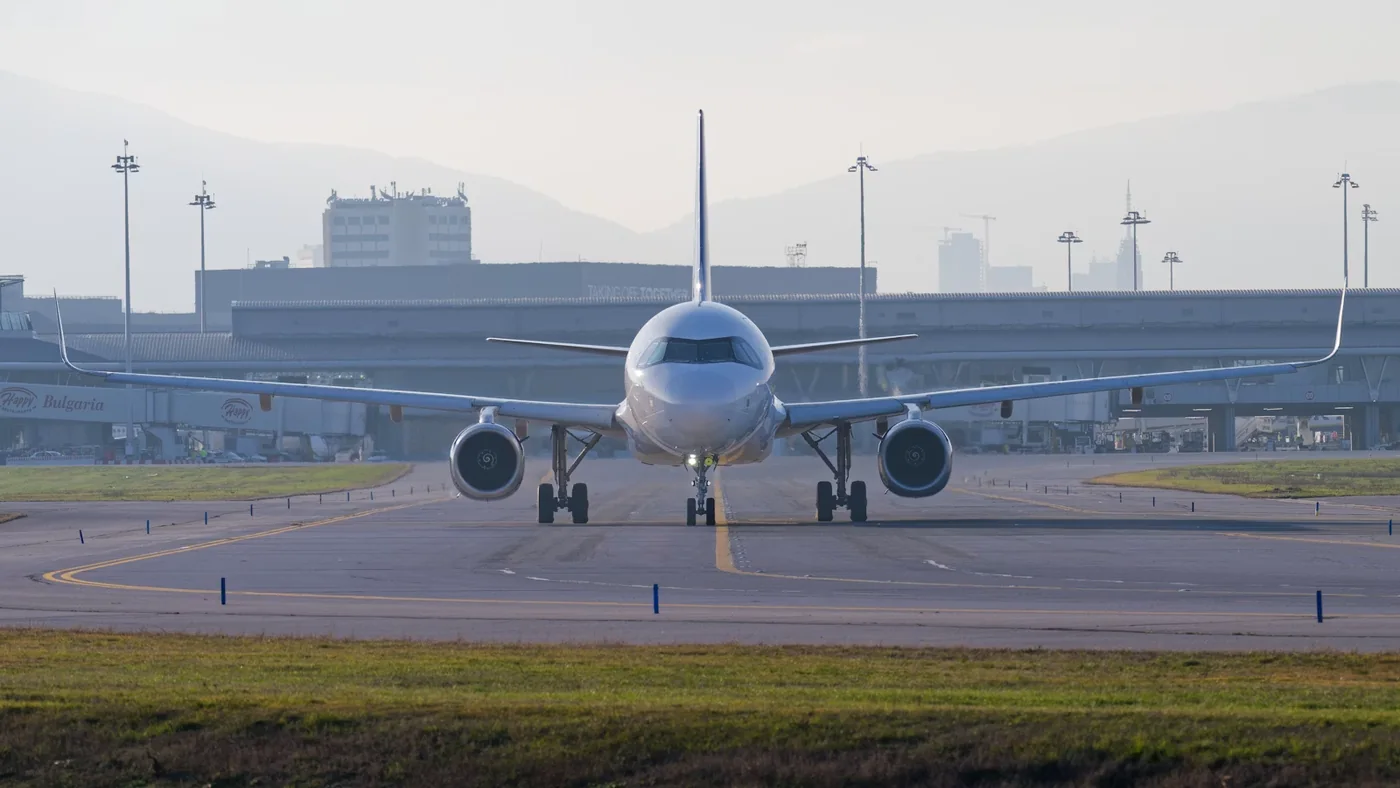
Pristina International Airport is the practical air gateway. A direct Wizz Air Brussels Charleroi–Pristina route is scheduled to start on 17 November 2026. The city's airport bus is the cheap transfer; regional buses make Skopje, Prizren and Tirana realistic onward links. There is no reason to rent a car for central Pristina.
Pristina can disappoint you surprisingly quickly.
Walk out looking for the old town, the cathedral square, the riverfront and the one obvious landmark around which the entire city break can be organised.
You will find fragments of that.
You will not find the neat version.
Good.
Pristina works better once you stop waiting for a preserved centre to tell you what matters.
The city is young in the political sense, young in population, visibly post-war and still full of buildings that seem to belong to different ideas of what a capital should look like. Concrete apartment blocks sit beside polished cafés. Government buildings face pedestrian streets full of students. A giant typographic independence monument sits within walking distance of one of Europe's strangest libraries.
It is not elegant in one consistent direction.
That is the point.
Prishtina's improving air connections
For Belgian travellers, Pristina becomes significantly easier from 17 November 2026, when Wizz Air is scheduled to start a direct Brussels Charleroi–Pristina service three times per week.
The airline announced launch fares from €24.99 one way, although that is a promotional starting fare rather than a promise about every date. Check the current Wizz Air route information before building a weekend around it.
From Pristina airport, the municipal transport operator currently lists the airport service at €5 digitally or €6 for a physical ticket. A normal city ride is €0.60 digitally or €0.80 physically, while the digital day ticket is €1. Kosovo uses the euro, so there is no conversion theatre required.
Check Trafiku Urban for the current airport timetable.
Prishtina's layered neighbourhoods
There is an older Ottoman layer around the bazaar side.
Go there.
Just do not expect it to organise the entire city for you.
Pristina's centre works as overlapping zones: Mother Teresa Boulevard, government buildings, the university district, NEWBORN, café streets, commercial roads and residential blocks that bleed into one another.
That can feel structurally disappointing if you arrive immediately after Sarajevo.
It can also be refreshing.
There is no gate where the city announces that you have now entered the officially photogenic section.
The National Library and university surroundings
The National Library of Kosovo keeps appearing in lists of the world's ugliest buildings.
That is lazy.
Walk around it instead.
The building combines concrete blocks, white domes and a metal lattice in a way that manages to look religious, industrial and speculative at the same time. It changes depending on where you stand, which is exactly why a frontal photograph does not explain it properly.

Spend time on the university grounds around it rather than treating the library as a single photograph.
The surrounding space matters because this is not a remote architectural curiosity. It is part of the daily geography of a capital with a large student population.
Then walk north towards the centre.
The change from monumental architecture to ordinary cafés and traffic happens quickly.
NEWBORN and changing civic expression
The NEWBORN monument was unveiled on 17 February 2008, the day Kosovo declared independence.
It is not ancient.
It does not need to be.
Its appearance has been changed repeatedly over the years, so the object now functions as a recurring public statement rather than one frozen monument.

Look at what is actually on it when you visit.
That is more useful than treating the letters as a permanent selfie frame.
The same applies to much of central Pristina: the city makes more sense when you read contemporary identity as something being argued over in public rather than delivered as settled history.
Mother Teresa Boulevard as an urban meeting place
Travel writing has developed a strange fear of obvious central streets.
Mother Teresa Boulevard is obvious.
Walk it.
The pedestrian axis gives you the city's easiest concentration of cafés, public life, retail, institutions and people moving between them. It is not a hidden neighbourhood. It is useful precisely because so much of Pristina's public rhythm crosses it.
Sit down.
Coffee here is not a break from sightseeing.
It is part of the city.
Pristina has a visibly strong café culture, with tables functioning as meeting spaces, informal offices and evening social infrastructure. Trying to race through three cafés in order to identify the single most authentic one misses the point.
Choose somewhere busy for reasons unrelated to your arrival.
Stay longer than the coffee requires.

Bazaar lanes and older city heritage
North and east of the pedestrian centre, Pristina's older commercial and religious layers become more visible.
Mosques, market streets and smaller-scale buildings give the area a different texture from the university and NEWBORN zone.

This is where the temptation to write "the real Pristina" becomes strongest.
Do not.
A bazaar is not automatically more real than a university.
An old mosque is not more authentic than a socialist apartment block.
Pristina is useful because those layers are close enough to walk between without pretending they form one coherent historical story.

After midnight, the city changes address
Pristina's nightlife deserves more than the sentence "there are good bars."
The centre is excellent for the first half of the evening: coffee, dinner, busy terraces, drinks and a social crowd around the pedestrian core.
But a visitor can make the mistake of assuming the whole city is winding down when that central phase softens.
Several of the serious late-night venues sit well outside the obvious centre. Zone Club uses an industrial-zone setting for part of the year; Gate Club sits out along the Pristina–Fushë Kosovë highway; other current club nights also operate beyond the neat walking circuit.
So if you want a proper club night, do not expect to drift there accidentally from Mother Teresa Boulevard.
Check the event, take a taxi and treat the club as the destination.
That split — social centre first, dispersed late-night city afterwards — is important enough that we built a separate Pristina After Dark guide.
And that separate guide is where the less polished details matter: a current central bar menu still has local beer at €2 and cocktails from €4–€7, while current local listings for major clubs explicitly warn about indoor smoking even though Kosovo's law says bars and nightclubs should be smoke-free.
That mismatch — young, modern, cheap, energetic and not always operating exactly as the rulebook suggests — is more useful than calling Pristina "vibrant."
Solo travellers and night journeys
Pristina is not a city I would tell a solo woman to avoid.
The pedestrian centre is busy, social and easy to use alone. Sitting by yourself for coffee or dinner does not make you look stranded.
The practical difference appears later at night.
Current UK travel advice for Kosovo specifically recommends pre-booked taxis and avoiding isolated areas after dark or when walking alone. That matters more in Pristina than a generic warning would suggest because some of the late clubs sit outside the walkable centre.
So the sensible solo-female version of a Pristina night is not "be back in the hotel before dark."
It is: enjoy the centre normally, but when the night moves to Zone, Gate or another outlying venue, make the ride home part of the plan rather than an afterthought.
Current official context: Kosovo safety advice.
The July 2026 bus fares are worth knowing
Prishtina's urban transport provider made a significant tariff change on 1 July 2026. According to the official Trafiku Urban notice, a single city journey is €0.80 on a physical ticket or €0.60 digitally. A day ticket costs €1.20 physical or €1 digitally. Most importantly for arriving visitors, the specific airport bus is €6 physical or €5 digitally under the same tariff; the ordinary single ticket should not be presented as the airport fare.
The operator's app and physical-ticket system have different purchasing procedures. Check the current timetable as well as the fare: knowing that a route exists does not guarantee it matches a late arrival. A legitimate taxi or prearranged transfer may still be more practical when the final airport service has departed.
Spend an afternoon on the streets around the famous buildings
Start around Mother Teresa Boulevard to get your bearings, then walk towards the National Library and the university. The library's distinctive architecture is worth seeing, but the wider campus, cafés and surrounding buildings make it part of a working capital rather than a standalone architectural oddity. Some institutional interiors may not be open for sightseeing; use public areas without assuming unrestricted entry.
The NEWBORN monument is a changing work of civic expression whose imagery evolves, so its value isn't tied to an old photograph in a guide. Continue towards the older market and mosque streets when they're active. They show another historic layer, but Prishtina's identity cannot be reduced to an invented old-town-versus-new-town contest.
For lunch or dinner, try traditional Kosovar dishes and the city's fast-evolving contemporary kitchens. Flija, pies, grilled meats and regional dairy products are useful starting points, but ask what is genuinely prepared at a particular place rather than seeking a single 'national dish' menu.
After dark as a city with separate scenes
Prishtina has a strong café culture and a lively music and bar scene, but events shift between venues and neighbourhoods. The most rewarding night is often one selected around an actual concert, DJ or performance calendar, followed by food or a late café. A quiet Monday does not prove the city is dull, and a festival weekend may distort the normal accommodation market.
Two nights allow a full day for city life without forcing a quick onward trip to Prizren. The latter is excellent in its own right, particularly for its historic river setting; it isn't a replacement for Prishtina's urban present.
Two nights works better than one
One night gives you the landmarks.
Two nights gives you the city.
Use the first afternoon for the library, NEWBORN and the centre. Let the evening turn into cafés, dinner and bars rather than engineering a nightlife checklist.
Use the second day for the bazaar side, slower neighbourhood walking and whatever current cultural event, gallery or exhibition happens to be running.
Pristina changes quickly enough that a guide pretending to freeze the city into a permanent top ten would become stale almost immediately.
Where to stay for the city's main districts
For a short visit, stay within walking distance of Mother Teresa Boulevard, NEWBORN or the university side.
Dardania can also work when the room is better value and you do not mind a less polished immediate setting.
Pristina is compact enough that paying a large premium to be 150 metres closer to the pedestrian strip often makes little sense.
Check the actual walking route rather than trusting "city centre" as a booking filter.
Prishtina and Prizren offer different city experiences
Prizren has the obvious historic fabric many visitors expect Kosovo to deliver.
It is a strong addition.
It is not a reason to skip Pristina.
The two places explain different parts of the country.
If you have three or four nights in Kosovo, dividing them between both cities makes far more sense than trying to decide which one is the "real" Kosovo.
That question is usually a warning sign anyway.
Continue south when the route allows it
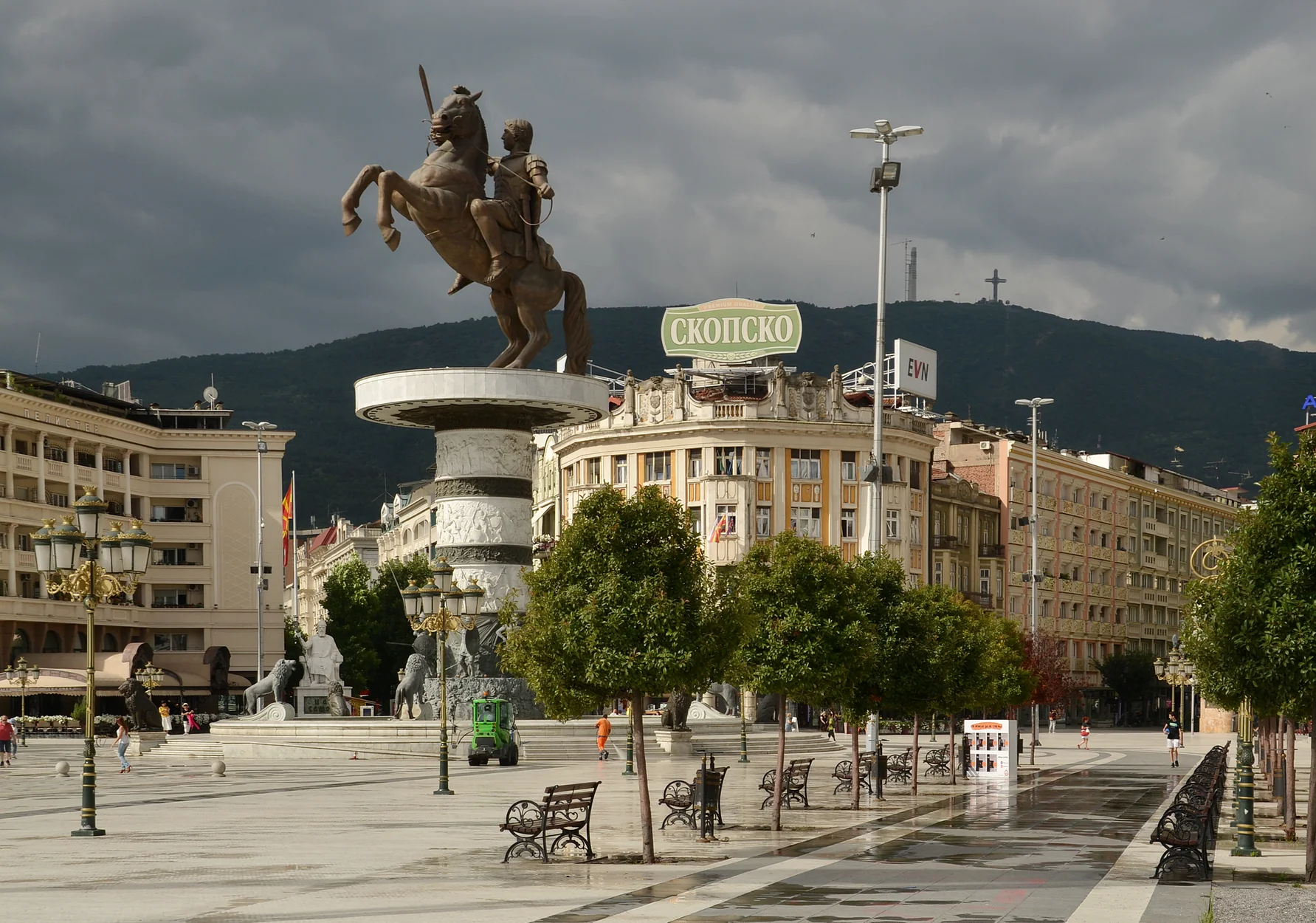
The obvious next capital south is Skopje, but the trip deserves more than a bus departure scribbled in the margin. Our Pristina–Skopje guide to buses, border documents and two capitals explains Hani i Elezit–Blace, the difference from the Kosovo–Serbia entry trap and why each city deserves an evening.
Heading north to Belgrade is a different border decision: our Kosovo-to-Serbia passport and entry-stamp guide explains why entering Kosovo through Pristina Airport is not equivalent to travelling Serbia → Kosovo → Serbia.
Pristina combines naturally with Skopje.
The two capitals sit close enough to fit one trip and are almost comically different in the way they use monuments, public space and national symbolism.
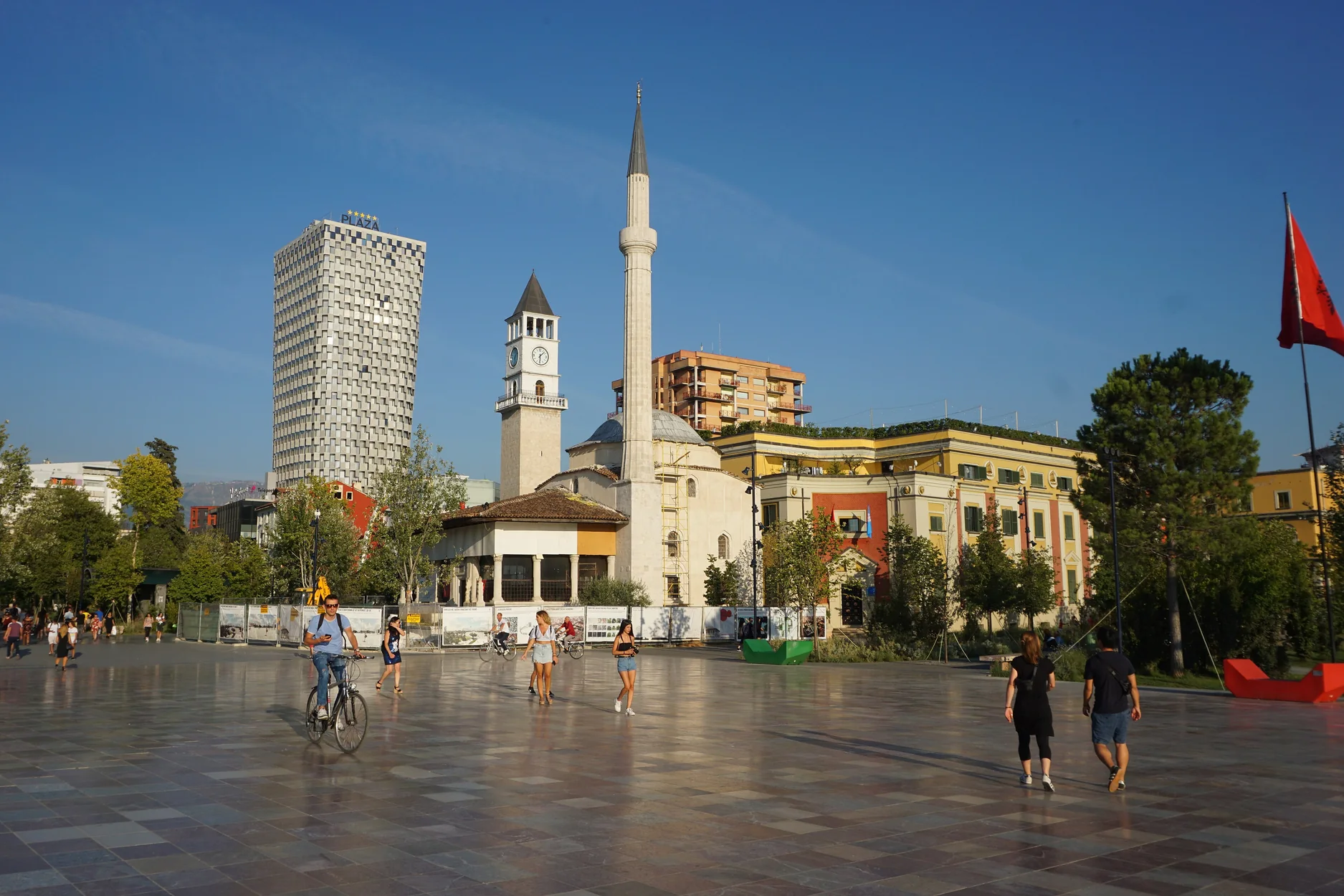
It also connects logically into a wider route towards Tirana.
But do not make Pristina the place where you arrive at 14:00, photograph NEWBORN at 15:00 and leave the next morning.
A visitor who spends only a short time looking for conventional landmarks can leave with the impression that Pristina offers little to explore. Much of its character lies instead in café culture, changing streets, social spaces and contemporary life. Allow time for those parts of the city as well as its better-known sites.
A trip that uses the city well
Prishtina is rewarding over two nights when you allow the city's café culture, public art, architecture and everyday social spaces to become the trip, rather than search for the medieval centre it doesn't have. NEWBORN, the National Library and the pedestrian streets each tell something about modern Kosovo, but the hours spent between those landmarks are often more revealing than the photographs.
Prizren is a natural companion for travellers who also want Ottoman-era streets and a different historic setting. On a longer itinerary, Skopje provides another capital with a dramatically different approach to symbolism and public space. Neither connection should reduce Prishtina to a transit night.
If you are travelling from Belgium, the recently introduced Charleroi connection mentioned in the original guide is worth checking for your dates; it can change the practicality and cost of a short visit, but routes and frequencies are not permanent.
Build a real afternoon and evening here. A café can be busy without being a nightclub, and an outlying music event requires checking its own programme and return route. Those are ordinary travel choices in a living capital, not evidence that the city lacks things worth doing.