

The problem is not that Eastern Europe became expensive. It is that “cheap” stopped explaining what kind of trip you are buying.
“Eastern Europe is cheap” may be one of the most durable pieces of European travel advice.
It is also becoming one of the least useful.
The sentence survives because parts of it are still true.
A tram, a bakery, a regional train, a neighbourhood lunch or a room outside the obvious tourism core can still cost dramatically less than the equivalent in Amsterdam, London or Copenhagen.
Then you buy a famous thermal-bath ticket in Budapest, order drinks in a beach club, stay in central Dubrovnik, spend a weekend in Riga or sit down in a newly euro-priced Bulgarian restaurant and the old map suddenly stops working.
Eastern Europe did not become one expensive region.
It became a region where the gap between local everyday prices and the traveller’s basket can be enormous.
That matters more than whether a cost-of-living table still gives the country a low national average.
And again, Eastern Europe is used here as the broad search-language shorthand. The examples span Central, Eastern and Southeastern Europe, the Baltics and the Balkans. They are economically and culturally different. Treating them as one cheap bloc is exactly the problem.
The old bargain was real — but it was never evenly distributed
There was a period when the price difference did a lot of the selling.
Flights got cheap. Low-cost carriers connected secondary airports. Hostels multiplied. Wages in much of the region remained far below Western Europe. A traveller with euros or pounds could move, eat and drink at a level that felt almost impossible farther west.
That produced an entire travel genre.
Budapest for cheap nightlife. Kraków for cheap beer. Prague for cheap weekends. Bulgaria for cheap ski trips and beach holidays. Croatia before everybody else discovers it.
The problem is that destinations do not freeze at the moment outsiders first decide they are good value.
Tourism grows. Wages change. Energy costs change. Property changes. Local demand changes. Tax changes. Currencies change. A district that was cheap because nobody wanted it becomes expensive precisely because everybody now wants it.
Then the old adjective survives long after the underlying trip has changed.
Budapest explains the new split better than almost anywhere
The Budapest city guide contains the contradiction in one city.
Public transport remains excellent value.
In September 2026, a normal BKK single ticket is 500 HUF (about €1.39) and a 72-hour travelcard is 5,750 HUF (about €15.94).
That is genuinely cheap compared with many Western-European capitals.
Then walk into the famous bath economy.
A weekday Széchenyi ticket is 13,200 HUF (about €36.60). Peak entry reaches 15,800 HUF (about €43.81). Rudas can cost 15,000 HUF (about €41.59) on a weekend.
Nothing contradictory is happening.
You are simply buying two different Budapests.
The first is a heavily subsidised urban transport system used by residents every day.
The second is a globally marketable experience with tourist demand strong enough to support major-city pricing.
That distinction is the entire article in miniature.

Bulgaria’s euro switch made the price question impossible to ignore
Bulgaria adopted the euro on 1 January 2026, at the fixed conversion rate of €1 = 1.95583 lev. The ECB’s changeover announcement is here.
Almost immediately, the argument split into two versions.
One version said the euro made everything dramatically more expensive.
The other said the data showed almost no euro effect at all.
Neither is a very good travel explanation.
The ECB and Bulgarian National Bank’s early analysis estimated that the changeover itself added only around 0.3–0.4 percentage points to inflation in January 2026, concentrated mainly in services. Annual harmonised inflation actually fell from 3.5% in December 2025 to 2.3% in January and 2.1% in February. Their April 2026 analysis is worth reading because it separates the currency effect from the wider inflation environment.
So no: the euro did not mechanically add 10 or 20 percent to every Bulgarian price overnight.
But now look at what a traveller actually buys.
Bulgaria’s National Statistical Institute recorded restaurants and accommodation services up 1.6% in January alone. In July they rose another 2.3% month on month. The August flash estimate added another 0.8% by CPI and 1.1% by HICP. By the end of August, the CPI index for restaurants and accommodation stood at 112.76 with 2025 = 100 — roughly 12.8% above the 2025 average level. Current NSI August data.
That is not proof that “the euro caused 12.8% inflation”.
It is proof that the category a visitor notices most can get much more expensive even when the measured currency-changeover effect on the whole economy is small.
The Sofia After Dark guide already has to work in euro prices now. That is not just a formatting change. The older expectation that Bulgaria automatically means bargain-nightlife pricing deserves rechecking every time.

Croatia already showed us this argument in 2023
Croatia adopted the euro on 1 January 2023, replacing the kuna at €1 = 7.53450 HRK. ECB changeover background.
The public reaction will sound familiar to anybody following Bulgaria in 2026.
Restaurants suddenly felt more expensive. Coffee prices became a national talking point. Tourists and locals complained about rounding and opportunistic repricing. Officials responded that the euro itself explained only a small part of wider inflation.
The ECB’s early estimate put the possible changeover contribution to annual headline inflation at up to about 0.4 percentage point, with the unusual January rises concentrated especially in services such as bars, restaurants, hairdressers and some health services. ECB analysis, March 2023.
Again, that does not mean people imagined the restaurant bills.
By December 2023, Croatia’s official CPI showed restaurants and hotels 12.4% more expensive than in December 2022, while their 2023 annual-average price level was 14.8% above 2022. Overall annual-average CPI inflation was 8.0%. Croatian Bureau of Statistics, December 2023.
The euro was not the sole cause. Croatia entered the euro during an already high-inflation period, tourism demand remained strong and service prices had their own dynamics.
But from a traveller’s seat in a restaurant, the distinction between “euro effect” and “everything else that happened at the same time” does not make the bill smaller.
That is why Bulgaria in 2026 feels familiar.

The traveller’s basket is not the inflation basket
This is the most useful distinction in the whole debate.
National inflation measures everything households buy in weighted proportions.
Travellers do not.
A visitor over-consumes exactly the categories that can rise fastest:
- hotel rooms;
- restaurants;
- bars and clubs;
- taxis and transfers;
- attractions;
- short-term rentals;
- event tickets;
- central-city convenience;
- and seasonal tourism infrastructure.
You are unlikely to benefit from a stable national price for home appliances while spending three nights in a resort town.
So a country can post moderate overall inflation while the tourism basket gets hit much harder.
That is not statistical dishonesty.
It is a different basket.
The Baltics already stopped pretending to be bargain Europe
Riga, Tallinn and Vilnius are a useful counterexample because the euro is not new there.
The Baltics have had years to move beyond the currency-changeover argument.
They are still regularly grouped into “cheap Eastern Europe” content because old travel categories are sticky.
But our Baltic capitals comparison already treats them as different city-break propositions rather than interchangeable budget alternatives.
Riga can produce restaurant and nightlife bills that feel thoroughly Northern-European in the central zones. Tallinn’s prices are not rescued by the fact that somebody once called Estonia Eastern Europe. Vilnius can still deliver good value, but the point is no longer “everything costs half of Western Europe”.
A destination does not fail because its prices converged.
It simply needs another reason to go.
Poland is still good value — just stop using 2012 as the reference year
Poland has not adopted the euro, which is useful because it removes the currency-switch scapegoat entirely.
And yet Kraków, Warsaw, Gdańsk and Wrocław have all become materially more expensive over the period in which their international tourism grew.
That should not surprise anybody.
The Poland in One Week route is still operationally good value when you use trains, ordinary restaurants and cities beyond the most saturated visitor streets. But central Kraków on a Saturday night is not obliged to honour the memory of somebody who paid 8 złoty for a beer fifteen years ago.
Poland proves the wider point:
you do not need the euro for a destination to stop being cheap.
Albania shows why “country price” is increasingly meaningless
The Albanian Riviera can now punish anyone arriving with a decade-old “Albania is dirt cheap” assumption.
Beachfront rooms, summer restaurants, parking and the most photographed coastal stops respond to tourism demand like tourism markets anywhere else.
Drive inland and the pricing picture changes quickly.
That is why the SH8 road trip should never be read as one national price zone. Vlorë, Dhërmi, Himarë and Sarandë do not cost the same as an inland town simply because the border stamp says Albania.
The tourism corridor is the economic unit that matters to the traveller.
Not the national average.

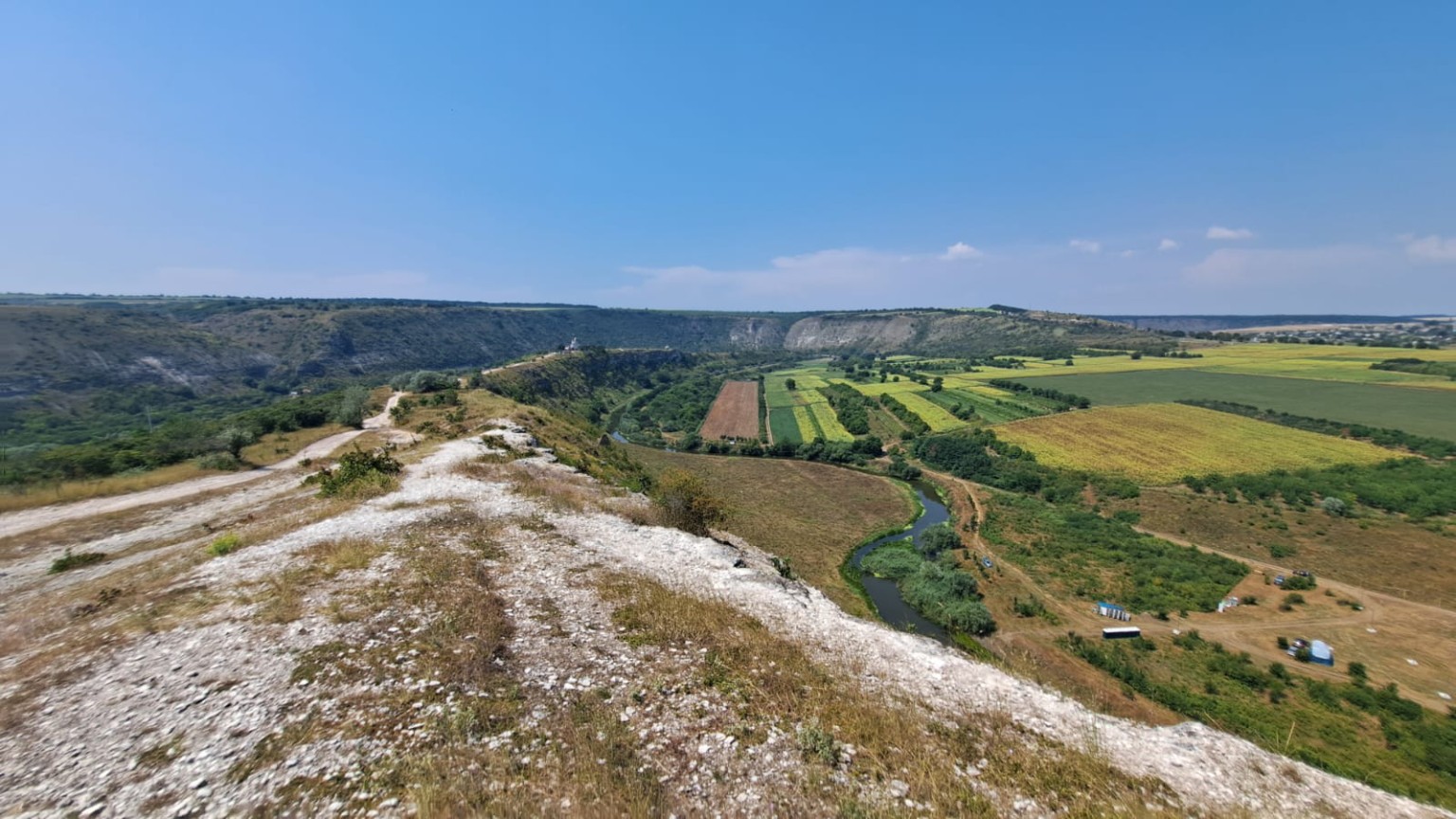
Moldova can still be cheaper — and still cost you in friction
Moldova remains one of the stronger cases where everyday prices can feel meaningfully lower than in the EU cities around it.
But “cheap” still does not explain the trip.
Transport can be less legible. Card acceptance can be less universal. English can disappear quickly outside the obvious places. A low room rate does not remove a border decision, a bad road, a cash problem or the fact that the place you want may not exist in the booking ecosystem you normally use.
Price and friction are not opposites.
A destination can be cheaper and operationally harder.
That trade-off is often far more important than a daily-budget number.
Bulgaria after the euro may become the next Croatia story — but we should measure it properly
The temptation is obvious.
Croatia adopts euro → restaurants feel expensive → a few years later Bulgaria adopts euro → restaurants feel expensive.
Therefore: euro causes tourism inflation.
Too simple.
The data in both countries point to a more precise pattern:
- the direct currency-changeover effect on total inflation was relatively small;
- services showed stronger and more visible increases;
- restaurants and accommodation are exactly the services travellers buy disproportionately;
- broader inflation, wages, energy, tourism demand and business pricing all continue at the same time;
- people remember frequently purchased visible prices more strongly than national averages.
So yes, the Bulgaria/Croatia comparison belongs in a travel article.
But not as proof that Brussels changed a currency and doubled your dinner.
The better conclusion is that currency changeovers create a moment when service businesses reprice, consumers pay much more attention, and existing inflation becomes much more visible.
That can be a small macroeconomic effect and a very noticeable city-break effect at the same time.
What still feels genuinely cheap in 2026?
Usually the parts built for residents rather than visitors.
Public transport.
Local bakeries.
Some regional rail.
Neighbourhood bars.
Markets outside the headline attraction.
Secondary cities.
Longer stays where you stop buying convenience every two hours.
The exact examples differ by country, but the pattern is remarkably stable.
The moment an experience becomes one of the reasons millions of outsiders choose the destination, it stops having any obligation to remain locally priced.
So why go east at all if the bargain is disappearing?
Because price was never the most interesting thing.
Budapest still gives you monumental architecture, excellent transit, industrial edges and a nightlife ecology that becomes more interesting after you leave the ruin-bar cliché.
Sofia still shifts from ministry squares to student districts, Balkan mainstream culture and mountain-edge geography within one city.
Romania still contains enormous differences between Bucharest, Moldavia, Transylvania and the Black Sea.
The Baltics still change language, architecture and urban rhythm over distances that make a multi-city trip easy.
Moldova still feels structurally different from the EU immediately west of it.
The Balkans still reward roads that do not exist because somebody optimised them for a weekend itinerary.
And many of these places still have parts of everyday urban life that have not been completely reorganised around international visitors.
That is worth more than a cheap beer.
Eastern Europe does not need to stay poor to stay interesting
The old bargain contained an uncomfortable assumption.
People liked these destinations partly because their own Western-European spending power went unusually far there.
When local wages rise, infrastructure improves and tourism economies mature, visitors sometimes describe the result as if the destination has broken a contract.
It has not.
A place does not owe you 2012 prices forever.
The useful task in 2026 is not to keep searching for the next country where dinner is still implausibly cheap.
It is to understand what still gives you value once cheap is no longer the whole proposition.
Sometimes that is transit.
Sometimes it is nightlife.
Sometimes it is a road, a district, a market, a strange piece of infrastructure or simply the fact that the city has not yet turned every rough edge into a product.
Go for that.
If the price still surprises you in the right direction, treat it as a bonus.