
A local beer bottle said it better than most destination campaigns: STYLE UNKNOWN.
Where it is — and how to get there
Moldova is a landlocked country between Romania and Ukraine, with Chișinău near the centre and the Nistru/Dniester shaping much of the east. It is small enough for a road trip to connect the capital, Orhei, Soroca and the south, but the road network makes distances feel slower than the map implies.
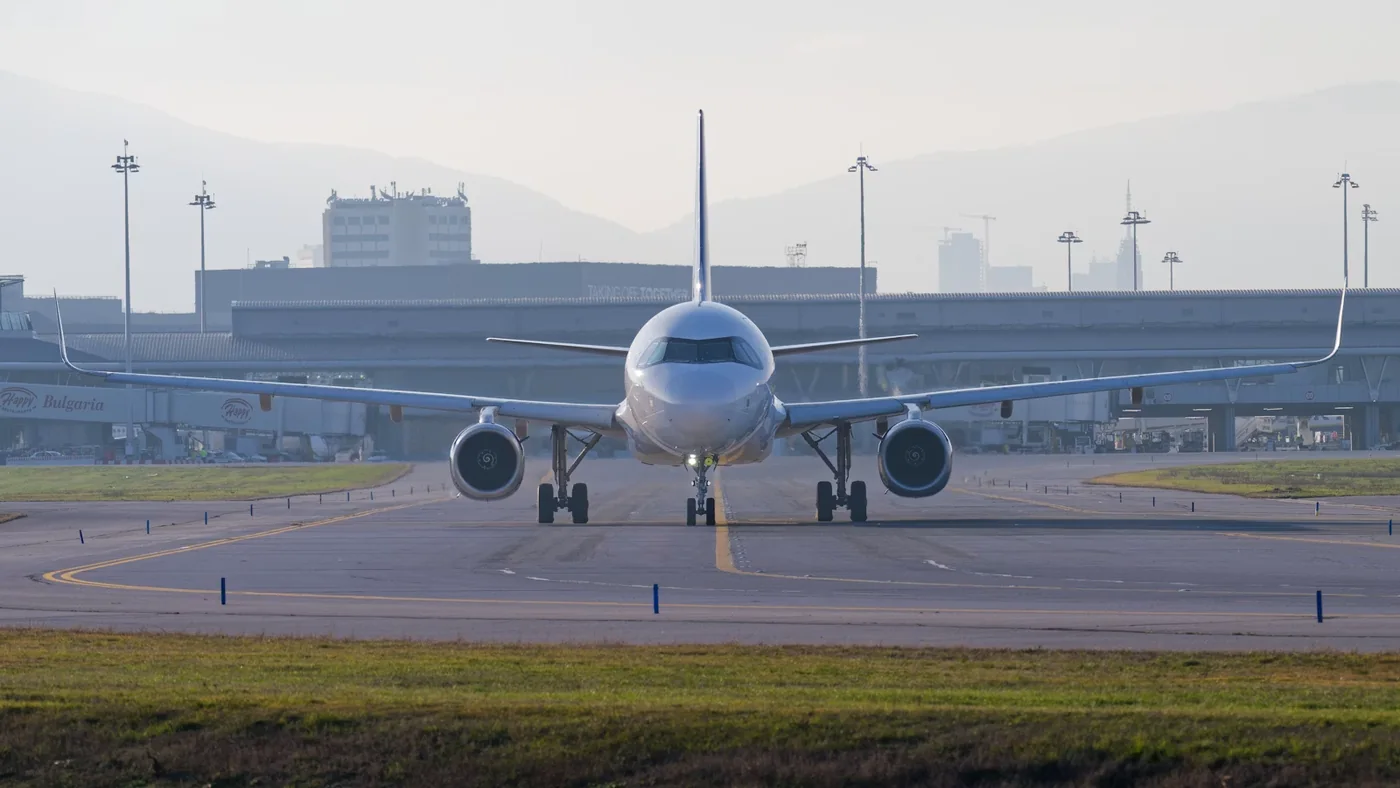
Chișinău International Airport is the main flight gateway. From Romania, buses and road connections are usually the broadest overland option and rail can also be relevant depending on the current service; routes involving Ukraine require a separate security check because the regional situation can change. A rental car is most useful after reaching Chișinău, not for proving the country is difficult to enter.
A beer bottle in Chișinău carried two words beneath the name Mystery:
STYLE UNKNOWN.
That is a surprisingly useful description of Moldova.
Travel media keeps trying to file the country somewhere familiar. It becomes Europe’s least visited country, the next hidden gem, wine country nobody knows about, a Soviet time capsule or the cheap weekend you should do before everybody else discovers it.
Each label finds something real and then flattens the rest.
Moldova is more interesting because it still refuses to settle into one travel category.
Chișinău can look contemporary, scruffy, green and post-Soviet within the same ten-minute walk. Orheiul Vechi turns the supposedly flat country into limestone cliffs and a winding river valley. Soroca is a fortress town that makes more sense once Ukraine is visible across the Nistru. Ordinary provincial places are useful precisely because they are not trying to become attractions. Southern Moldova adds Gagauz culture and another version of the country again.
Wine can organise the whole trip.
Or barely appear in it.
That flexibility is the point.
Do not come for one version of Moldova
The official tourism pitch is built around several real strengths: wine, rural life, food, religious and archaeological heritage, nature and hospitality. Moldova Travel is not inventing those things.
The mistake is treating all of them as compulsory.
Wine lovers can spend days around Cricova, Mileștii Mici and smaller estates. People more interested in landscape can give that time to Orheiul Vechi and the Răut valley. Urban travellers can base themselves in Chișinău. A roadtrip can connect the pieces without pretending one theme explains the country.
Moldova works best when the itinerary contains different kinds of place.
The capital alone undersells it.
A winery tour alone also undersells it.
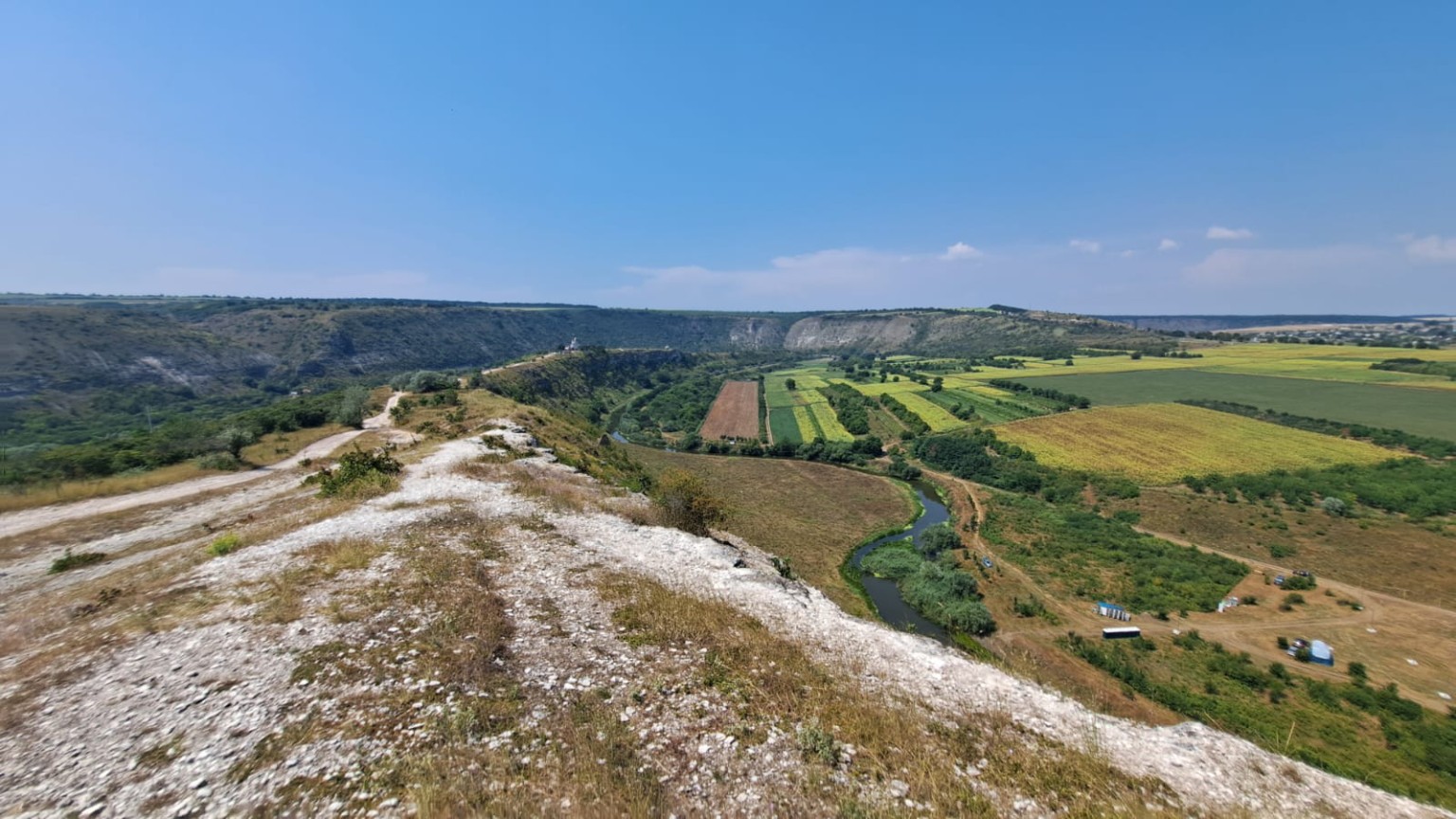
Orheiul Vechi works even if monasteries are not your thing
Orheiul Vechi is usually introduced through its cave monastery.
That is too narrow.
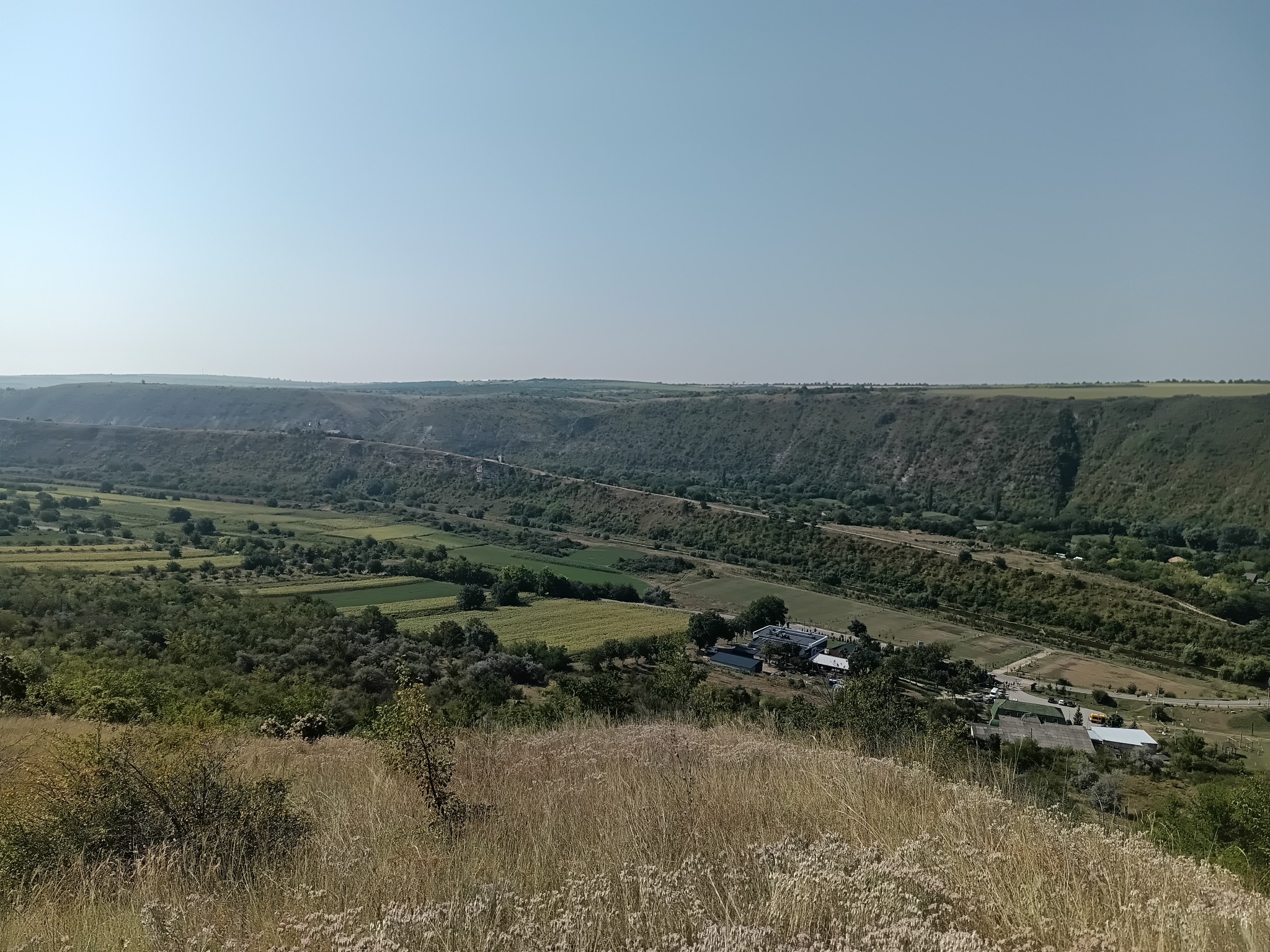
The wider protected area includes limestone ridges, villages, archaeological layers and the Răut curling through the valley below. The official site lists walking and cycling routes through the area.
The landscape is reason enough to go.
From the ridge, Moldova suddenly stops looking flat. Pale rock breaks open around fields. The river bends beneath the cliffs. Dirt paths disappear around the edge. The villages sit inside a geography that feels much larger than the short drive from Chișinău suggests.
You can visit the monastery.
You do not have to make it the emotional centre of the day.
That distinction matters because destination writing has a habit of turning famous religious sites into compulsory proof that you travelled correctly.
If cliffs, strange roads and views are what interest you, Orheiul Vechi still works.
Soroca works because the border is visible
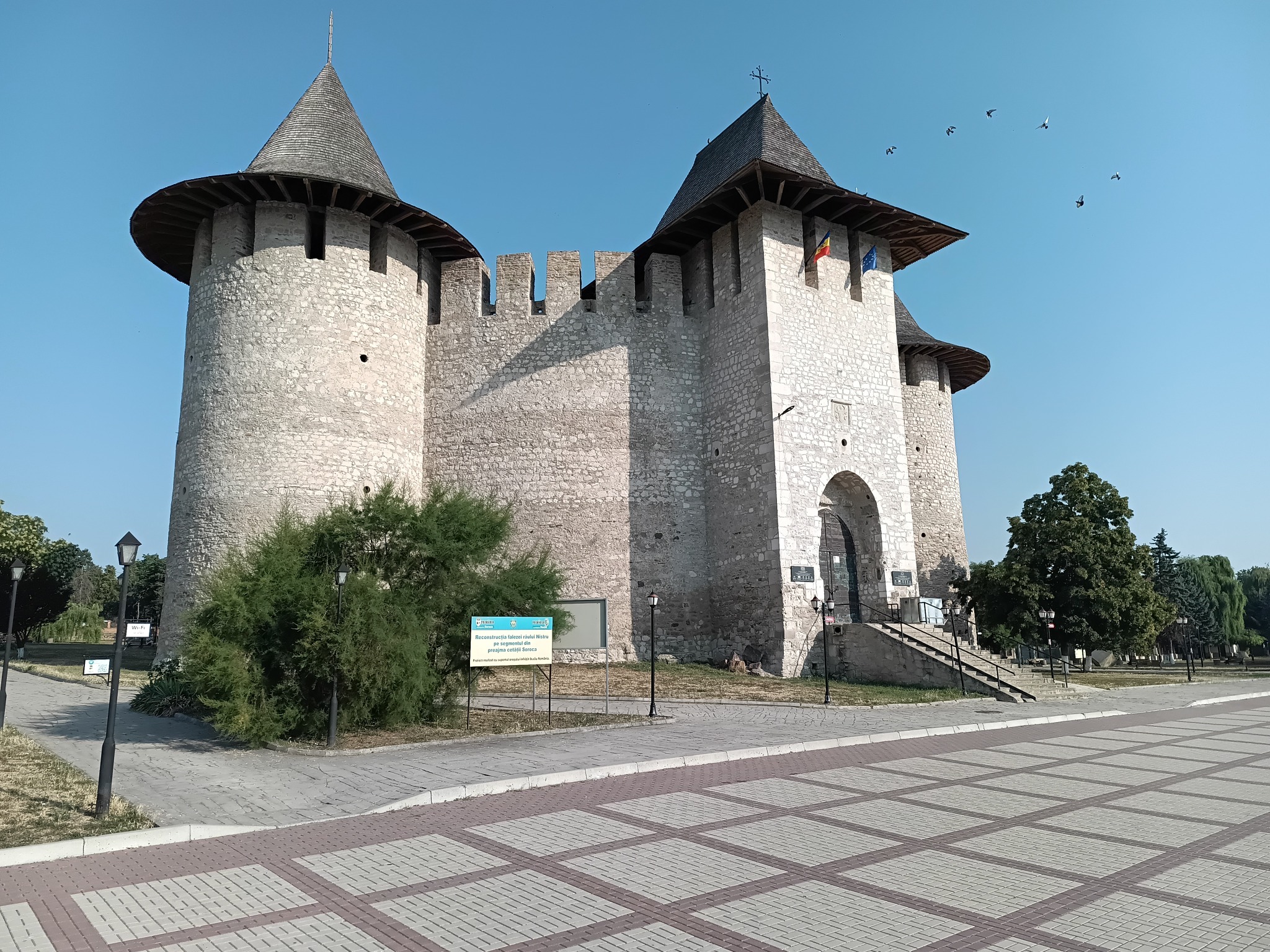
Soroca’s fortress is the obvious landmark.
The river is the better story.
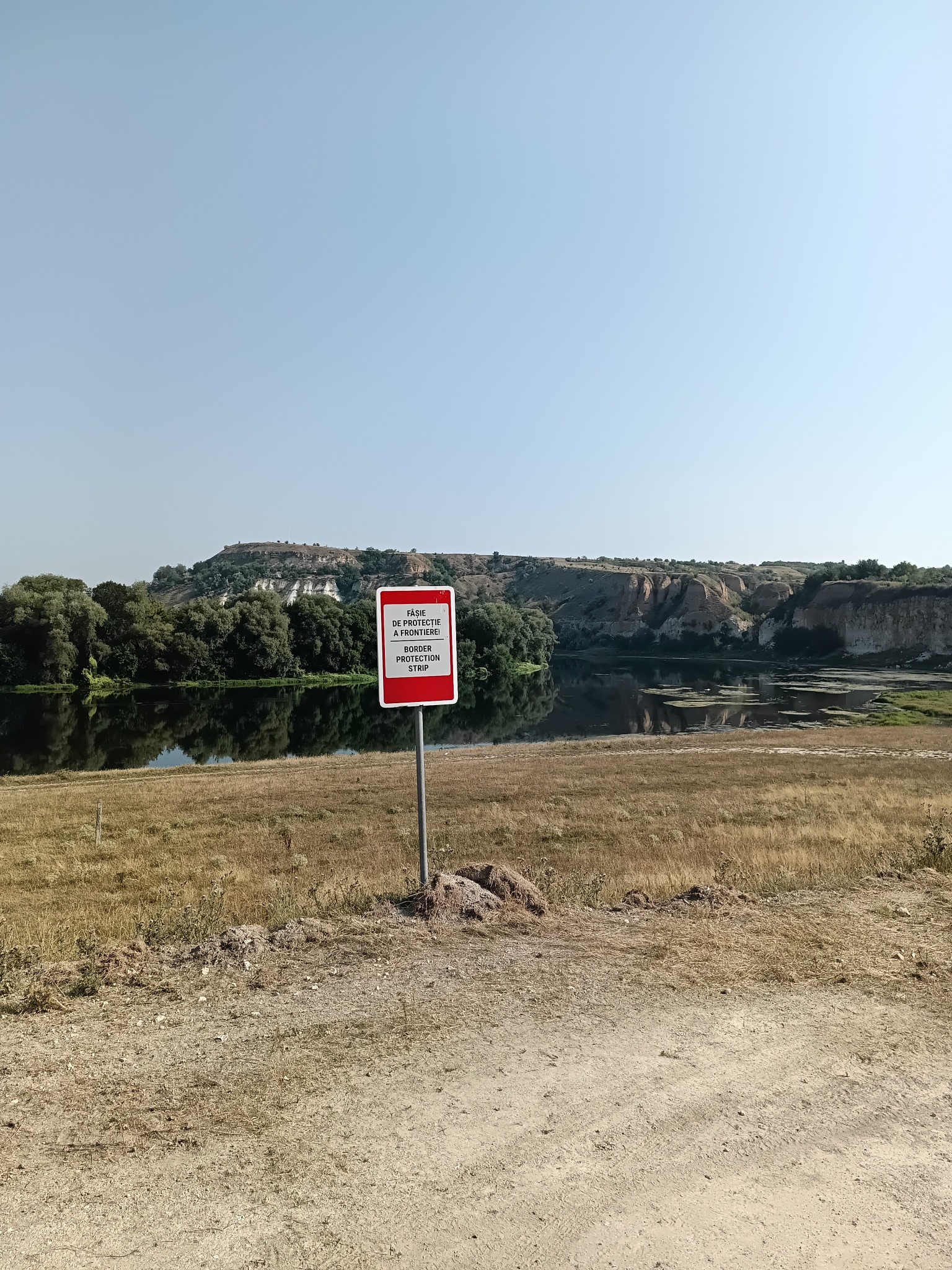
The Nistru runs directly beside the town and Ukraine is visible on the opposite bank. The border stops being an abstract political line and becomes part of the landscape.
That gives Soroca an edge Chișinău does not have.
Above the centre is the Roma neighbourhood, still commonly referred to locally and in older tourism material as “Gypsy Hill”. It is known for large, highly individual houses borrowing ideas from palaces, temples and monumental architecture.
Go because it is part of Soroca.
Do not turn it into a human zoo.
The houses are extraordinary. The people living inside them are not exhibits.
And then there is the less photogenic detail that may tell you more about the town: after sunset, Soroca became dark enough on this trip that a planned walk beside the Nistru stopped feeling particularly attractive.
That is not a universal claim about Moldovan street lighting.
It is exactly the kind of small reality that disappears from polished destination pages and matters once you are actually there.
The roads are not a transfer
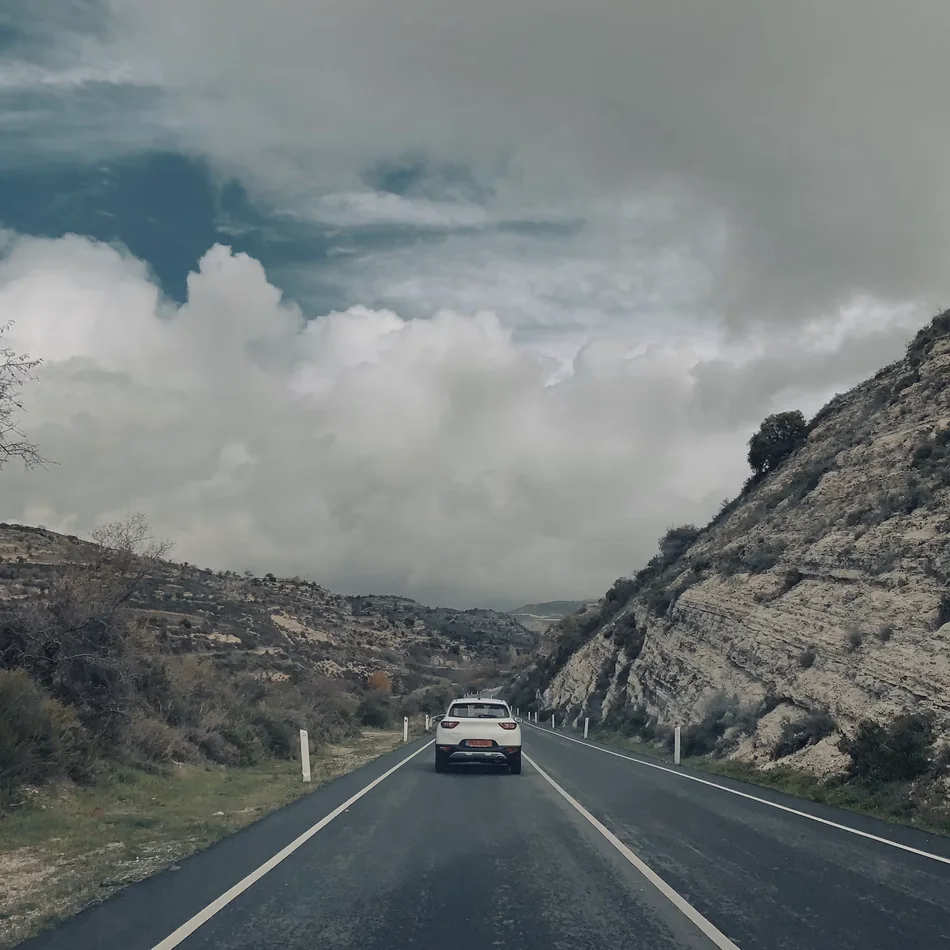
Belgian travel advice notes that Moldova has no motorway network, that national roads pass through villages, that surfaces can be poor and that night driving is best avoided. It also warns about unpredictable driving behaviour and the zero-alcohol rule behind the wheel. Check the current road advice before travelling.
That sounds like a warning box.
It is also why renting a car changes the trip.
The road keeps putting the country back in front of you. Villages interrupt the route. Agricultural land starts at the roadside. Bus stops, old signs, Soviet remains, unfinished buildings and small shops appear where a motorway service area would exist elsewhere.
Even a large luxury SUV does not remove that texture.
The Range Rover Velar used on this trip looked much more suited to Moldovan roads than it felt. Broken surfaces still came through the suspension, and a braking issue became serious enough to report to the rental company.
The useful conclusion is not that Moldova requires a Range Rover.
It is almost the opposite.
Choose the rental for condition, support and insurance before choosing it for prestige.
A mechanically sound ordinary car is more useful than an expensive one you do not trust.
Moldova rewards the stop you did not schedule
Some of the strongest moments do not deserve their own map pins.
A half-abandoned stone building with an elaborate roofline. A huge weather front above a village. A cracked sign. A Soviet block still carrying the remains of another era’s branding. A view across water that made pulling over more sensible than continuing to the next “sight”.
That is not an argument for driving randomly with no plan.
It is an argument for leaving space around the plan.
Moldova is small enough that an unscheduled twenty-minute stop rarely destroys the day. The slower roads mean you should not be designing the itinerary with German motorway maths anyway.
Plan fewer destinations than the map says you can reach.
Use the spare time for the things the map did not suggest.
Orhei the city is useful because it is not Orheiul Vechi
Orhei itself is a small regional city north of Chișinău.
It is not the archaeological landscape.
It is not a major tourism product.
That makes it useful.
Ordinary Moldovan cities show the country without a tourism edit: apartment blocks, local shops, municipal spaces, traffic, small restaurants and evenings that can be much quieter than the capital.
On this trip, finding a casual place for a beer in Orhei became more work than expected.
That does not mean “Orhei has no nightlife”.
It means the city has a different rhythm and far less concentrated hospitality than Chișinău.
Not every stop needs to compete for your attention.
Some should reset it.
The south is the obvious unfinished chapter
A north-and-centre route is convenient on a short first visit.
It is not the whole country.
Southern Moldova includes Gagauzia, an autonomous region with a Turkic cultural and linguistic heritage distinct from the Romanian-speaking majority. Moldova’s tourism material highlights Comrat, Gagauz traditions and regional food as reasons to treat the south as its own destination. See the current southern Moldova overview.
That makes the south a better reason for a second trip than a rushed extra day on the first one.
Moldova stops looking like a simple Romania-meets-Soviet equation once its regional differences start to become visible.
It should also not be confused with Romanian Moldavia. The historical names overlap; the trip logic does not.
Do not add Gagauzia merely to say you covered it.
Give it enough time to be a region rather than a checkbox.
Wine is major. It is not an admission ticket.
Pretending wine is unimportant here would be contrarian nonsense.
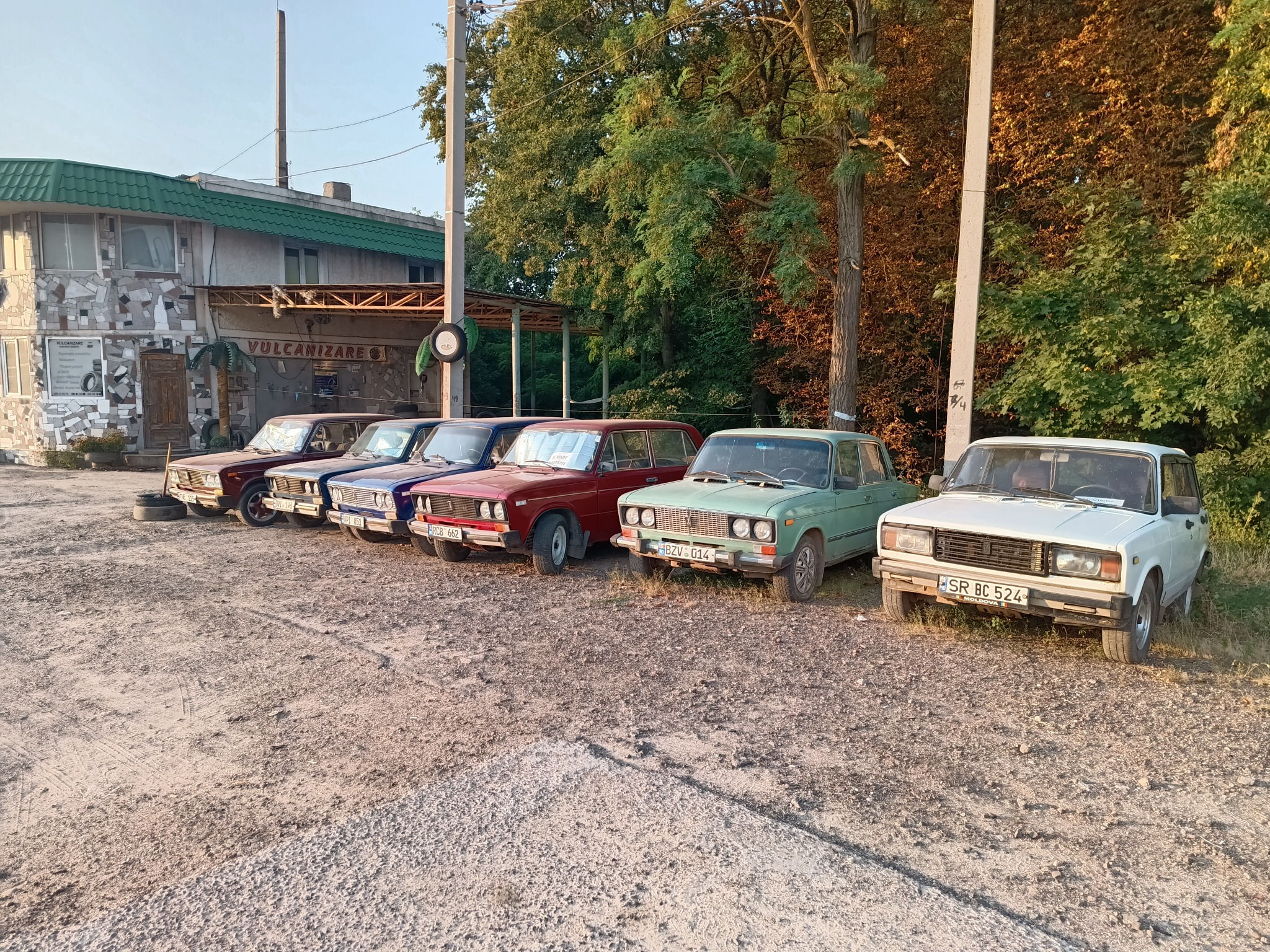
Moldova’s vineyards and underground cellars are substantial. Cricova and Mileștii Mici are not artificial tourism inventions. For many visitors they will be among the main reasons to travel.
The correction is simpler:
Wine is an option, not the admission fee for understanding Moldova.
If you love it, build around it.
If you do not, do not spend half a day underground simply because every generic itinerary told you that this is what Moldova is for.
The country still has roads, architecture, regional culture, landscape, food and Chișinău.
That is enough material for several days.
Food works better as context than as a quest
Moldovan food can become another checklist if you let it.
Plăcintă. Mămăligă. Sarmale. Zeamă. Borscht. Local wine.
Tick, photograph, continue.
Better to notice how the food fits the setting.
A provincial restaurant may offer smoked meat, pickles, salo-style pork fat, fried fish or snacks built around beer and vodka. Chișinău can polish similar regional references into something more contemporary. Gagauzia adds another layer again.
One first-hand meal of borscht, dark bread, pork fat, pickles, garlic, beer and Borjomi was useful not because it was “the best meal in Moldova”.
It was useful because it made a post-Soviet food logic visible without turning it into theatre.
That is more interesting than ranking dumplings.
Chișinău is the country’s pressure point
Chișinău is large enough to absorb several different Moldovas at once.
There are Soviet-planned avenues, new towers, low-rise streets, parks, decaying modernist structures, shopping centres, cocktail bars, local beer, clubs and the visible effects of a country modernising without completely removing its earlier layers.
The city should not be reduced to “surprisingly green” or “underrated”.
Both descriptions are too comfortable.
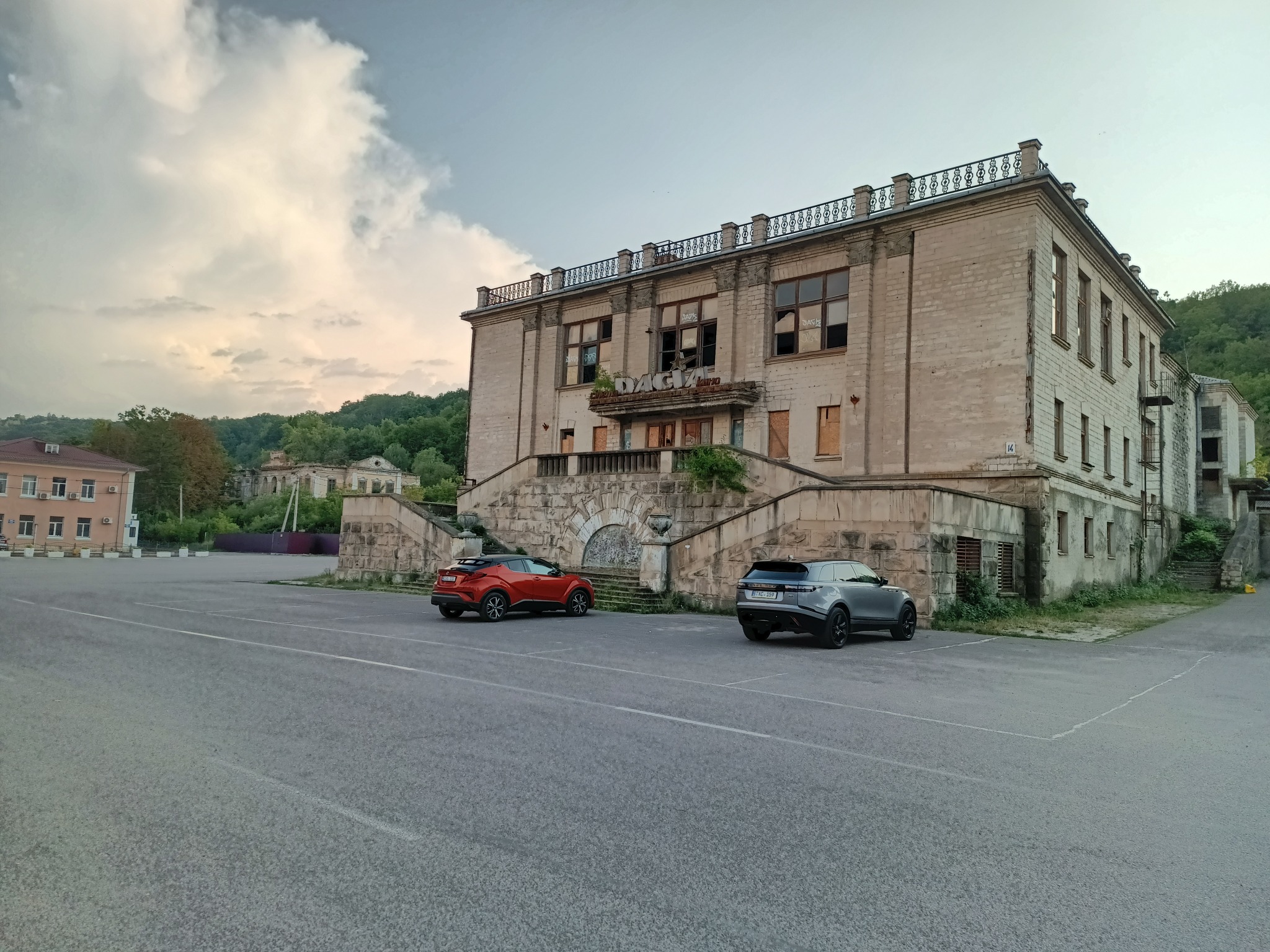
A weathered Moldovatur building beneath newer development says more about the city than another photograph of a manicured park.
So does the nightlife.
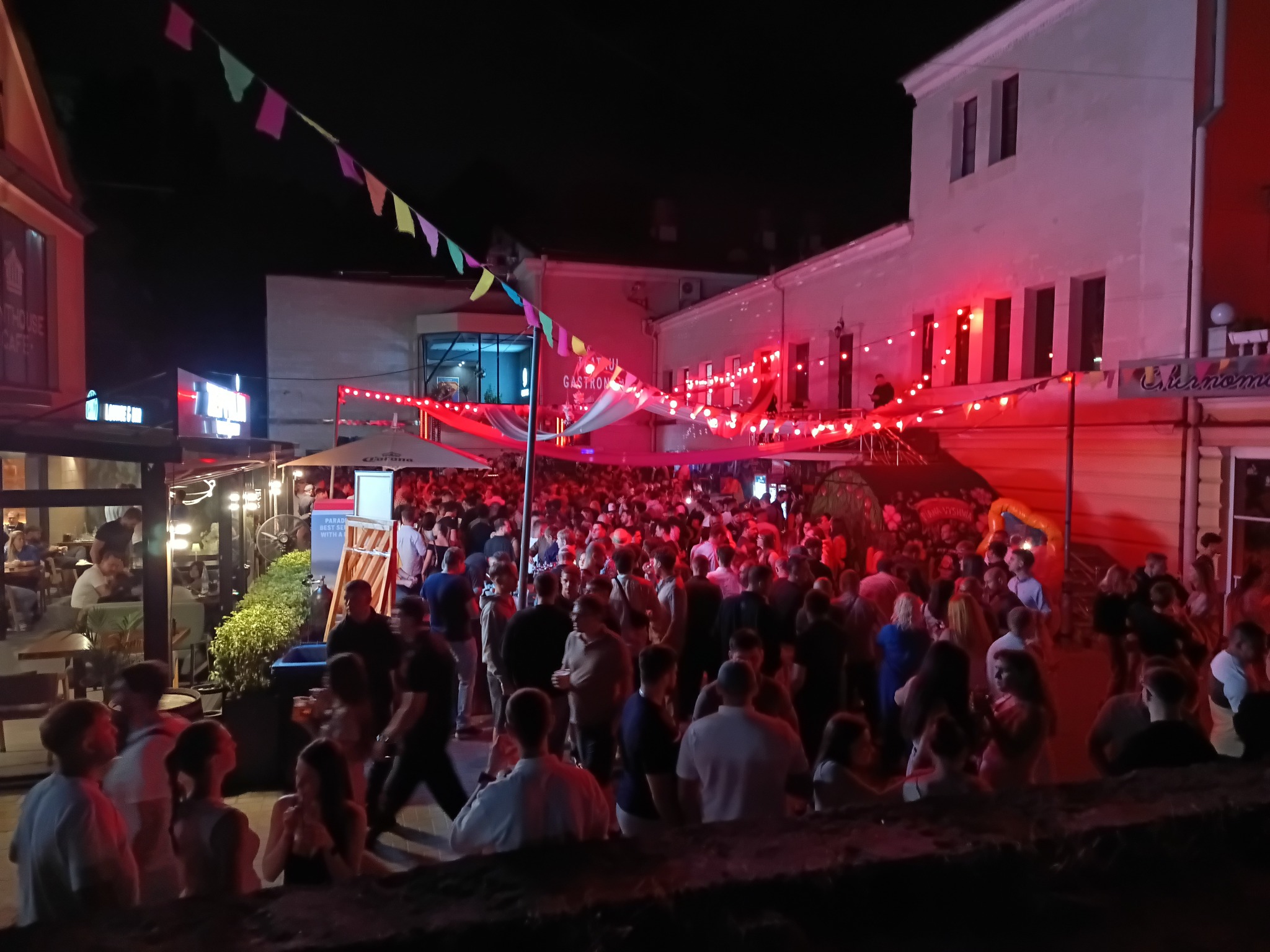
In summer, tiny almost-hidden clubs coexist with temporary outdoor courtyards capable of absorbing hundreds of people. Young locals walk the centre between venues without the city ever resolving into one neat nightlife strip.
The dedicated Chișinău after dark guide covers that properly: the near-invisible doors, the tiny local rooms, NOD, the summer pop-up pattern, rooftops that stay seated and the late food that becomes more useful than another mediocre final drink.
The last ten percent can be Moldova’s recurring irritation
One repeated first-hand impression deserves to survive into a broader guide precisely because it should not become a national stereotype.
Several hospitality experiences were close to very good and then lost something in the final execution: a follow-up request acknowledged but not completed, a restaurant adding unnecessary friction to a table, a polished operation making a technically defensible decision that slightly damaged the experience.
That was a pattern on one short trip.
Not a theory of Moldovan character.
Use it as a practical expectation.
Keep confirmation screenshots. Reconfirm transport. Ask again when something matters. Do not let one awkward service interaction become your explanation of the country.
Most problems are small enough to solve by changing the plan.
Transnistria is a separate decision, not the whole country
Transnistria has occupied a disproportionate amount of international travel writing about Moldova for years.
That does not make it irrelevant.
It makes scale important.
Tiraspol and Bender can add something genuinely different to a Moldova trip: a de facto border regime, a separate currency, Soviet-era infrastructure that is still being used, the Sheriff commercial ecosystem, Bender Fortress and a city whose ordinary life is more interesting than the usual “time capsule” label.
They also add a different risk calculation. Several governments currently advise against all travel to Transnistria, the Moldovan government does not control the territory, consular access can be limited and the checkpoint rules deserve to be checked close to departure.
So do not bolt it onto the itinerary because every old Moldova guide says you need a Lenin photograph.
And do not erase it merely because the security warning is inconvenient to explain.
Use the dedicated Tiraspol & Transnistria in 2026 guide to decide whether that extra layer is worth it for your trip.
The important editorial correction is simple: Transnistria is one version of Moldova's travel geography. It is not the country's entire personality.
Practical Moldova is easier than the mythology
The currency is the Moldovan leu. Cards work in many restaurants and shops, while Chișinău has ATMs and exchange offices. Current Belgian practical information is here.
Cash remains useful outside the capital.
A rental car is the strongest tool for a multi-stop route, but not a requirement for Chișinău plus organised day trips. If you drive, avoid constructing the itinerary around late-night arrivals and aggressive mileage.
A useful first-trip shape is deliberately loose:
- Chișinău for the capital, food and nightlife;
- Orheiul Vechi for the landscape;
- Soroca or another regional overnight to change the scale;
- then back to Chișinău, or south only if you have enough time to treat it properly.
That is not a definitive route.
It is one that leaves room to stop.