Zagreb to Sarajevo: The Motorway Ends Before the Trip Does.
Zagreb to Sarajevo is short enough to look like a transfer and long enough to punish transfer logic. The A3 removes kilometres quickly; the Sava border, Doboj, Bosna valley and road conditions decide whether the final five hours feel routine or like the trip has properly started.
Croatia / Bosnia and Herzegovina · Road guideCroatia and Bosnia9 min read
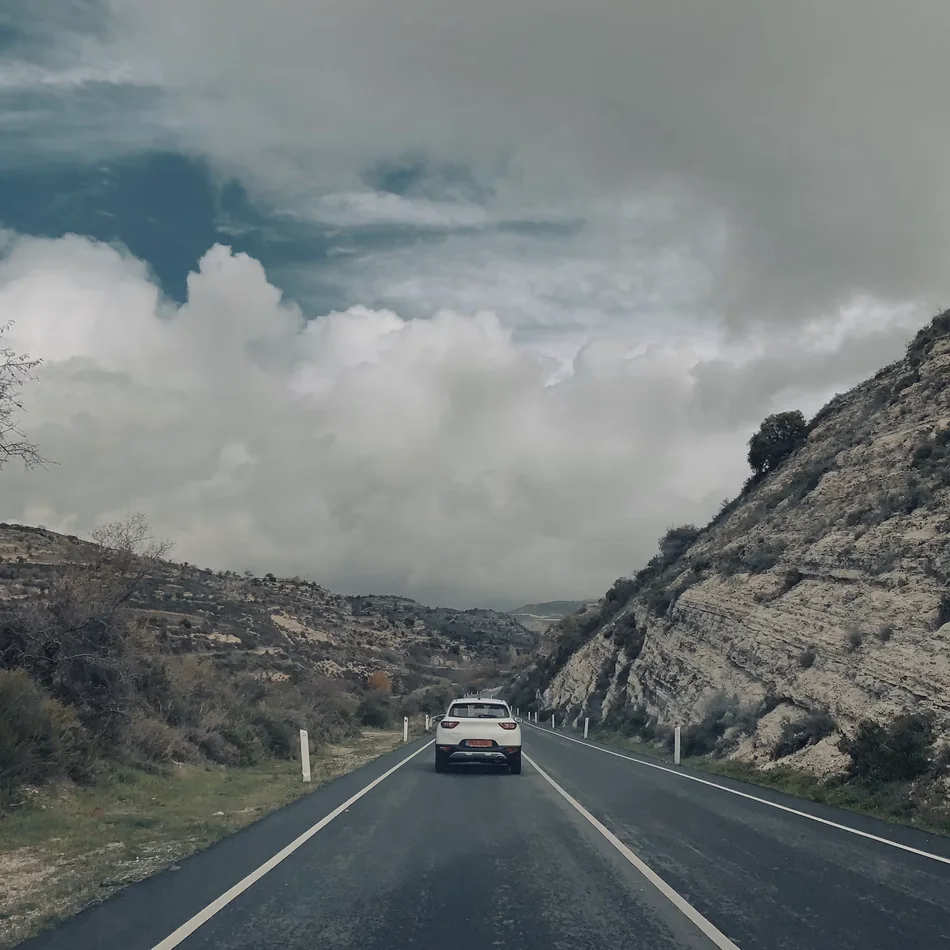
The road is not scenic because every hour contains an attraction. It is useful because the infrastructure, border and Bosna valley make the transition between Croatia and Bosnia physically obvious.
Where this sits
This route links Croatia's inland capital, Zagreb, with Sarajevo in Bosnia and Herzegovina by running east on the A3 to the Sava border and then south through Doboj, Zenica and the Bosna valley. The motorway-heavy Croatian half and slower Bosnian half behave like two different drives.
Road check: 11 September 2026. Border queues and crossing availability can change within hours. The current main route uses Slavonski Brod / Brod, not the Stara Gradiška crossing that is currently closed because of bridge damage.
Zagreb to Sarajevo is the kind of drive that route planners make look settled.
About five and a half hours.
A3 motorway east.
Cross the Sava.
Follow the Bosna valley south.
Arrive.
That outline is correct enough to create bad planning.
The border can add an hour.
The motorway disappears.
Bosnian average speeds fall.
Rain, fog, roadworks and traffic around towns matter.
The useful itinerary therefore treats 5½ hours as a clean-driving reference, not an appointment promise.
The route in 60 seconds
The practical 2026 line is:
Zagreb → A3/E70 → Slavonski Brod → border at Slavonski Brod / Brod → Derventa → Doboj → Maglaj / Žepče → Zenica → Sarajevo.
Sarajevo Navigator's updated June 2026 route uses the same corridor and quotes roughly 5 hours 30 minutes in normal conditions. Current route overview.
Allow 6–7½ hours when you include fuel, a proper stop and normal border uncertainty.
In heavy summer/weekend traffic, allow more.
Do not promise somebody dinner in Sarajevo based on zero minutes at the border.
First solve the car
If it is your own vehicle, confirm that insurance documentation is valid for Bosnia and Herzegovina and carry the vehicle registration and driver documents.
If it is a rental, the critical question is:
Is cross-border travel into Bosnia and Herzegovina authorised in writing?
Ask before paying for the car.
Confirm:
Bosnia and Herzegovina is permitted;
any cross-border fee;
insurance documentation / Green Card rules under the contract;
roadside assistance outside Croatia;
whether the vehicle may be left in Bosnia if it breaks down;
one-way restrictions if your return plan is different.
A Croatian rental deal that cannot legally cross the Sava is not a Zagreb–Sarajevo rental.
Plan this trip
Confirm Bosnia in the rental contract before the motorway makes the border look easy.
Compare the practical parts of a trip to Zagreb, Croatia / Sarajevo, Bosnia and Herzegovina.
Central Zagreb does not reward storing a rental car while trams do the work.
Use the Zagreb guide without a vehicle if possible.
Collect the car on departure morning or leave it at accommodation with confirmed parking until the road day starts.
Zagreb is the urban beginning, not the road itself. Keep the car parked until the capital is finished with you.
The A3 eastbound is exactly what a motorway should be here: efficient, unromantic and capable of removing a large block of distance before the trip gets slower.
You do not need to make the motorway interesting.
You need it to work.
The A3 is the fast part. Let it be fast
From Zagreb, the A3 carries you east across northern Croatia toward Slavonia.
Fuel is easy.
Services are easy.
Navigation is easy.
This is where the road-trip instinct to add a village, viewpoint and 'authentic' lunch every hour becomes actively unhelpful.
If the goal is Sarajevo in one day, use the infrastructure.
The shift after Slavonski Brod will provide enough texture without forcing it early.
Slavonski Brod: the useful border stop
Slavonski Brod sits on the Sava directly opposite Brod in Bosnia and Herzegovina.
Slavonski Brod is the last Croatian city before the Sava border. The fortress gives a real stop without pretending the transfer needs a full sightseeing day. Photo: Tmatijase / Wikimedia Commons.
It is a practical fuel/coffee/lunch stop and has enough substance to justify 60–90 minutes if you leave Zagreb early.
The eighteenth-century Brod Fortress is the obvious fixed site, built into the Habsburg military frontier system. That historical role is unusually relevant to a drive about to cross a modern state and Schengen border.
Do not turn it into a half-day sightseeing project unless Slavonski Brod itself interests you.
The road already has a job.
The border: Slavonski Brod / Brod is the important variable
Croatia is inside the EU and Schengen area.
Bosnia and Herzegovina is not.
This is a real external border.
HAK's current traffic service provides live border-wait information and repeatedly warns that waiting times change quickly. On 10 September 2026, HAK showed up to one hour in one direction at Slavonski Brod/Brod during part of the day. That is a snapshot, not a prediction. Check HAK immediately before departure.
The new EU Entry/Exit System (EES) is also being applied at Croatia's borders with Bosnia and Herzegovina for non-EU third-country nationals; EU citizens are not subject to the biometric-registration requirement described by HAK. Current HAK border notice.
Keep passports/travel documents and vehicle paperwork accessible.
Do not bury the rental authorisation below four suitcases.
Do not casually reroute through Gradiška in September 2026
There is a current operational issue that route apps may not contextualise well.
As of 10 September 2026, HAK reports traffic suspended between Stara Gradiška (Croatia) and Gradiška (Bosnia and Herzegovina) in both directions because of bridge damage. An alternative crossing at Gornji Varoš–Gradiška is open, but that is not a reason to improvise a Banja Luka route without checking the full road situation. Current HAK report.
The normal Slavonski Brod / Brod corridor avoids this problem.
Still: check on the day.
Road articles age fastest at borders.
Brod to Doboj: the trip slows down on purpose
After crossing into Bosnia and Herzegovina, continue through Derventa toward Doboj and the E73/Bosna corridor.
The geometry changes.
Motorway expectations stop being useful.
Towns, junctions, trucks and lower average speeds become part of the calculation.
Do not read a 70-kilometre section as if it were 70 kilometres of Croatian motorway.
This is also where you should stop converting every delay into failure.
The border is behind you.
The road is now doing something different.
Doboj is the best optional real stop
Doboj is strategically more interesting than a random service stop because the fortress and transport geography explain why the town matters.
Doboj is where the drive becomes visibly Bosnian and the road logic changes from Croatian motorway to valley movement through the Bosna corridor. Photo: Castrum 1415 / Wikimedia Commons, CC BY-SA 4.0.
The medieval/early-modern fortress sits above a junction where the Bosna, Usora and Spreča valleys and major transport routes meet.
If you have 60–90 minutes, stop.
If the border already consumed the margin, keep moving.
This is not a route where missing one fortress invalidates the trip.
A road guide should protect arrival time as well as sightseeing ambition.
The Bosna corridor: Maglaj, Žepče and the valley are the continuity
South from Doboj, the Bosna River becomes the route's organising feature.
The road follows a long industrial and settlement corridor through places that are rarely international destinations in their own right.
That is precisely why this section is useful.
Bosnia does not begin at Sarajevo's Baščaršija.
It begins in ordinary roadside businesses, mosques and churches, industrial sites, apartment blocks, villages and the valley narrowing around transport infrastructure.
Do not expect constant scenery.
Expect context.
Zenica: industrial Bosnia without a beauty contest
Zenica is one of Bosnia and Herzegovina's major industrial cities and sits directly on the Bosna corridor.
Zenica is an industrial city along the Bosna corridor, not a stop that needs to be beautified for a road-trip article. The valley itself explains the route.
The steelworks and valley geography are a better argument for noticing Zenica than pretending the city is a secret tourism discovery.
Stop for food or coffee if timing works.
Do not add the city because a road itinerary needs a photogenic attraction every ninety minutes.
The industrial landscape is the point if you are interested in it.
If you are not, continue.
Zenica to Sarajevo: the road gets easier again
South of Zenica, motorway sections improve the final approach toward Sarajevo.
That can create false confidence late in the day.
You are still arriving into a capital with commuter traffic, complex hotel access and parking decisions.
Know where the car is going before the city starts.
If the accommodation has parking, get the instructions in advance.
If it does not, do not attempt to improvise a perfect old-town parking space with six hours of road fatigue behind you.
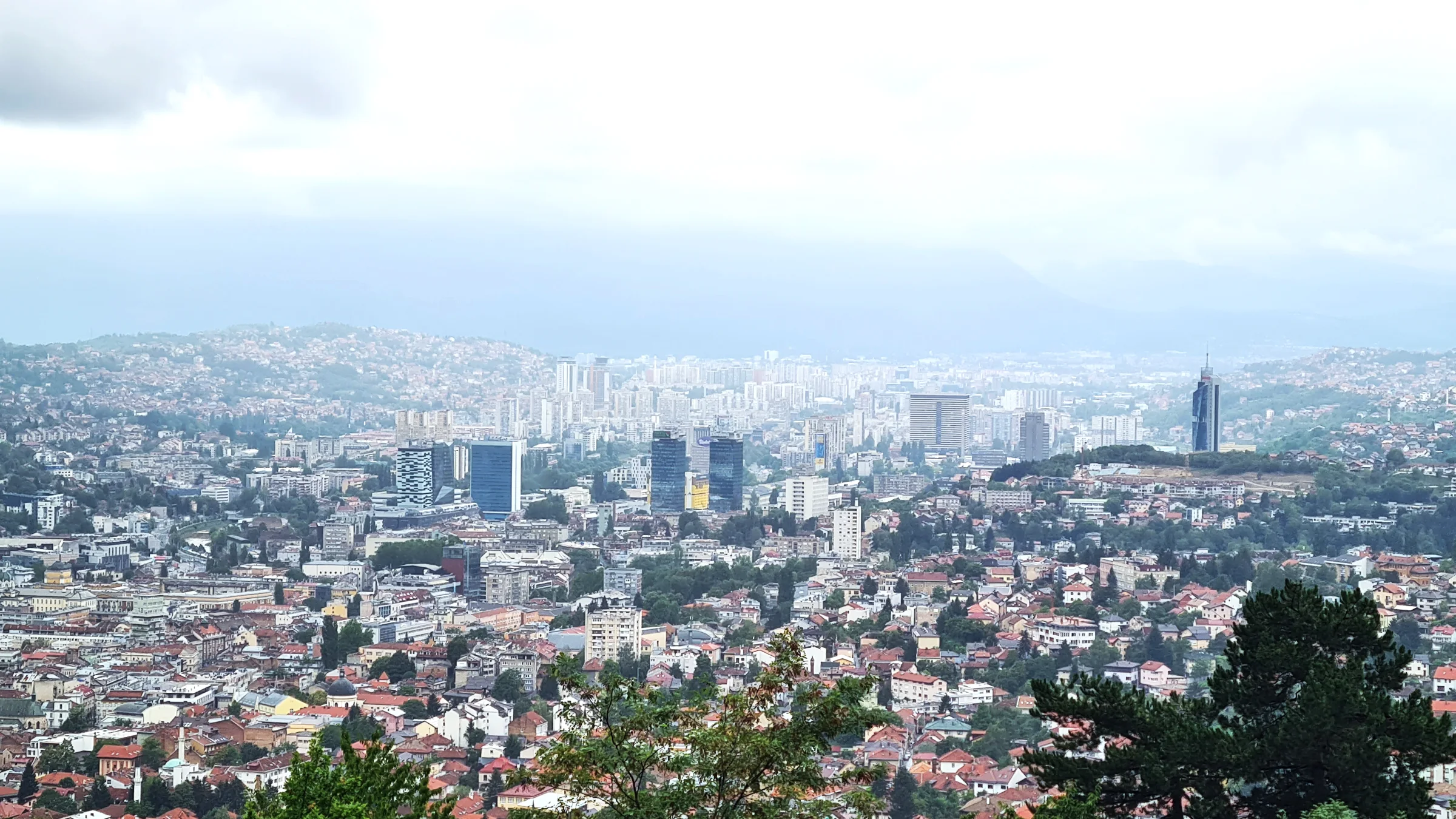
Sarajevo deserves to be the end of the driving day, not one final attraction squeezed between border delays and hotel check-in. Photo: Julian Nyča / Wikimedia Commons, CC BY-SA 4.0.
Sarajevo should not become the last two rushed hours of the road day.
Arrive.
Park.
Eat.
Let tomorrow be Sarajevo.
Currency: one border, two money systems
Croatia uses the euro.
Bosnia and Herzegovina uses the convertible mark (BAM / KM), fixed to the euro at approximately 1 EUR = 1.95583 BAM.
Cards are common in cities and fuel stations, but cash remains useful for smaller businesses, parking and places where terminal reliability should not be assumed.
Do not exchange a large amount at the border simply because a booth exists.
ATM/exchange conditions vary by provider.
Know the fee before accepting conversion.
Roaming: Croatia and Bosnia are not the same telecom zone
Croatia is in the EU roaming framework.
Bosnia and Herzegovina is not automatically covered by an EU 'roam like at home' plan.
Some mobile operators include the Western Balkans in specific packages. Others charge expensive out-of-zone data rates.
Check your provider before the border.
Download offline maps as backup.
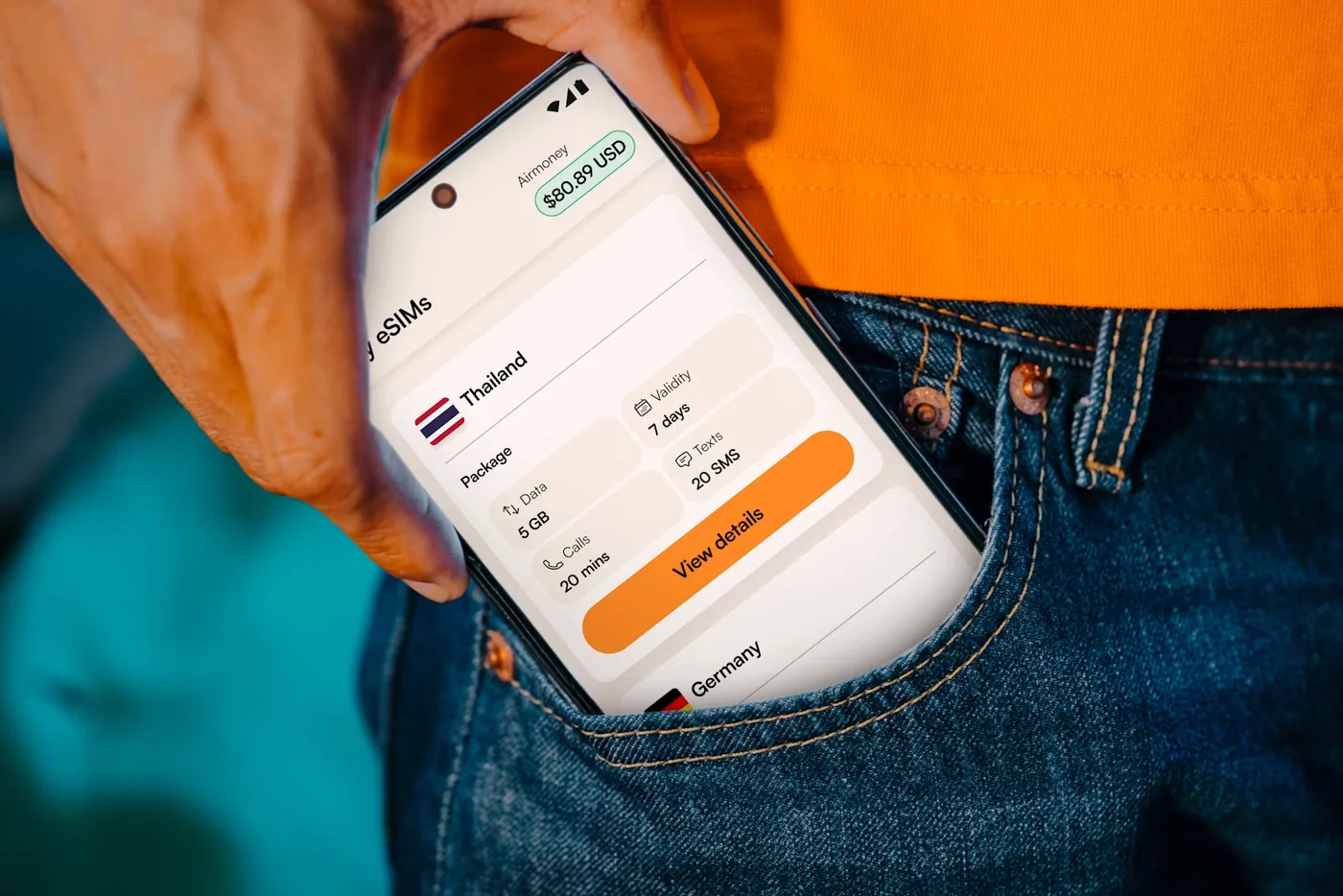
An eSIM can be useful, but only if the package explicitly covers Bosnia and Herzegovina rather than advertising 'Europe' vaguely.
Autumn: often the best driving balance, but fog/rain can slow Bosna-valley sections.
Winter: snow, ice, fog and short daylight can turn a routine transfer into a much longer day. Winter equipment rules and current road conditions matter.
Spring: variable weather and roadworks are the recurring problem.
HAK handles the Croatia side; check Bosnian motoring/road information as well before departure.
One day or two?
For most travellers, one day is correct.
This is not the Drina route from Belgrade where two days can transform the journey through Tara and Višegrad.
Zagreb–Sarajevo's strongest practical route is a transport corridor with a few meaningful stops, not a scenic detour machine.
Use two days only if you deliberately want Slavonia, Doboj or another Bosnian stop rather than because you think road trips become superior when slowed artificially.
The alternative through Banja Luka and Jajce
A western route via the Gradiška/Banja Luka/Jajce direction can be attractive when Jajce or Banja Luka is the actual objective.
It is not the current default for a direct Zagreb–Sarajevo road day.
In September 2026, the Stara Gradiška–Gradiška bridge closure makes casual rerouting even less sensible without current checks.
If Jajce is the reason, build a separate two-day route around it.
Do not bolt it onto Sarajevo arrival because the map looked prettier.
A practical departure schedule
07:30–08:00: leave Zagreb after fuel/coffee.
10:00–10:30: Slavonski Brod; short fortress/coffee stop if timing works.
11:00-ish: border approach — but this is the variable, not the promise.
13:00–14:00: Doboj area, depending on border; lunch/fortress only if margin survives.
15:30–16:30: Zenica corridor.
17:00–18:30: Sarajevo arrival in a normal day.
That range is deliberately loose.
A road article that promises 17:12 hotel check-in at an external border is fiction.
Who this route is for
Use this road when Zagreb and Sarajevo are both destinations and the vehicle makes the transition useful.
Use it when you want to see the country change through infrastructure rather than airport gates.
Do not rent a car solely because road travel sounds more authentic if a bus/flight would better fit your time and stress tolerance.
And do not take the route expecting a chain of famous attractions.
The value is continuity.
Final answer
Zagreb to Sarajevo is a better road than the map suggests because the map hides the change in systems.
Euro to mark.
Schengen to external border.
Motorway to valley roads.
Croatian capital to Bosnian industrial corridor to Sarajevo.