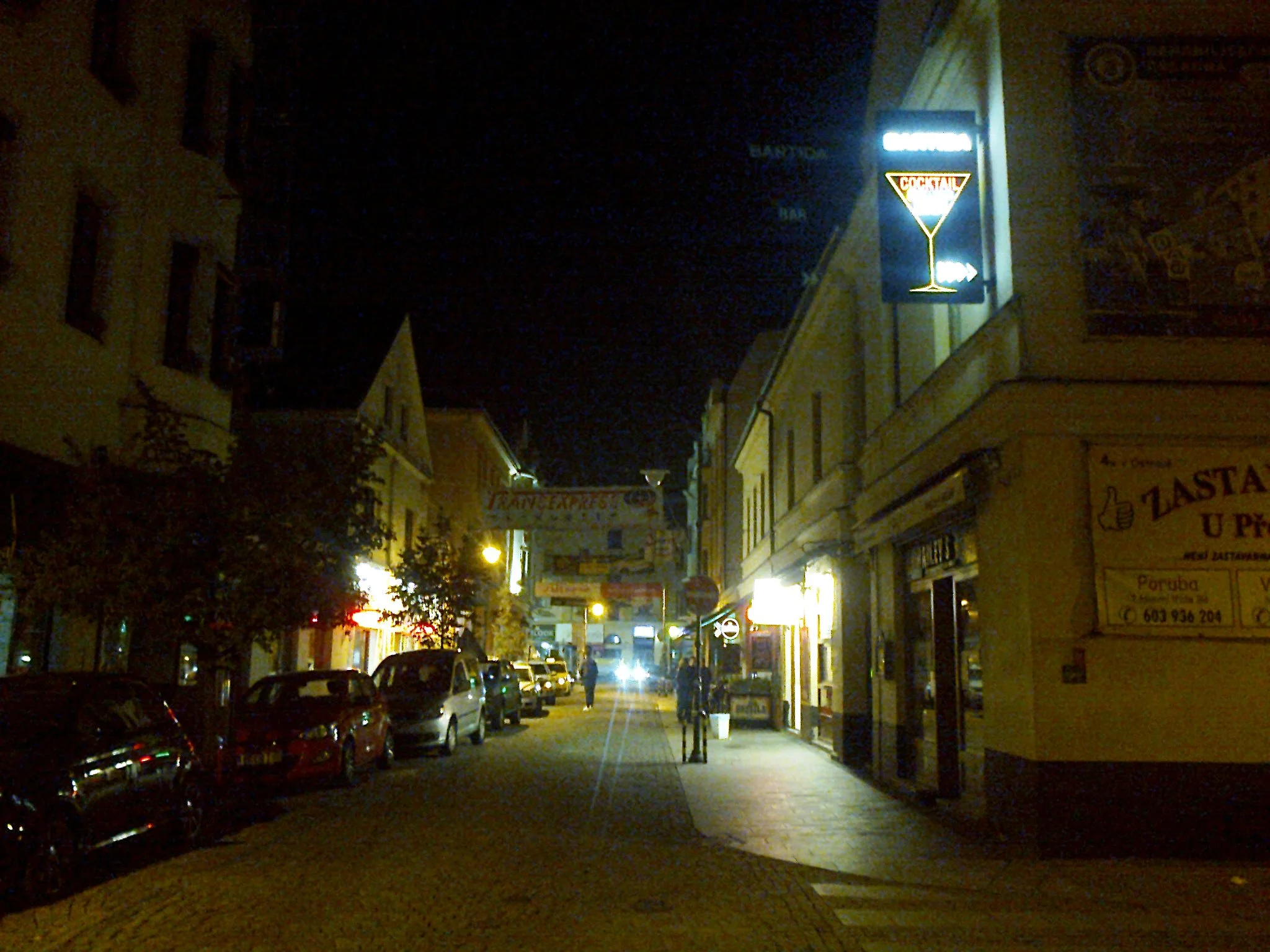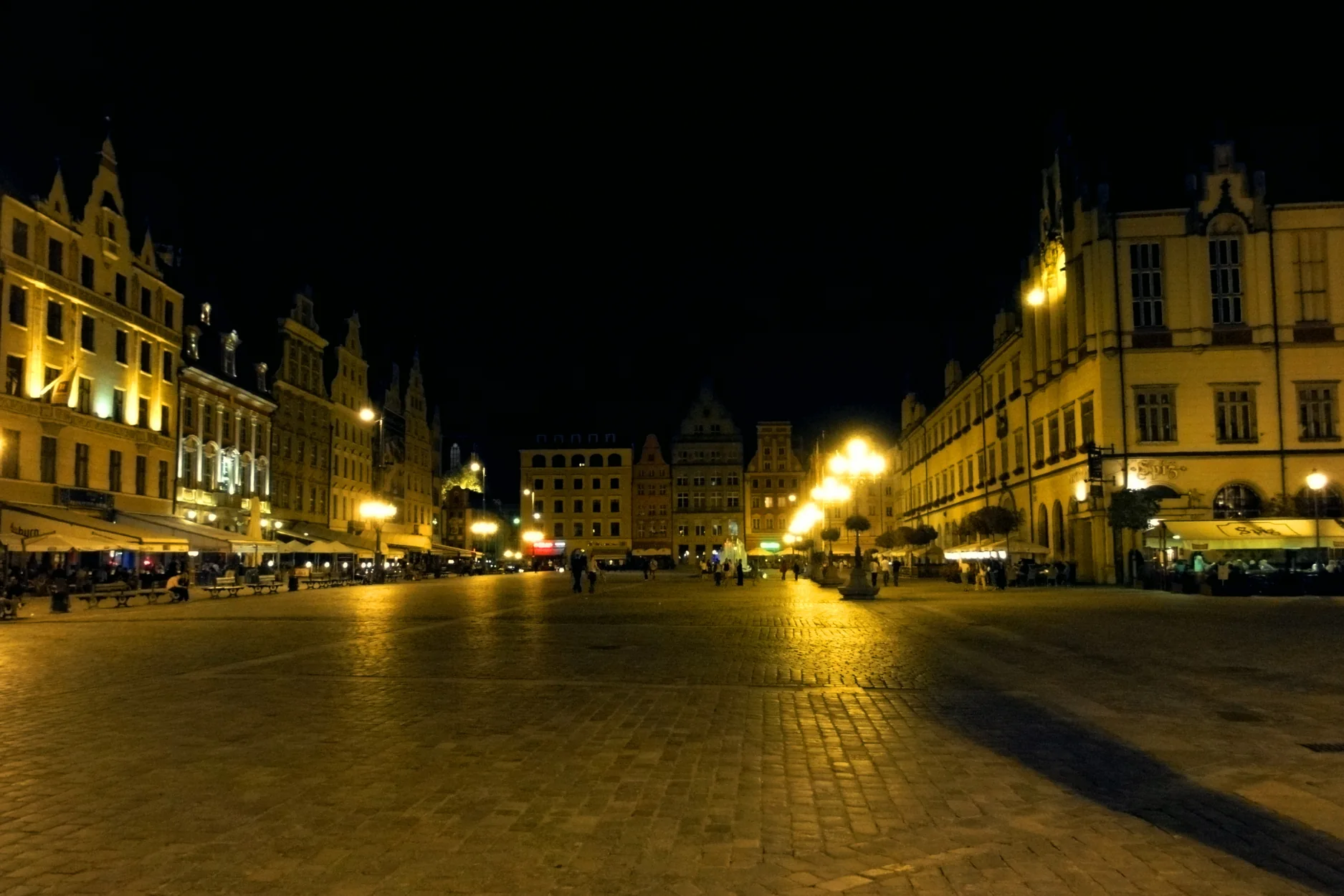
The best clue to Wrocław after dark is what changes when you leave the postcard square.
Where you are
Wrocław is the main city of Lower Silesia in south-western Poland, built across branches of the Oder and close to Czechia and Germany. The Market Square is only the easiest start; use the full Wrocław guide for arrival and the wider city.
Wrocław's Market Square looks almost suspiciously well arranged after dark: illuminated façades, full terraces and groups choosing where to begin. It brings people together before the surrounding streets send them towards very different evenings.
West of it, an old courtyard combines rescued neon signs with real bars and club events. South, a railway embankment has become a street-length social machine. Elsewhere there are straightforward party rooms, polished tables, queer events, hard electronic floors and an entirely different summer city beside the Oder.
Together these places give Wrocław a distinctive nightlife built around railway architecture, sociable bars, live music and dancing.
The Rynek: an easy meeting point with several exits
A Friday square can contain couples dressing up for dinner, students organising a night, international groups following a bar crawl and locals just crossing the centre. One attractive photograph gathers the different crowds together. Their plans diverge after the first drink.
The Rynek is convenient and genuinely lively on the right night. Its best-known frontages often sell similar restaurant-and-bar formats. Nearby passages, railway arches and concert venues supply strikingly different possibilities a short walk away.
A city of short walks and sudden changes of scene
Wrocław's centre offers several different night environments within a fairly compact area. The Rynek holds restaurants, pub-crawl meeting points, terraces and a visible tourist crowd. Plac Solny adds its own ring of nearby bars and routes towards the west. Włodkowica and Świętego Antoniego support a dinner-and-conversation night. Ruska 46 and Pasaż Niepolda sit close together, yet the courtyard and the party passage fill different roles. Further south, Bogusławskiego's railway arches provide a full stretch of eating and drinking; across the centre, Joannitów leads to Ciało and Tęczowa to Transformator.
The important thing is how the evening moves. You can begin beneath railway brickwork, reach Włodkowica by walking, and arrive in the Old Town as a different audience is taking over the streets. A music-first night in Transformator is a destination of its own, with a specific promoter, timetable and crowd. The different areas invite different commitments of time and energy.
The city's student population gives the centre another rhythm. Groups arrive around term time, events are programmed for weekdays, and well-known streets can feel different during exam periods and long summer breaks. A university city gives its night economy several calendars, often overlapping with business visitors and weekend tourism. Wrocław's city information on student nightlife names the Rynek, Ruska, Włodkowica, Bogusławskiego and larger concert venues as parts of that broader circuit.
Bogusławskiego: the bars live inside the railway
Wojciecha Bogusławskiego Street, beneath the railway embankment south of the Old Town, is one of the city's most distinctive nighttime systems. A long sequence of arches houses food, pubs, cocktails, music and places that change character as the evening advances. The working railway and its repeated brick arches give this social street its distinctive shape.
The city's detailed 2026 profile of the street records U Augusta at number 7 with its pub nights and Sunday karaoke, Rusty Rat at 23 for cocktails, Soul Train at 27 for concerts and DJ sets, and Rumbar Nasyp at 55 with a rum-focused approach. Restaurants and casual kitchens fill the gaps.

Have food, listen for the music under the next arch, and choose the bar whose energy fits the evening. The continuous sequence of rooms gives the street a lively bar-to-bar rhythm.
Under the tracks: the pleasures of a whole evening on one street
The railway arches are a place for changing plans in small increments. Start with a drink, notice what is happening two doors away, and stay for food or a DJ who sounds interesting. A dense row of venues creates its own rhythm: kitchens are busy earlier, people arrive from work, and some bars become more focused on music or conversation as the night advances.

The city's updated 2026 survey of Bogusławskiego includes Mercado Tapas Bistro and Mercado Nuevo at numbers 15 and 13, U Augusta at 7, Mistrz i Małgorzata at 21, Rusty Rat at 23, Soul Train at 27 and Rumbar Nasyp at 55. The businesses include tapas, informal beers, cocktails, live music and tropical mixed drinks. The address list is useful because each describes a different way of using the railway.
A table at Mercado can start the evening with shared plates. U Augusta is an unpretentious pub format, with advertised Sunday karaoke. Rusty Rat gives cocktails a more deliberate role. Soul Train has hosted concerts and DJ events, offering a reason to stay for the music. Rumbar brings rum and an outward-looking Caribbean theme to an unmistakably Lower Silesian railway setting.
The theatre connection also matters. The area borders the city's cultural institutions, including Teatr Muzyczny Capitol and the historic Polish theatre quarter; audiences and performers coming out after a show add another stream of people to the arches. It is a good part of the city for a full early-evening meal followed by a second stop decided on the spot.
Włodkowica: dinner, conversation and another round
Mleczarnia at Włodkowica 5 gives the district a particularly tangible history. It opened here in July 2004, when the street had a very different commercial profile. In an October 2026 interview, its owners describe the furniture, the photographs and the early years of building a place people could make their own. The mismatched chairs and old pictures are part of the room's history. The idea had roots in Kraków's Kazimierz, but its Wrocław life grew with this street.
That matters to the experience of going out: Włodkowica's appeal can be as simple as sitting in a room where people have gathered for two decades, then walking a few doors to a second venue as the evening changes. The city's Włodkowica guide also names Cocofli at number 9, which combines books, drinks and a changing programme. These are two examples rather than a catalogue: one rooted in bar history, another in the encounter between culture and conversation.
Around Włodkowica and Świętego Antoniego, the Four Denominations District shifts from historical identity to restaurants, bars and people moving between them. It has a different pace from the Rynek and from the party passage near Ruska.
You can start over dinner and let the evening keep going. A conversation at the next table can turn dinner into several hours out. This part of the centre supports an unhurried evening across a very manageable stretch of streets.
Ruska 46: the neon courtyard and the rooms behind it
At Ruska 46, historic shop signs from Wrocław's past have been gathered into a courtyard that is now part art space, part meeting point, part nightlife. The neon is real and worth the photograph. But making the courtyard a photo stop and leaving ignores the people and programmes using it.
The Ruska 46 project and the city-backed Recepcja venue document this change of use. Surowiec, at Ruska 46A, brings a changing mix of DJ events, performances and queer-friendly nights. The current Travel Gay guide identifies a citywide LGBTQ+ event culture with Surowiec among its meeting points.

The courtyard is striking even on a quiet evening. Its event calendar reveals when the adjoining rooms fill with music, dancing and a larger audience.
The small-scale evenings behind the main square
The Four Denominations District is a useful example of how Wrocław builds atmosphere from reused spaces and lanes. Around Świętego Antoniego, restaurants open onto courtyards and passages; a dinner can stretch into cocktails, conversations and a late return through the moat-side streets. Pasaż Pokoyhofa is a recognisable part of this geography. The historic Mleczarnia and Szajba have long formed part of its bar culture, while the exact operating format and calendar deserve checking for the night you visit.
One advantage of the area is scale. One street and two adjacent lanes offer an entire evening of walk-in bars and restaurants. It suits the part of a city break when you want to be surrounded by people and still hear a complete sentence. A concert or dance event can still fit later in the same evening, with an easy change of pace.
The night-time routes also reveal the city's physical character: older façades, narrow passageways, a mixture of rebuilt and reused buildings, and the changing intensity between open squares and sheltered courtyards. Wrocław's historic urban fabric contributes to how social life spreads after dark.
Pasaż Niepolda: a different kind of crowd
The passage has a visual texture of its own: tight approaches, club entrances gathered in an old back-of-building complex and small changes of crowd from doorway to doorway. The documented April 2021 photograph records the physical space; individual businesses and posters can change while the arrangement of the passage remains recognisable.

A useful way to choose a night here is to listen as you pass through. A mainstream singalong room, a louder dance set and a bar where the group is still deciding its next move may share an entrance corridor. The enjoyment is the density, the movement and the chance to change rooms quickly. A couple may enjoy the people-watching before selecting a club; a group can move together without negotiating a taxi between each stop.
Nearby Pasaż Niepolda is more direct: party bars, busy doorways, accessible commercial dance music, groups looking to stay out and the possibility of moving on quickly when a room feels wrong.
It can be loud, messy, easy, fun, tacky or all of the above. Good. A crowded commercial party room can provide precisely the social, flirtatious, unplanned night someone came for, with familiar music doing the work.
Confusing it with Ruska's creative courtyard produces poor expectations. They are adjacent nightlife geographies with different reasons to be there.
Live music beyond club DJs
One recent, concrete example is Elysium's concert at Liverpool Club on 27 September 2026. A documentary photograph from the performance shows how a live-music night occupies its own space beside Wrocław's DJ-oriented venues. Such concerts need their own planning logic: doors, start time and the band's set are the centre of the evening, while the nearby bars become places to meet before or after.

This broadens the choice for someone who enjoys music as much as dancing. A smaller live room has a different sense of audience from a midnight club floor. The best discovery may be a band you first noticed on a poster rather than an established nightlife name. Wrocław's music scene has room for rock, metal, soul, pop and experimental performances alongside the better-publicised electronic events.
Wrocław has a substantial concert night alongside the bars and dance clubs. The city's long-standing student and nightlife directory identifies Stary Klasztor, A2, Kalambur and Nietota among places associated with live music or shows. Individual venue calendars matter: a seated concert, a rock gig and a DJ-heavy club night build different audiences and finish at different hours.
A venue such as Nietota demonstrates the crossover. Its current official website and drinks menu frame it as a music club and cocktail bar, making it useful for a casual bar evening that can grow into a live-music or DJ event. For theatre, an evening performance at Capitol changes dinner timing; for a rock show at Stary Klasztor or A2, the advertised start time becomes the anchor around which you choose food.
Concert evenings offer an easy shared subject for travellers who enjoy meeting people through music. A performance creates a reason to arrive, listen, and talk about something concrete afterwards. Wrocław's range makes it possible to pursue live rock, folk, pop, soul, electronic performances and theatrical music across different nights.
Cherry, SiSi and the pleasures of a dressed-up night
Cherry Club, on Kuźnicza 10, openly sells a polished experience: resident DJs, VIP space, weekend opening until 05:00 and a more presentation-conscious crowd. The venue's appeal is direct: polished presentation, familiar music and a crowd that enjoys dressing up.
SiSi at Rzeźnicza 32–33 advertises another sequence: dinner and live acts first, then DJs and dancing until late. It is deliberately social and commercial. That is a different promise from an industrial rave.
Attraction, dressing up, flirting and showing off are part of the pleasure in this corner of Wrocław's nightlife.
Ciało and Transformator: a city that takes dancing seriously
Ciało is at Joannitów 13, near the main station. The club's lineage and published events centre house, techno and harder electronic programming. A serious sound system and a dance-floor-focused programme define the attraction.
Transformator, at Tęczowa 57, describes long raves, industrial space and a DIY approach. The club's own rules include a strong no-unapproved-photography policy. It is the opposite end of the night from a venue selling tables and bottle displays.

An event at Ciało, a heavier programme at Transformator and a familiar pop night in the Old Town draw different crowds and energy levels. Their actual schedules give travellers useful choices.
Real drinks, real covers: Wrocław prices in euros
Published menus make it possible to talk about the cost of a night with some precision. Rynek 26's own drinks menu lists a 0.5-litre house draft beer at about €4.80, an IPA at approximately €5.20 and a bottled Wrocław craft beer at roughly €5.90. These are restaurant prices on the central square, a useful benchmark for a prominent location.
A few streets away, Nietota's published bar menu lists a half-litre Žatecký at about €5, a Negroni or Old Fashioned around €7.95, and a signature cocktail at approximately €6.80–€7.95. SiSi's menu lists selected cocktails at about €10, three oysters at about €11.10 and a cheese board at approximately €14.75. The differences reflect venue identity, ingredients, location and service format. They are prices from named menus, rather than a single invented Wrocław average.
There are also concrete club admissions. The city's event page for a 7 November 2026 Transformator hard-techno night advertises about €11–€18 for the event (a published local ticket band converted to euros). The event starts at 23:00, with a listed end around 06:00, and distinguishes hard/industrial sounds from a second bounce stage. Another show or promoter will have another price.
Here are illustrative per-person budgets built from the documented menus and the cited club event. They are illustrative budgets assembled from separate costs, with each venue charging individually:
| Wrocław night | Indicative spend | What is included | |---|---:|---| | Two beers and a sociable pub | €10–€18 | Bar drinks; food separate | | A cocktail-focused evening | €22–€38 | Three to four drinks at a named cocktail-bar price level | | Dinner, two drinks and moving between bars | €35–€65 | A moderate meal plus drinks; depends heavily on venue | | A music event and several drinks | €30–€55 | A ticket near €11–€18 plus a few drinks and a journey | | Dressier club table and premium drinks | €70+ | Spend driven by table conditions, group size and selections |
Conversion: approximately €1 = 4.4038 zloty, the ECB reference rate for 30 October 2026. We round the euro amounts; prices and exchange costs can change.
A useful way to compare two nights is to separate entry, drinks, food and getting back. A cheap club ticket paired with expensive bar drinks can cost more than a long evening in an atmospheric pub. A table reservation may suit four friends and feel extravagant for someone alone. The city has room for both.
The river has its own season
The night photograph of Słodowa Footbridge shows an older but still revealing part of the geography: the river's footbridges connect places where people gather with quieter stretches of water and the illuminated cathedral skyline. It is an urban experience in its own right, particularly after an early dinner or before a seasonal outdoor event.
At the right time of year, a riverside bar can turn into a whole evening. Its attraction is the setting, the breeze off the water and the shifting group around the tables; the exact operator and opening date matter. Wyspa Tamka has operated across artistic, club and outdoor uses. Wyspa Słodowa functions as an informal gathering point. These are two related but distinct parts of a summer night, and their programmes change with the weather and the season.
The Oder islands change the city's evening geography when the weather cooperates. Wyspa Słodowa remains a gathering point; Wyspa Tamka has combined art workspaces, club use and an outdoor bar concept. The venue description captures that mixture.
Summer riverside bars and events give warm-weather Wrocław a separate evening geography. Winter programmes shift the emphasis towards indoor venues.

What a Friday floor can actually sound like
Wrocław's dance music spans several generations and audiences. The Pasaż Niepolda side of the centre attracts groups heading for familiar pop and commercial dance, fast changes of room and plenty of flirting. A dressier place such as Cherry sells a different presentation: resident DJs, well-styled crowds and a more deliberate arrival. Both crowds have their own rhythm, clothes and expectations.
At Ciało, the attraction is the particular booking and the DJ culture around the club. At Transformator, an industrial setting and event-driven programme can produce a long night based on hard techno, bounce, drum and bass, house or other genres depending on the promoter. The 7 November hard night is a concrete illustration: two musical stages and published hours until dawn. Another event may be built around slower house or a completely different subculture.
Surowiec brings a different mix: an art-and-bar setting, queer-friendly parties and occasional DJs in the central Ruska complex. An electronic purist, a pair going out to dance together, and a larger group after a messy pop night can all have a genuinely good weekend in Wrocław. The relevant distinction is the night being advertised.
The city's nightlife also includes live bands, karaoke, singing along to familiar Polish songs, international student parties and occasional themed evenings. These can be more sociable than a packed ticketed venue, particularly for a visitor who wants to meet people while travelling. A specific event programme reveals which audience a venue will draw on a particular night.
Adult entertainment and the money around it
There are strip and go-go businesses in the Polish night-time economy. It is part of the city's adult commercial nightlife. A documented fraud case adds another dimension: in January 2026, TVP reported a prosecution involving 82 defendants over alleged nightclub fraud; Notes from Poland reported the allegations. Allegations are not convictions, and the case does not describe every adult venue.
The case provides context about business practices, with the allegations clearly separated from the wider venue scene.
The drinking culture changes after 22:00 — one precise rule
Wrocław has a real, current regulation that affects an ordinary late-night decision. Since 9 October 2025, shops and petrol stations across the city have been prohibited from selling takeaway alcohol between 22:00 and 06:00. Bars and restaurants serving drinks for consumption on their premises are outside that restriction. The city's July 2026 review explains the distinction.
Bars continue serving on-premise drinks after shops end their alcohol sales. The distinction shapes the atmosphere around hospitality streets late at night. The rule is particularly relevant for travellers expecting the same convenience-store habits they know from elsewhere.
The practical details at a club are equally direct. Some ticketed events have an early-entry price, others cost more at the door. Coat check, card acceptance and re-entry vary. A prepaid event ticket is especially helpful when the artist and music justify the night. A bar-to-bar evening around Bogusławskiego needs little planning beyond dinner and an idea of where you want to finish.
Eating after the performance
Evening food is woven into the way Wrocław functions. Under the railway you can build dinner from tapas or a proper meal. The Old Town offers restaurant tables early, quick food between bars and places where groups meet again after a performance. A pub may keep serving drinks after its kitchen has finished for the night; the two hours are worth distinguishing.
The character of the meal changes with your night. A long Polish dinner and the walk towards the Rynek fit a couple's evening. Shared plates under the arches suit a group changing venues. A serious club event can work better after an earlier, simple meal. In summer, riverside seating turns a sunset meal into the start of the evening.
The date also matters. Student-term Wednesdays, an international Saturday DJ booking, public holidays and a winter weekday can produce markedly different late-food availability. The useful search is for a specific kitchen and its current hours, particularly if you expect to eat at 02:00.
Three entirely different nights in the same city
For bars and spontaneous conversation: begin beneath the railway on Bogusławskiego. Dinner can flow straight into a pub, a cocktail bar or a music night along the same street.
For people, parties and a little spectacle: the Rynek, Włodkowica, Ruska and the Pasaż each give the evening a different social temperature. Choose one and let the crowd show you the next.
For music first: commit to a specific Ciało, Transformator or Surowiec event. Build the evening around the artist and the dance floor.

The practical return is simple: Wrocław has night buses and app rides, while river crossings and roadworks can make a seemingly nearby hotel inconvenient. Check the journey for the particular address. A useful final detail is the actual last-leg journey between the venue and your hotel.
The city after midnight: atmosphere, access and company
For two people, Włodkowica can provide hours of conversation, a dinner and a return through illuminated streets; Cherry or SiSi can add a dressier night with dancing. For a larger group, the railway arches and Pasaż Niepolda offer room to change plans without splintering the entire evening. For someone alone, a concert, a bar with actual counter seating or a named Surowiec event gives a natural reason to arrive and interact.

There are different ways of being social. A big dance floor offers anonymity and energy. A narrow pub makes conversation more likely. A fixed restaurant table supports existing groups. A performance gives people something shared to talk about. These are more useful differences than labelling each location 'authentic' or 'commercial'.
The city also offers queer cultural nights, nightlife for older audiences, concerts built around listening, and long evenings spent talking beneath a railway arch. The Wrocław visitor who enjoys a good commercial club is as well served by this range as somebody following experimental electronic events.
When the night ends, central areas are connected by night buses, taxis and app-booked rides. River branches, one-way streets and temporary works affect the practical last leg. Staying near the Rynek is helpful for central bars; accommodation near the station suits certain venues; a destination event on Tęczowa may call for a booked ride. One geographical choice can shape several evenings of a trip.
The InstantTraveling verdict
Wrocław has a distinct night-time identity rooted in its railway arches, rebuilt centre, riverside spaces and varied club programmes. The postcard square, the railway arches, the neon courtyard, the noisy passage, the dressed-up commercial room and the electronic clubs are all different urban products within one compact city.
The most rewarding evenings begin with a specific interest — music, conversation, dancing, a lively group or a late meal — and use the city's different after-midnight worlds to follow it.
Researched 1 November 2026 from local city reporting, official venue programmes and published records. No first-hand visit claimed; events and outdoor venues change by date and season.