
Kraków does not need help becoming photogenic. It needs enough time to become more than a background.
Where it is — and how to get there
Kraków is in southern Poland on the Vistula, the historic centre of Małopolska and one of the country's main rail cities. Warsaw lies far to the north, Katowice and Upper Silesia to the west, and the Carpathian foothills begin not far south of the city.
Kraków Airport at Balice lies west of the centre and has direct rail and bus connections into the city. Long-distance trains make Kraków straightforward from Warsaw, Wrocław, Katowice and other major Polish cities, and international rail also matters on some Central European routes. A car is more burden than help in the centre.
Kraków can reward lazy travel.
Walk into Rynek Główny.
Look at St Mary’s Basilica.
Cross the Cloth Hall.
Follow Grodzka to Wawel.
Eat, drink, repeat.
You will still have seen something exceptional.
You will also have missed the city’s harder structure: the Jewish history of Kazimierz, the occupation landscape in Podgórze, post-industrial Zabłocie, the planned socialist district of Nowa Huta and the tension created by a visitor economy that packages all of them.
Kraków is beautiful.
Beauty is not innocence.

Kraków in 60 seconds
- First visit: three full days gives the city room; two is a compressed minimum.
- Best first base: Old Town edge or northern Kazimierz, not necessarily directly on Rynek.
- Essential sequence: Main Square, Wawel, Kazimierz, Podgórze.
- Best expansion: Nowa Huta for a different urban argument.
- Most important distinction: Auschwitz-Birkenau is a memorial and museum visit, not a sightseeing add-on equivalent to a salt mine.
- Best evening companion: Kraków After Dark.
- Best national route: finish a north-to-south rail spine here in Poland in One Week.
- If choosing one Polish classic: use Kraków or Wrocław? rather than pretending the cities are interchangeable.

Rynek and the Old Town: the obvious centre is still the centre
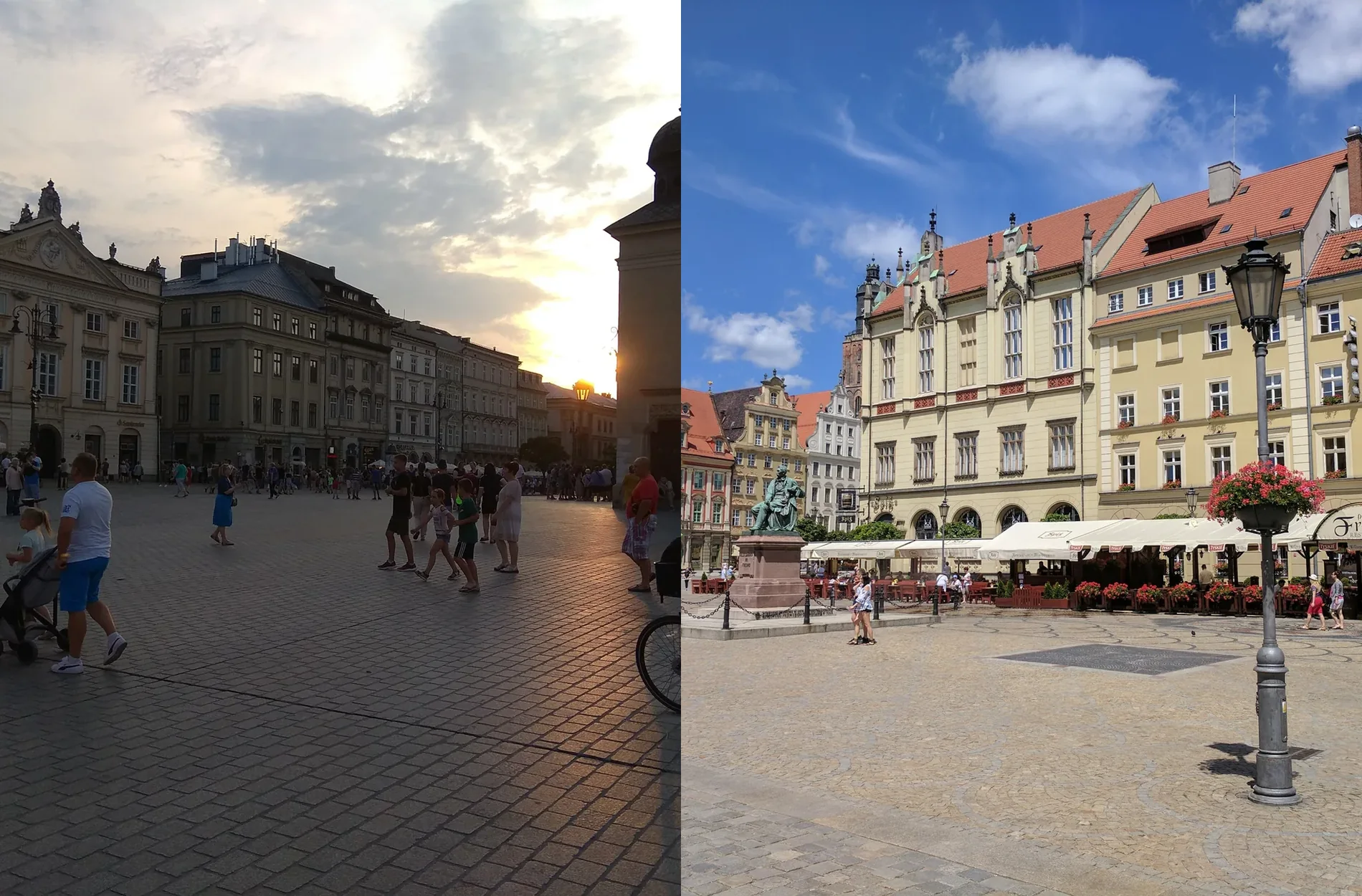
Rynek Główny is one of Europe’s great urban rooms.
The square is huge without feeling empty. St Mary’s Basilica, the Cloth Hall, the Town Hall Tower and the surrounding façades keep changing the scale. Horse carriages, restaurant terraces and tour groups work hard to convert it into a product.
Arrive early.
Return after dark.
Do not confuse avoiding crowds with understanding the place. The square has been commercial for centuries; tourism is not an alien substance poured over a silent monument.
The better question is how much of your day you surrender to it.
Walk the Planty, the green ring replacing the old walls. Use side streets. Visit a church or museum because its contents matter, not because rain began. Follow the Royal Route south towards Wawel.
The official city visitor site provides current information for the Main Market Square, but opening hours for individual monuments should be checked at their own sources.
Wawel: national symbol, royal complex, crowded hill
Wawel Castle and Cathedral carry royal, religious and national meanings that cannot be absorbed as one pretty hill.
Choose interiors in advance.
If you want state rooms, treasury collections or a specific exhibition, book the relevant product and time. If the budget or schedule is tight, the courtyards, river views and exterior still create a meaningful visit.
The dragon is fun.
The symbolism above it is heavier.
Avoid constructing a timetable that sends you from the castle straight into Kazimierz with no pause. The places are close; the histories are not interchangeable.

Kazimierz: living district, Jewish history, visitor theatre
Kazimierz is often sold as Kraków’s bohemian quarter.
That label can become a way to consume the district’s cafés and distressed interiors while treating Jewish heritage as atmosphere.
Do better.
Visit synagogues, cemeteries and museums with attention to their own rules. Understand that Jewish life in Kraków existed for centuries before the Holocaust and exists now; it is not only a trail of absence. Move between the area around Szeroka Street, Plac Nowy and the Christian part of the former city without forcing everything into one story.
Then enjoy the bars, restaurants, courtyards and nightlife.
Pleasure is not disrespect.
Lack of context is.

Podgórze and Zabłocie: across the river, into the occupation city
Cross the Father Bernatek Footbridge and Kraków changes.
Podgórze was once a separate city and later contained the German-created ghetto during the occupation. Sites associated with that history include Ghetto Heroes Square, the Eagle Pharmacy and fragments of the ghetto wall.
Zabłocie’s industrial landscape includes the former enamel factory associated with Oskar Schindler. The museum exhibition is primarily about Kraków under Nazi occupation, not a film set devoted to one man.
Book if it matters.
Read what the ticket includes.
Allow emotional space afterwards.
New apartments, cafés and cultural buildings now occupy the same wider district. That coexistence can feel uncomfortable. It should.
Kraków’s official tourism service gives useful context on Podgórze’s history.
Nowa Huta: the city that was meant to make a different citizen
Nowa Huta was planned as a socialist realist industrial city beside the Lenin steelworks.
Wide avenues, monumental housing blocks, courtyards and civic axes produce an urban scale that feels nothing like the Old Town. The district is not an abandoned communist theme park. People live there, raise families there and argue about its past like residents anywhere else.
Use a tram.
Walk the central avenues and residential courtyards.
If you take a tour, choose one that explains planning, labour, housing and resistance rather than only selling retro cars and ironic vodka.
Nowa Huta is especially valuable on a second or third day, when Kraków’s historical centre has begun to feel like the only imaginable version of the city.

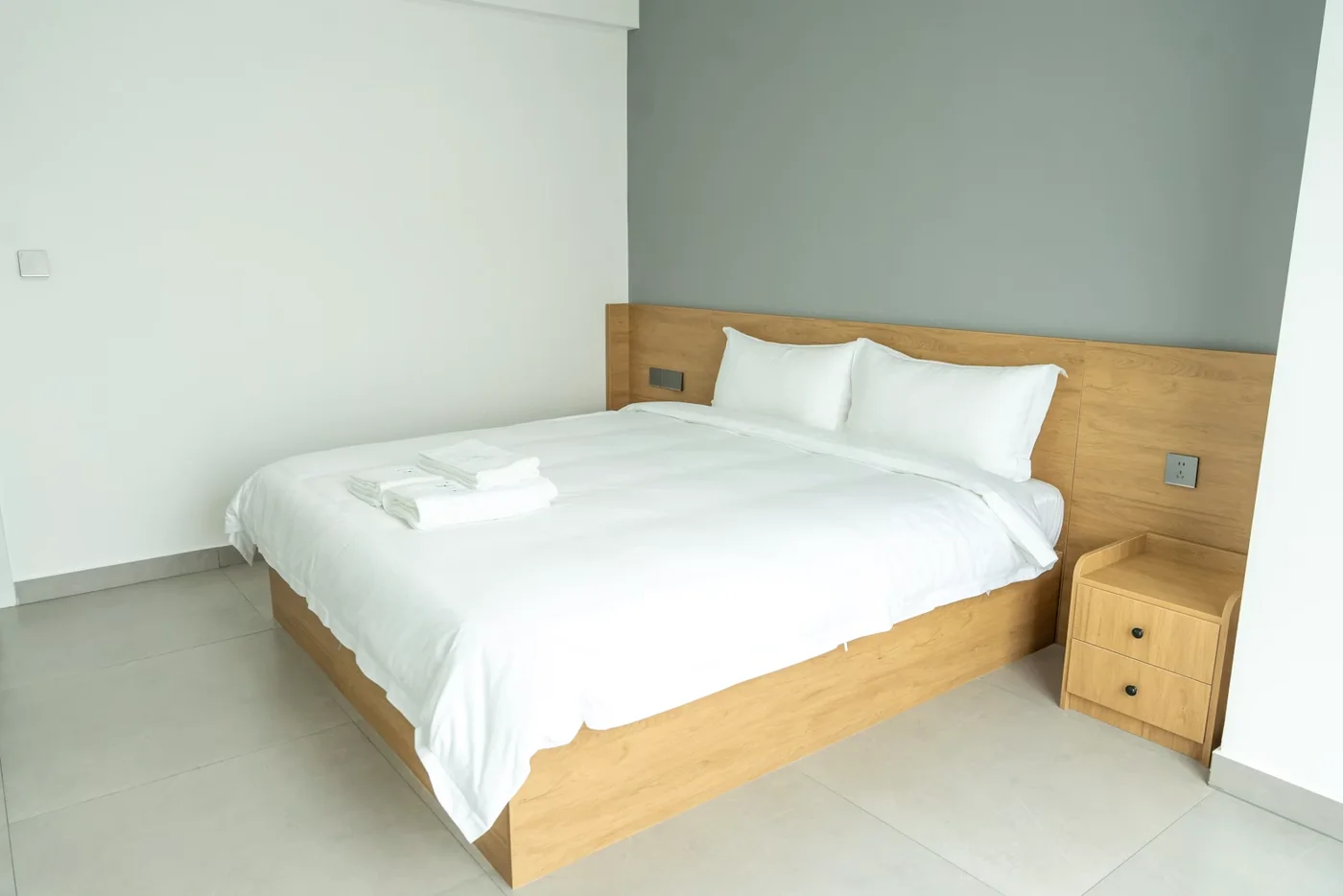
Where to stay
Old Town edge
Best for first visits and early departures.
Look just outside the loudest streets. Five extra minutes on foot can remove hours of sleep disturbance.
Kazimierz
Best for restaurants, bars and walking access to Podgórze.
The northern and western parts are convenient; room noise varies street by street.
Podgórze or Zabłocie
Best for modern apartments, river access and a less saturated evening.
You will cross or use trams more often, which is a feature if you want the city to widen.
Near the station
Practical for the one-week rail route and day trips.
The immediate commercial zone is functional rather than romantic, but the Old Town remains close.

.jpg)

.jpg)