A comparison page should not just announce a winner. It should tell you which version of the trip you are buying.
Where this sits
Kraków and Wrocław are two of Poland's strongest city-break choices outside Warsaw. Kraków anchors Małopolska in the south; Wrocław sits farther west in Lower Silesia near Czechia and Germany, so they belong to different regional histories as much as different weekend styles.
Kraków and Wrocław make very different Polish weekends. Kraków has an extraordinary concentration of historical sites around the Market Square, Wawel and Kazimierz, plus museums that can easily fill several days. It is also one of Poland's busiest visitor cities. Wrocław offers a handsome reconstructed centre, river islands, varied neighbourhoods and a less tightly scheduled way to explore urban history.
The distinction is most useful when you look beyond first impressions. Choose Kraków when its museums and historic districts are central to your trip. Wrocław works especially well for a relaxed couple of days or as a base for exploring Lower Silesia. Both have excellent food and nightlife; the practical differences are how much time you want to spend in museums, where the next day trip lies and how you prefer to move around town.
Kraków's central route is worth its reputation
Kraków's Main Market Square leads straight into the Cloth Hall, St Mary's Basilica and a medieval street network enclosed by the Planty. From there, Wawel follows naturally, while Kazimierz and Podgórze add essential parts of the city's Jewish, industrial and twentieth-century histories. You can find the basic geography in the city's official Market Square guide.
This is a substantial advantage on a first Polish city break. Several important places sit close together, and you can understand a great deal without organising every hour. The concentration can also make the central streets busy, particularly at weekends; it's worth allowing time for a quieter neighbourhood café or a walk away from the main square.
Kraków is particularly rewarding when you want three days of museums, history and architecture. Its fame means crowded attractions and a large visitor economy, but it does not make the major sights any less worthwhile.

Wrocław is easier to explore without a strict itinerary
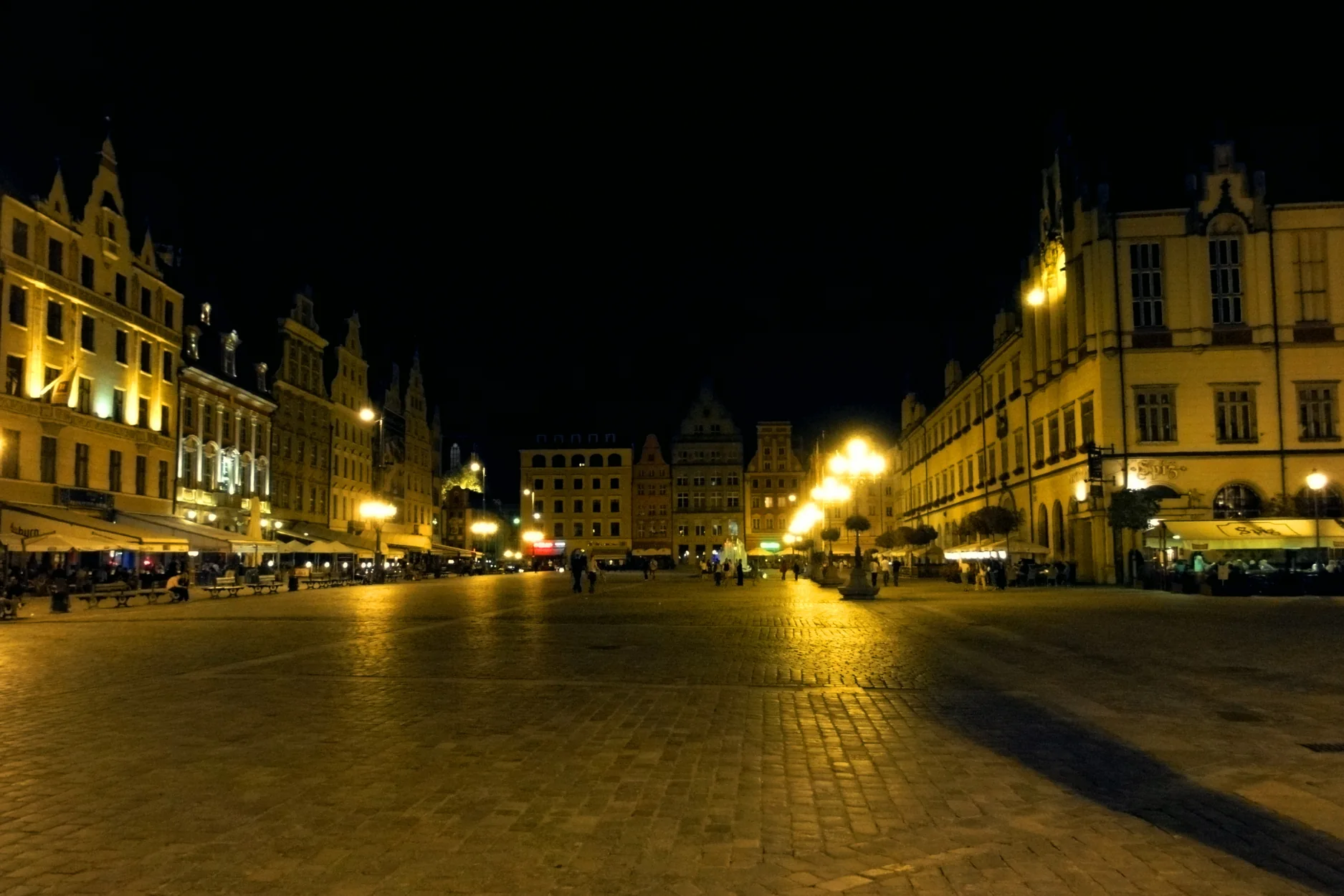
Wrocław's Market Square and Town Hall make an impressive first stop. The Oder and its islands then encourage a less direct route: cross towards Ostrów Tumski, spend time near the Four Denominations District or look at the streets and public art around Nadodrze. Centennial Hall and the eastern parks give you a reason to use a tram.
The pleasant thing about Wrocław is that a good day need not revolve around one major ticketed attraction. A riverside walk can become lunch, another bridge and an interesting residential street. The city's complex history is present, but it often needs explanation rather than simply presenting itself through a continuous medieval centre.
Wrocław's 1945 destruction and post-war rebuilding, its German Breslau history and the population changes that followed give the reconstructed centre a different meaning from Kraków's surviving core. This is a real cultural distinction, not a reason to decide which city looks 'more authentic'.

Different histories beneath the attractive façades
Kraków's medieval street plan, churches, university buildings and royal complex survived the Second World War more extensively than the centres of many other Polish cities. Its continuity makes the old town especially legible for visitors interested in the kingdom, the university and the city's later occupation history. Restoration and heavy tourism have changed how the centre operates, but the historical fabric remains exceptional.
Wrocław was devastated at the end of the war and rebuilt as a Polish city after the population transfers and territorial changes of 1945. The reconstructed Market Square stands alongside surviving German-era buildings, later Polish interventions and extensive post-war residential areas. This mixture is one of Wrocław's most interesting features if you are willing to look beyond the colourful façades.

Tourist pressure works differently
Kraków draws large international crowds to a relatively small area around Rynek Główny, Wawel and Kazimierz. The city also has universities, working neighbourhoods and everyday life far beyond that visitor circuit, including Nowa Huta and residential areas to the east. Avoiding the entire city because the square is busy means missing some of Poland's best historical places.
Wrocław receives substantial visitor numbers too, but its river geography, islands and more dispersed sights distribute people differently. Summer weekends around the Market Square can still feel crowded, while a neighbourhood a few tram stops away has a very different rhythm. Neither is an undiscovered secret. The meaningful distinction is how much of your chosen itinerary takes place in the most heavily visited streets.
Which city works better after dark?
Kraków has the denser international nightlife circuit. The Old Town offers cellar bars and clubs; Kazimierz has a broader mix of restaurants, drinking spots and late social life. That choice brings specialist music, mainstream options and a visible weekend-party economy, including venues designed chiefly for foreign groups. It is particularly convenient if you want activity on several evenings rather than only Friday and Saturday.
Wrocław has a lively central circuit of its own: the Market Square, Włodkowica and the Four Denominations District, Ruska 46 and Pasaż Niepolda offer different atmospheres within a manageable area. Electronic venues such as Ciało and Transformator are worth choosing around particular event programmes, rather than assuming every night is equally busy. Our Wrocław After Dark guide explores these differences in greater detail.
A casual pub evening works well in both cities. Kraków is the stronger bet for several consecutive nights with plenty of choice; Wrocław can be particularly enjoyable when you build an evening around a central neighbourhood or a specific music booking.
Museums worth making time for
Kraków offers an exceptionally strong museum itinerary. Wawel combines the cathedral, royal collections and historical interiors; the National Museum has several branches. Beneath the Market Square, Rynek Underground explains the medieval city, while Schindler's Factory, Podgórze and Kazimierz allow a more careful exploration of twentieth-century history. Those visits require time and context rather than a race through a checklist.
Wrocław has engaging museums with a wider spread of subjects. The Panorama of Racławice is an extraordinary nineteenth-century painted spectacle, Hydropolis examines water and infrastructure in a converted reservoir, Zajezdnia covers the city's post-war history and the Four Domes Pavilion is a strong choice for modern and contemporary art. A visitor interested in a few diverse stops may prefer that mix; someone wanting several days of connected historical study will find more material in Kraków.

Where the two cities lead next
Kraków is commonly paired with Wieliczka Salt Mine and Auschwitz-Birkenau. These are fundamentally different kinds of visits. Wieliczka is a major historical and engineering attraction; Auschwitz-Birkenau is a memorial at the site of a former extermination camp, which deserves its own attention rather than being treated as a casual add-on to a fun weekend. The Tatra foothills and Zakopane are another possibility, especially with more time.
Wrocław is a particularly useful starting point for Lower Silesia: Książ Castle, the Churches of Peace at Świdnica and Jawor, mountain areas, industrial heritage and routes into Czechia or Germany. Many of those excursions are easier with a car, whereas Kraków's better-known trips have more developed organised-tour and public-transport options.
For a wider Polish road trip, that difference may matter more than the cities' relative café prices. Consider what lies beyond the second night before deciding where to stay.
Walking and local transport
The core of Kraków is well suited to walking. Rynek Główny, Planty, Wawel, Kazimierz and much of Podgórze can be combined with a little planning and comfortable shoes. Trams become valuable for Nowa Huta and more distant neighbourhoods. A rental car adds very little to an ordinary central visit, where traffic and restrictions can be inconvenient.
Wrocław is also easy to explore on foot around the Market Square, but the Oder's channels and the city's separated sights create a more stretched practical map. Use trams for Centennial Hall, the zoo and eastern parks; Nadodrze and the station area can fit into a longer urban walk. A car becomes more useful when you intend to continue into Lower Silesia, not merely to move between Wrocław's bars and museums.
Compare actual dates and neighbourhoods
Wrocław is often cheaper than Kraków for accommodation at a comparable level, especially when Kraków's old-town demand is high. But there is no reliable rule that every meal, beer or hotel room costs less in Wrocław. Both cities have polished restaurants and expensive central cocktails, and both offer simpler neighbourhood options.
Compare stays for the dates you actually intend to travel. A room beside Kraków's busy Market Square may cost more and be noisier than one a few tram stops away; Wrocław's most central addresses also command premiums on event weekends. Choose a location that suits the museum visits, evening plans and onward journey rather than chasing an old headline about which Polish city is cheaper.
Kraków suits a history-led first trip
Kraków is particularly suitable for a first substantial trip to Poland when major historic sites and museums are priorities. With three or four days, you can explore the Market Square, Wawel, Kazimierz and Podgórze at a sensible pace, eat in several different areas and still include a carefully chosen museum or excursion. It has enough nightlife for a stay with more than one late evening.
The cost of that concentration is sharing famous streets with many other visitors. Plan a few hours beyond the best-known squares rather than trying to escape the city altogether; there is considerable resident life in Kraków once you move outside the tourist core.
Wrocław suits a lighter weekend or a longer route
Wrocław is a strong choice for two relaxed days with attractive squares, riverside walking, neighbourhood cafés and selected museums rather than a densely programmed royal itinerary. The city's changing political and architectural identity rewards a little reading, and there is plenty of nightlife for a good weekend.
It also fits especially well into a journey through Lower Silesia, western Poland or across the Czech border. If the road or rail route matters as much as the city break, Wrocław's geography may be the deciding advantage. It deserves to be visited on its own terms, not merely as an alternative for travellers priced out of Kraków.
What the trip actually rewards
Kraków is the stronger first Polish city break when you want historic density and major museums within three nights. Rynek Główny, Wawel and Kazimierz sit close enough together to be enjoyed without a complicated travel plan. The tourist economy is visible, but the architecture and historical sites genuinely merit their reputation.
Wrocław is excellent for another kind of visit. Its river islands and bridges, Silesian history, markets and less concentrated evening areas make it pleasant to spend time moving between different parts of the city. It works particularly well when you are extending a trip through western Poland rather than basing everything around famous excursions.
Do not decide by assuming Wrocław is automatically cheaper or less touristy. Compare the actual accommodation and the museums, music or neighbourhoods you want. Choose Kraków for a concentrated first trip; Wrocław for a city where the route through it is part of the pleasure.
Hero photograph: Jakub Hałun – Kraków seen from Krakus Mound, April 2023, CC BY-SA 4.0. The page layout may crop the original.