

Sarajevo makes the past difficult to escape. Belgrade makes the present difficult to contain.
Where this sits
Sarajevo is the mountain-valley capital of Bosnia and Herzegovina; Belgrade is Serbia's much larger capital at the Sava–Danube confluence. They connect naturally on a western-Balkans trip, but the road between them is part of the journey rather than a quick transfer.
Sarajevo and Belgrade are close enough to be linked on the same trip and different enough that comparing them as substitutes feels slightly wrong.
That is exactly why the comparison is useful.
Both sit inside the former Yugoslav space. Both carry Ottoman, Austro-Hungarian, Yugoslav and post-Yugoslav histories. Both have strong café and restaurant cultures. Both can produce a late night. Both are cheap enough in some categories to retain an old “Balkans value” reputation that needs updating.
Then you arrive.
Sarajevo is a city compressed by mountains.
Belgrade is a city that keeps spilling across rivers.
Sarajevo makes history physically close.
Belgrade gives you enough urban scale to spend a day barely touching the old centre.
The correct choice depends less on which city is “better” and more on whether you want concentration or expansion.
The answer in one minute
Choose Sarajevo if you want:
- two or three days with very little wasted movement;
- history that is physically visible in the streets;
- Ottoman and Austro-Hungarian urban layers inside one walk;
- a smaller city with stronger immediate atmosphere;
- cafés, food and evenings that do not require a nightlife strategy;
- mountain geography always present around the city;
- a trip where the twentieth century deserves serious attention.
Choose Belgrade if you want:
- a real metropolis rather than a compact capital;
- Yugoslav modernism and New Belgrade at city scale;
- bigger nightlife choice;
- more restaurant/bar neighbourhoods;
- a stronger four-night stay;
- free city public transport;
- a city that can support repeat visits without repeating the same route.
For two nights, Sarajevo wins.
For four nights, Belgrade wins.
For the most distinctive first impression, Sarajevo.
For the broader urban trip, Belgrade.
Sarajevo is immediately legible because the valley does half the work
Sarajevo’s geography explains the city before a museum does.
The Miljacka runs through the valley. Hills rise close on both sides. Baščaršija sits at the eastern end of the central axis. Austro-Hungarian streets extend west. Yugoslav and later residential development continues down the valley.
You can physically read expansion by walking or taking the tram.
That is unusual.
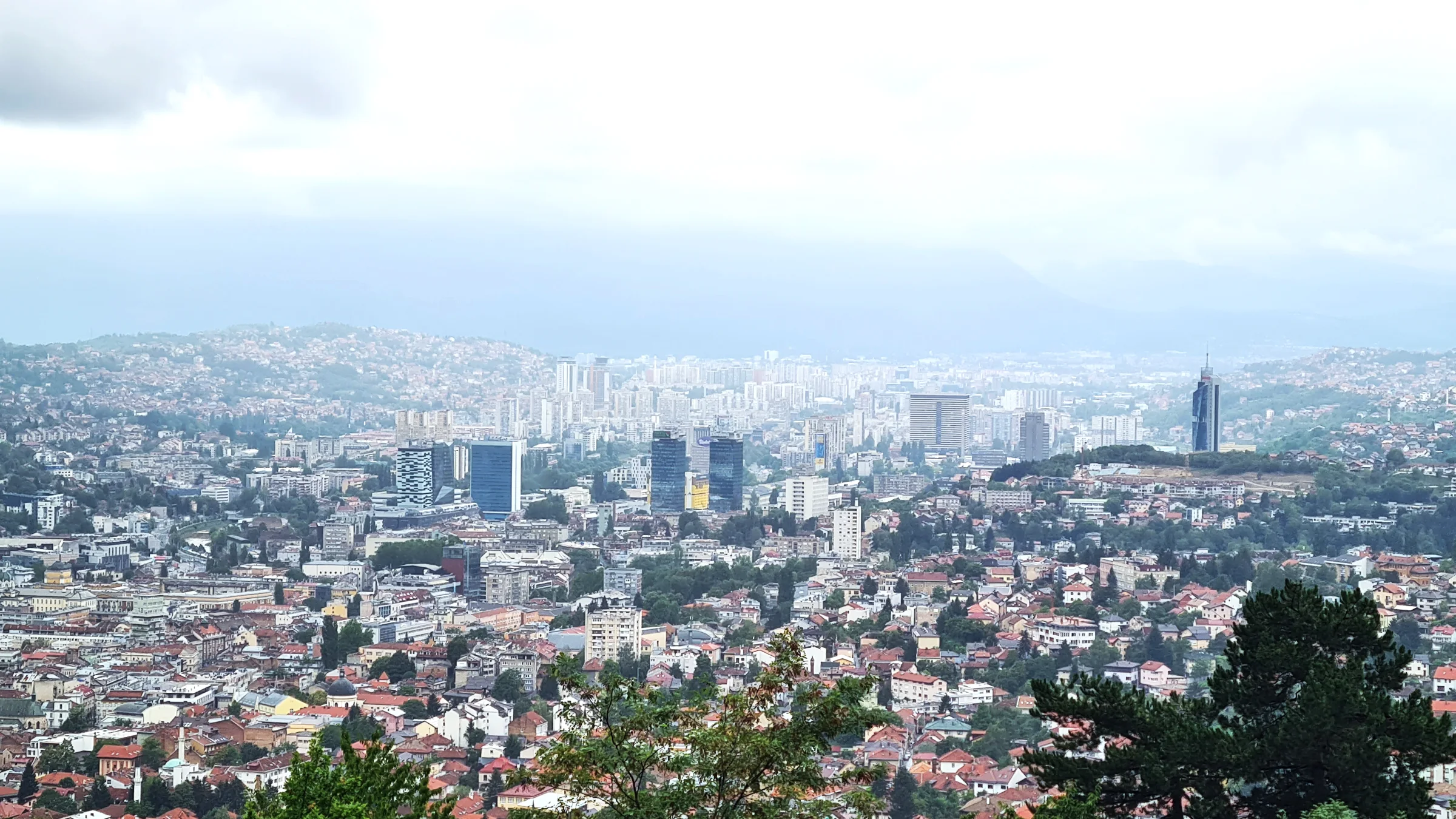
It also means the siege of the 1990s cannot be separated from geography. High ground, access routes, the airport and the tunnel are not abstract historical references. The terrain makes them legible.
The full Sarajevo guide deliberately resists turning the city into a war museum with coffee attached.
But resisting reduction does not mean reducing the history in return.
Sarajevo asks for attention.
Belgrade is harder to understand because the city has too many centres of gravity
Belgrade begins with Kalemegdan and the confluence because that is the easiest geography to explain.
Then the city refuses to stay there.
Dorćol drops toward the Danube. Vračar builds another social centre around Saint Sava. Zemun keeps its own historical identity. Novi Beograd operates at completely different scale across the Sava. The waterfront redevelopment changes another edge again.

This makes Belgrade less romantic as a short weekend and more rewarding as an urban trip.
You cannot simply walk the “old town” and claim the capital made sense.
That is a weakness when you have 36 hours.
It is an advantage when you have four days.
History: Sarajevo is denser, Belgrade is broader
Sarajevo concentrates world-historical events unusually tightly.
The 1914 assassination site, Ottoman urban heritage, Habsburg administration, Yugoslav period, 1984 Olympics, siege and post-war reconstruction all exist within a relatively small geography.
The Museum of Sarajevo continues to actively interpret this history; in 2026 it has run programming around both the assassination and the Tunnel of Hope. Current Museum of Sarajevo programme.
Belgrade’s historical role is wider geographically and institutionally.
It was the capital of Serbia, then Yugoslavia in several forms, and its twentieth-century state architecture matters at metropolitan scale. The Museum of Yugoslavia’s current 2026 programme includes an exhibition on Yugoslav modernism and continuing public discussions about Yugoslav heritage. Current Museum of Yugoslavia programme.
Choose Sarajevo if you want history concentrated into place.
Choose Belgrade if you want history expressed through a whole capital’s scale.
Ottoman layer: Sarajevo wins easily
Baščaršija, mosques, courtyards, trading streets and surviving residential heritage give Sarajevo a much stronger Ottoman urban experience.
This is not a “more authentic Balkans” award.
It is simply what survived and how the city developed.
Belgrade was also profoundly shaped by Ottoman rule, but far less of that urban fabric remains visible at equivalent scale.
If this layer is central to the trip, choose Sarajevo.
Yugoslav modernism: Belgrade wins at metropolitan scale
Sarajevo has major Yugoslav architecture, Olympic infrastructure and post-war neighbourhoods.
Belgrade has New Belgrade.
That changes the category.
Blocks, federal buildings, broad roads and monumental projects were not inserted into one part of an older city. They helped create an enormous new part of the capital.

For travellers interested in socialist urban planning, brutalism, late modernism and how those districts function now, Belgrade is the stronger destination.
The important caveat: do not treat apartment blocks as an outdoor design museum built for visitors.
People live there.
Architecture: Sarajevo has sharper transitions; Belgrade has more scale
Sarajevo is famous for the way Ottoman and Austro-Hungarian streets meet almost visibly along the central axis.
The transition can feel almost too perfect as travel symbolism.
Then the city continues into Yugoslav and contemporary layers and the neat story breaks down usefully.
Belgrade’s transitions are bigger and less theatrical.
Historic centre, interwar fabric, socialist blocks, river industry, glass offices and waterfront towers can require actual transport between them.
Choose Sarajevo for architectural contrast in one walk.
Choose Belgrade for urban systems that need a day.
Food: Sarajevo is easier to love quickly
Sarajevo gives a visitor an immediate food grammar.
Ćevapi, burek and other pita, Bosnian coffee, grilled meat, bakeries and sweets are easy to encounter without turning the trip into research.
The danger is eating only the five dishes every visitor has been told to order.
Belgrade has a broader metropolitan restaurant range: Serbian classics, kafanas, bakeries, grill culture, modern restaurants, regional influences and a bigger contemporary dining scene.
Sarajevo wins the first 48 hours.
Belgrade wins if food is part of a longer city trip.
Coffee: both take it seriously, in different rooms
Sarajevo’s coffee culture is tied visibly to Bosnian/Ottoman tradition and Baščaršija ritual.
Belgrade has a more diverse café map: traditional kafana culture, neighbourhood cafés, specialty coffee and terraces across several districts.
Do not ask which city has “better coffee”.
Ask whether you want a distinctive inherited ritual or a larger café city.
Nightlife: Belgrade wins on range, Sarajevo wins on ease
Belgrade has the deeper nightlife ecosystem.
The Belgrade After Dark guide covers Drugstore, Barutana, Cetinjska, splavs, kafanas, queer events, table clubs and commercial adult nightlife because those categories genuinely coexist.
Sarajevo is smaller.
That can be an advantage.
A dinner can turn into drinks without the night becoming a transport project. Central bars, live venues and seasonal events are easier to reach from a central hotel.
Belgrade is the choice when nightlife is a primary travel reason.
Sarajevo is the choice when nightlife should support the trip rather than organise it.
The “wild Balkans” stereotype fits neither city very well
Belgrade is marketed internationally as wild nightlife.
Sarajevo is marketed as emotional history and hospitality.
Both descriptions flatten adults into travel characters.
Belgrade has quiet residential evenings, family restaurants and museum days.
Sarajevo has clubs, alcohol, youth culture and late nights.
Neither city exists to perform a regional stereotype.
That matters because expectations shape behaviour.
A group arriving in Belgrade determined to prove the city is crazy is more likely to enter a commercial club it did not research.
A visitor arriving in Sarajevo determined to feel moved can reduce residents to historical evidence.
Both are forms of bad travel.
Transport: Belgrade is bigger and cheaper; Sarajevo is simpler
Belgrade’s public transport has been free for all users since 1 January 2025. Official current policy.
That is an enormous practical advantage because the city is large enough to need the network.
Sarajevo’s main urban axis is simpler. Tram, trolleybus, bus and walking cover the useful visitor geography, with far less reason to cross a metropolis multiple times.
The difference is almost philosophical.
Belgrade gives you free transport because you will use a lot of it.
Sarajevo asks for less transport in the first place.
Airports: Sarajevo is closer in feeling; Belgrade has more transport options
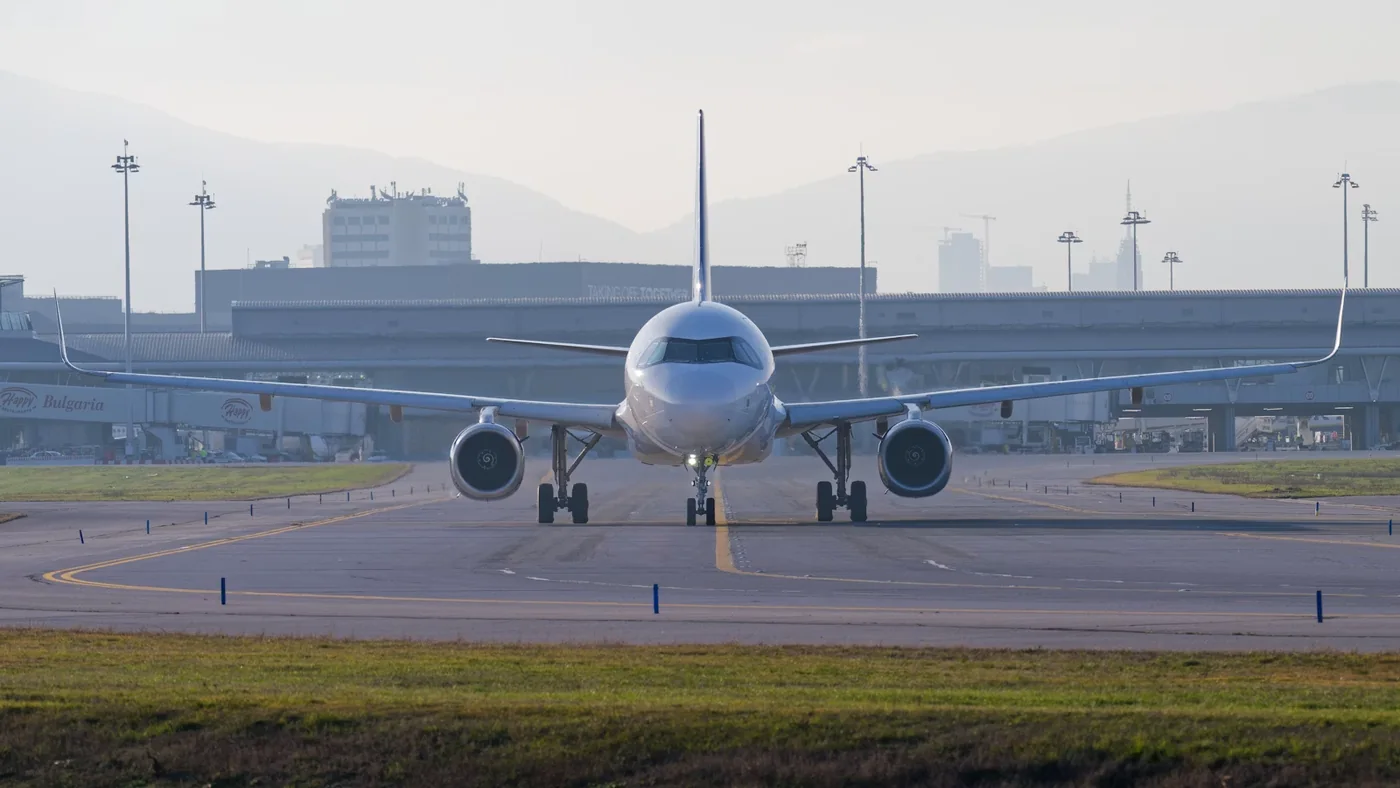
Sarajevo Airport is geographically close to the city, though the final urban connection has historically been less frictionless than the distance suggests. The airport’s current bus to Baščaršija/Bentbaša costs 5 KM one way, with a revised timetable designed around passenger demand. Current airport bus information.
Belgrade Airport currently lists line 72 to Zeleni Venac, A1 to Slavija, 600 to Beograd Centar and 72N to Republic Square at night. Current Belgrade airport public transport.
Belgrade has the broader network.
Sarajevo feels physically closer once the connection works.
Costs: Sarajevo generally wins, but not every category
Sarajevo usually offers lower accommodation, meal and casual-drink costs than Belgrade’s most fashionable districts.
Belgrade can still be inexpensive in ordinary cafés, bakeries and restaurants, but its high-end nightlife and modern hotel market create a much wider price range.
Free public transport pulls some cost back in Belgrade.
The biggest budget mistake is assuming “Balkans” makes either city uniformly cheap.
A table club in Belgrade can cost more than the rest of the day combined.
A central Sarajevo hotel on a major event weekend can erase the usual accommodation advantage.
Price the actual trip.
Solo travel
Sarajevo’s compactness makes solo travel exceptionally manageable. A traveller can stay central, walk most days and keep evenings geographically simple.
Belgrade offers more social variety, more hostels, bigger nightlife and more neighbourhoods, but the scale requires stronger decisions.
Solo women do not need a separate sanitized itinerary in either city. They do benefit from defined late transport, normal drink awareness and not accepting unsolicited rides or venue redirects.
Queer travellers should research current community venues and events in both. Belgrade has the larger visible event ecosystem; neither city should be assumed socially uniform outside those spaces.
Winter
Sarajevo can be atmospheric in winter, but valley air quality and inversions can be a real issue. Mountain access may be excellent while the urban air is not.
Belgrade is less geographically dramatic in winter and more capable of shifting the trip indoors: museums, restaurants, cafés, clubs and neighbourhoods.
For a winter city break with no mountain plan, Belgrade is more resilient.
For a winter trip where Sarajevo plus nearby mountain context is the point, Sarajevo is more distinctive.
Summer
Sarajevo’s outdoor cafés and evenings work beautifully without requiring huge distances.
Belgrade’s rivers, open-air venues, Ada Ciganlija and Barutana give summer a broader nightlife and leisure map.
Summer makes Belgrade’s scale more enjoyable.
It makes Sarajevo’s compactness almost effortless.
Which one first?
For somebody new to the western Balkans, Sarajevo may be the more distinctive first trip.
It concentrates regional history, religion, food, urban form and geography into an experience that does not resemble many other European capitals.
Belgrade is the stronger second city when the traveller is ready for scale, modernism and a more contemporary metropolitan rhythm.
That does not make Sarajevo more authentic.
It makes it more immediately specific.
Or do not choose: drive between them
The direct practical decision can be replaced by a better one.
Drive Belgrade → western Serbia → Drina → Višegrad / Tara option → Sarajevo and let the transition become the trip.

The Belgrade to Sarajevo Drina road is deliberately built around that idea.
Two capitals make more sense when the landscape and border between them are not erased by a boarding pass.