
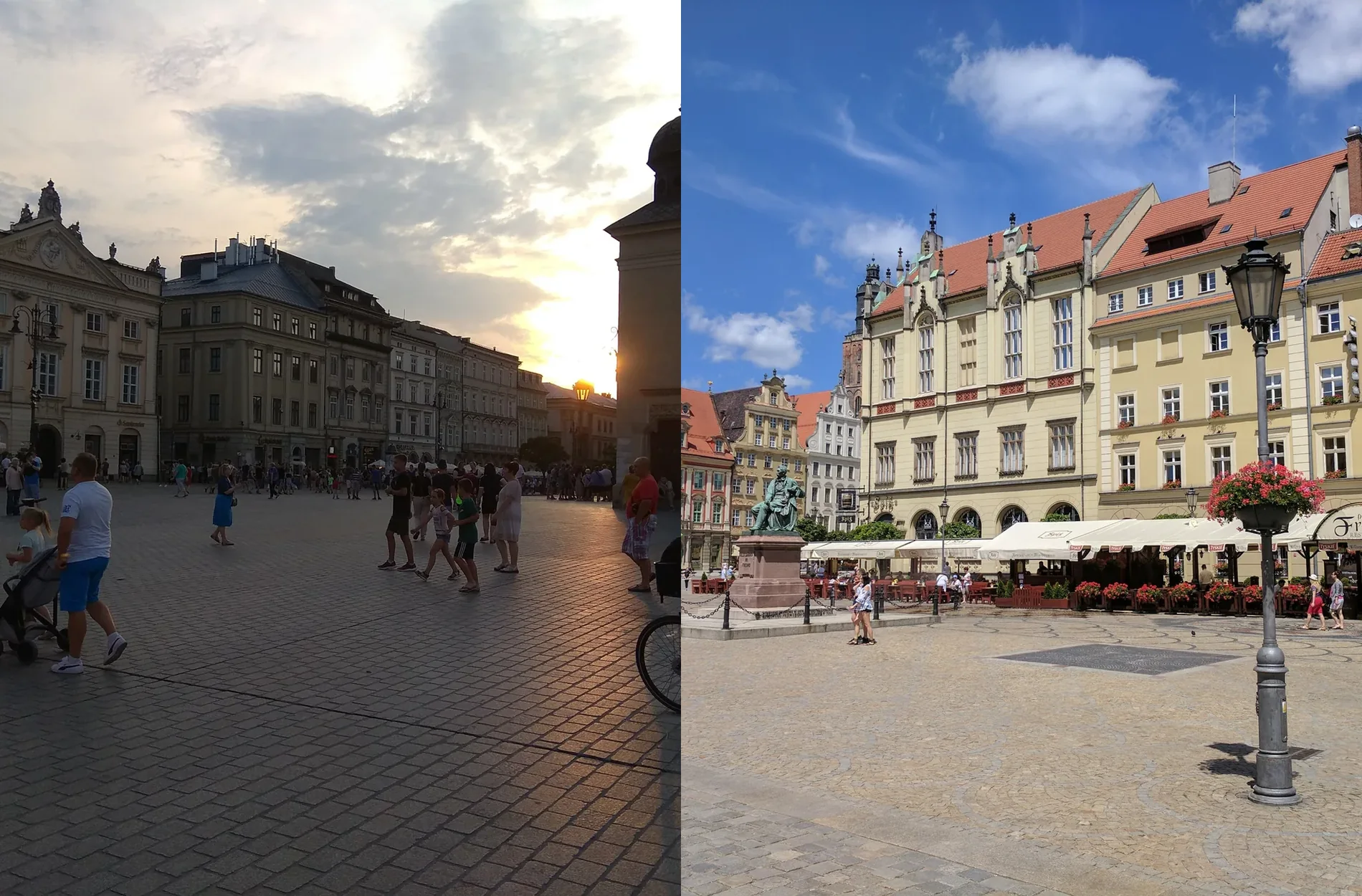
A comparison page should not just announce a winner. It should tell you which version of the trip you are buying.
Where this sits
Kraków and Wrocław are two of Poland's strongest city-break choices outside Warsaw. Kraków anchors Małopolska in the south; Wrocław sits farther west in Lower Silesia near Czechia and Germany, so they belong to different regional histories as much as different weekend styles.
Choosing between Kraków and Wrocław sounds like a question about two Polish city breaks.
It is really a question about how much importance you want the city to carry for you.
Kraków arrives with instructions.
There is the vast Market Square, Wawel, Kazimierz, Podgórze, major museums and several historical subjects that cannot be treated as decorative background. The city is famous enough that visitors often arrive with an itinerary already assembled by other people.
Wrocław arrives with fewer obligations.
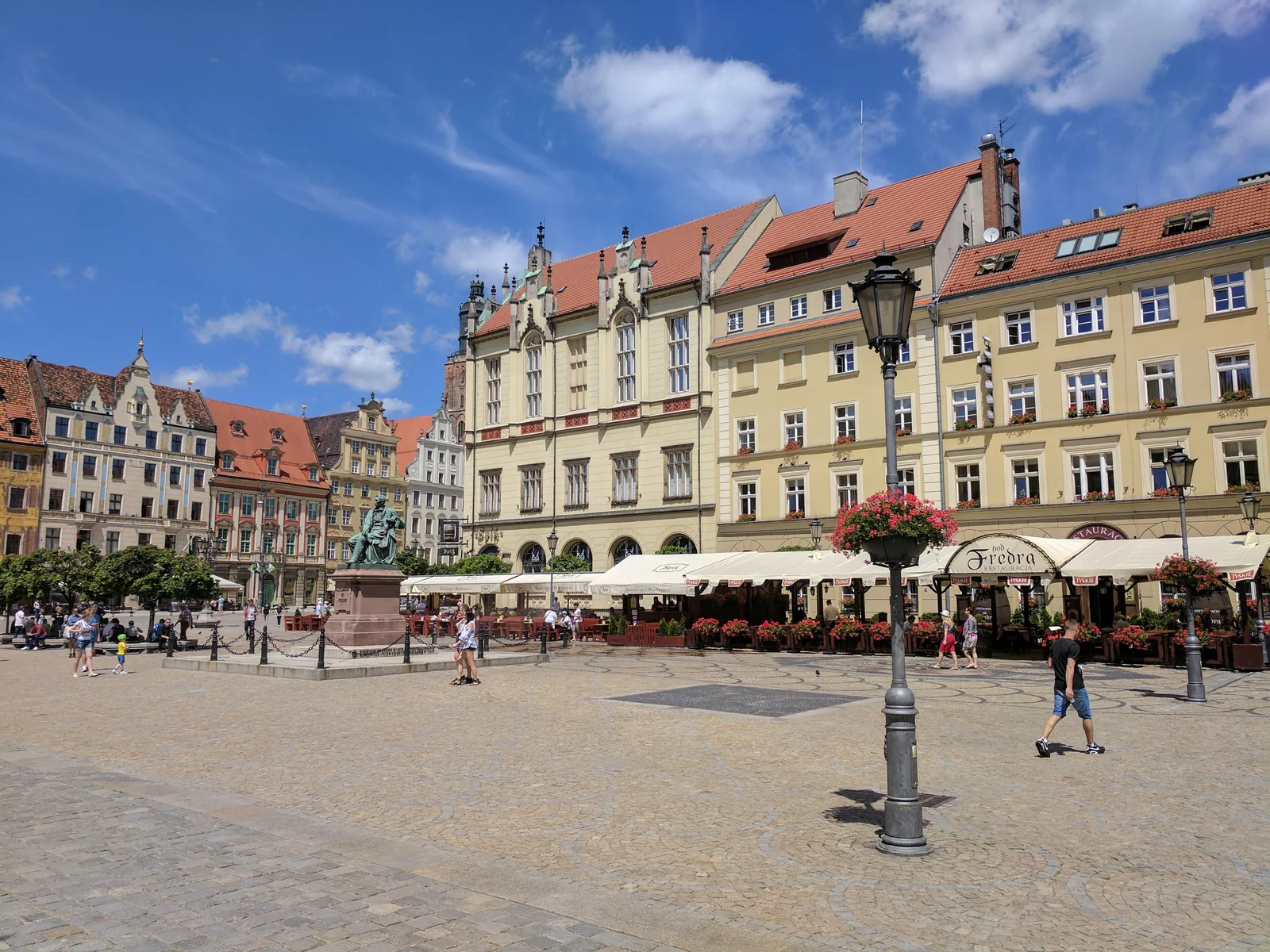
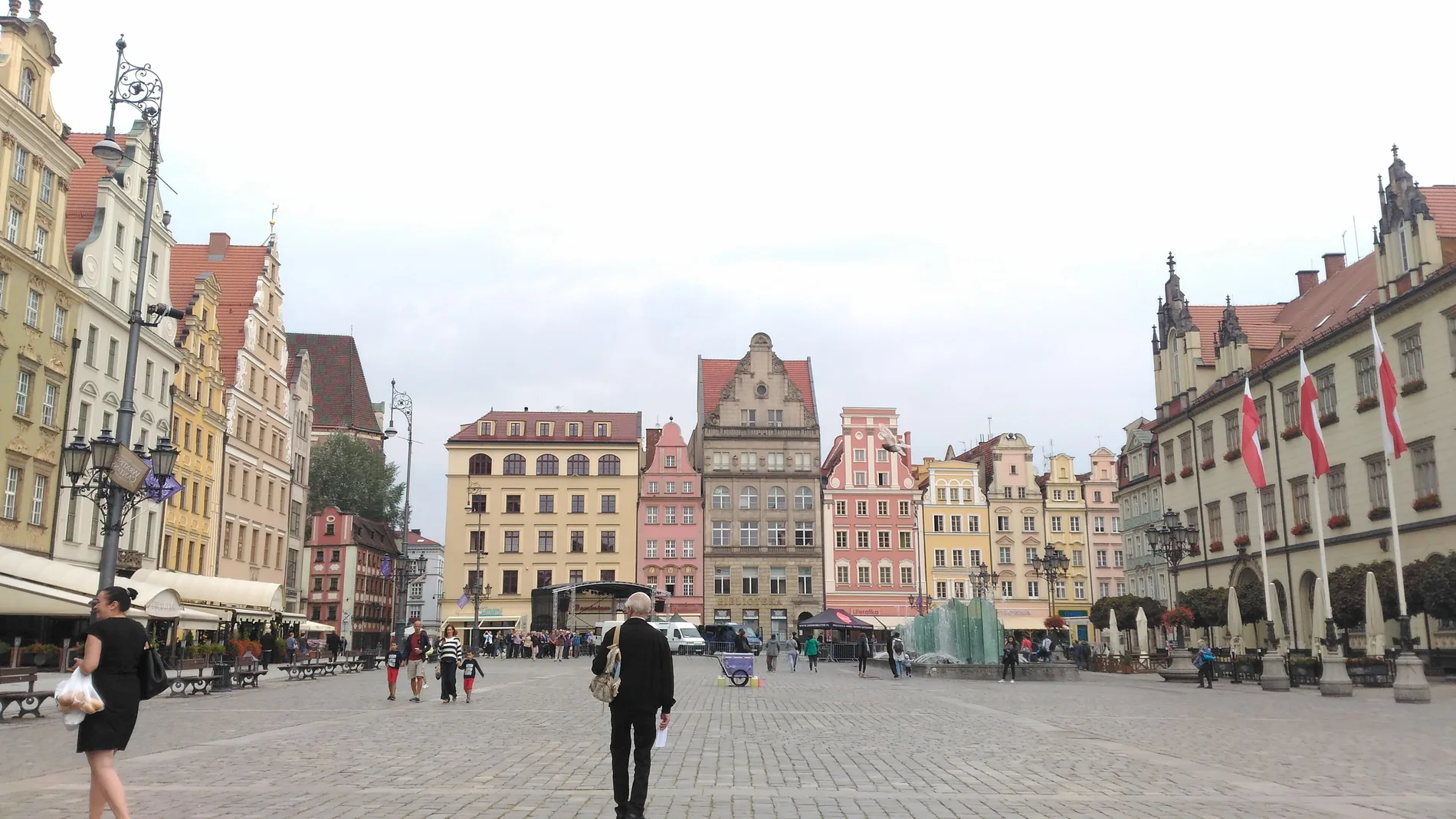
Its Market Square is beautiful, its history is complicated and its river gives the centre an unusually relaxed structure. But the city does not insist that every day becomes culturally significant.
Neither is the universal winner.
The useful answer depends on what kind of weekend you are buying.
Choose Kraków for the stronger first impression
Kraków has the more powerful central sequence.
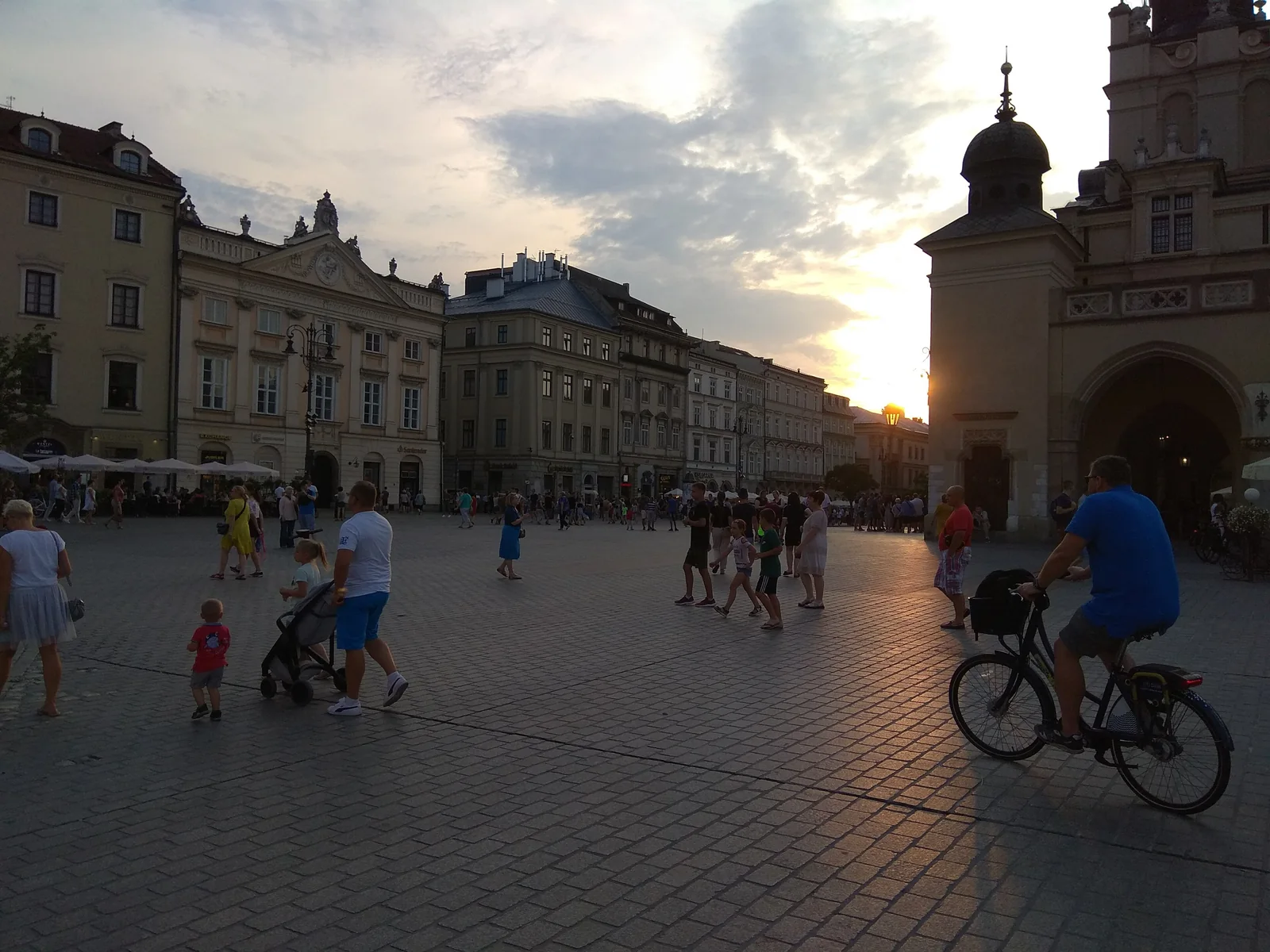
The Main Market Square opens directly into the Cloth Hall, St Mary’s Basilica, medieval streets and the Planty garden ring. From there, Wawel Hill follows naturally. Kazimierz and Podgórze extend the historical and social geography rather than feeling like unrelated excursions.
The city’s main attractions connect into a coherent narrative.
That is a major advantage on a first visit.
A traveller can arrive with limited preparation and still encounter a city that explains what matters through its physical structure.
Kraków also offers more internationally significant museums, interiors and historical sites than Wrocław. A visitor motivated by Polish royal history, Jewish history, the Second World War or twentieth-century occupation will find more material concentrated within a manageable area.
That concentration creates weight.
It can also create pressure.
Choose Wrocław when you want room around the itinerary
Wrocław’s highlights are more dispersed.
The Market Square, river islands and Ostrów Tumski form the historical core. Centennial Hall sits east of the centre. Nadodrze, the Four Denominations District and Ruska 46 add neighbourhood life without becoming formal sightseeing blocks.
The city is easier to use casually.
You can walk beside the Oder without needing the walk to end at a major monument. You can spend longer over lunch without calculating which royal chamber has been sacrificed. You can decide that the afternoon has finished before the attractions do.
That does not mean Wrocław lacks history.
Its history is simply less immediately packaged.
The transition from German Breslau to post-war Polish Wrocław, the population movements after 1945 and the reconstruction of the damaged city require more context than the colourful façades provide.
Kraków presents history.
Wrocław often makes you look for the join.
Kraków is older in the way visitors expect
Kraków’s centre survived the Second World War without the destruction experienced by many other Polish cities.
That continuity remains visible.
The medieval street plan, churches, university buildings and royal complex create the kind of historical atmosphere people imagine when booking a Central European city break.
The city has been curated, restored and visited intensively, but the underlying fabric is real.
Wrocław’s centre was heavily damaged in 1945 and rebuilt afterwards. Its current appearance combines reconstruction, surviving older buildings, Prussian and German architecture, post-war modernism and later Polish interventions.
That mixture is intellectually interesting.
It is not always visually seamless.
Choose Kraków when preserved historical continuity matters.
Choose Wrocław when reconstruction and changing identity are part of the appeal.
Wrocław is not empty and Kraków is not unusable
The easiest comparison exaggerates.
Kraków becomes an overtouristed theme park.
Wrocław becomes an undiscovered local secret.
Neither description is accurate.
Kraków remains a functioning city of more than three quarters of a million residents, with universities, neighbourhoods and ordinary life extending far beyond the Old Town. The municipal tourism strategy explicitly tries to spread visitors towards Podgórze, Nowa Huta and areas outside the central tourist circuit.
Wrocław received more than seven million visitors in 2025, including 3.9 million overnight stays. It is not waiting quietly for the first perceptive foreign visitor to notice it.
The difference is concentration.
Kraków’s visitors gather heavily around the Market Square, Wawel and Kazimierz.
Wrocław’s river geography and separated attractions distribute movement more widely.
Kraków can feel busier even when both cities are busy.
The nightlife decision is not simply bigger versus smaller
Kraków has the larger internationally recognised nightlife reputation.
The Old Town contains dense clusters of cellar bars and clubs. Kazimierz provides bars, restaurants and late social activity across a wider district. The city attracts large numbers of foreign weekend groups, including the stag-party economy that local marketing prefers not to place on the brochure cover.
That produces choice.
It also produces venues designed primarily around visitor turnover.
Wrocław’s nightlife is smaller but not marginal. The Market Square, Four Denominations District, Ruska Street and Pasaż Niepolda form a compact central area, while clubs such as Ciało and Transformator operate around specific electronic events. Commercial venues remain available when a polished, recognisable club night is the objective.
Read the dedicated Wrocław after-dark guide before assuming the Market Square is the entire evening.
Choose Kraków for a wider range and more reliable midweek activity.
Choose Wrocław when a compact Friday or Saturday night is enough and the evening does not need to justify the whole trip.
The museum question favours Kraków
Kraków offers more obvious depth for visitors who want several days of museums and historical interiors.
Wawel includes the cathedral and royal collections. The National Museum operates multiple branches. The underground museum beneath the Market Square interprets the medieval city. Schindler’s Factory, Podgórze and Kazimierz address twentieth-century history through different sites and institutions.
These are not attractions to be stacked mechanically.
They make Kraków stronger when museums are a central reason for travelling.
Wrocław’s best museum choices are more varied than cumulative.
The Panorama of Racławice is a large nineteenth-century painted spectacle. Hydropolis explains water and infrastructure in a former reservoir. Zajezdnia focuses on the post-war city. The Four Domes Pavilion covers modern and contemporary art.
Wrocław offers good individual choices.
Kraków offers a stronger museum trip.
The day trips are not equivalent
Kraków is commonly used for Wieliczka Salt Mine and Auschwitz-Birkenau.
These should not be placed in the same emotional category.
Wieliczka is a major historical and engineering attraction.
Auschwitz-Birkenau is a memorial and former extermination camp. Visiting it can be important, but it is not a casual addition used to increase the value of a city break.
Kraków also opens routes towards the Tatra region, although Zakopane and the mountains deserve more than a rushed return journey when time permits.
Wrocław is the better western-Poland and Lower Silesia base.
The region includes Książ Castle, Świdnica and Jawor’s Churches of Peace, mountain areas, former industrial towns and road routes towards Czechia and Germany.
The Wrocław excursions generally become easier with a car.
Kraków’s best-known excursions are more heavily organised and easier to book without one.
Choose according to the wider journey, not only the city.
Both cities are walkable, but their geometry differs
Most of central Kraków can be explored on foot: the Market Square, Wawel, Kazimierz and Podgórze sit within a relatively compact urban area.
Trams become useful for Nowa Huta, outer neighbourhoods and longer transfers.
Driving in the central districts is inconvenient and frequently restricted.
Wrocław’s central core is similarly walkable, but the river channels and separated attractions stretch the practical map. Centennial Hall, the zoo and eastern parks are better reached by tram. Nadodrze and the station remain easy additions.
Neither city requires a rental car for the urban visit.
Wrocław benefits more when that car continues into the region afterwards.
Prices do not produce a permanent winner
Wrocław is repeatedly described as the cheaper alternative.
Sometimes it is.
Accommodation near Kraków’s Main Market Square can carry a stronger tourism premium, particularly on busy weekends and around major events. Central Wrocław may offer more value at the same level.
That does not make every meal, drink or hotel cheaper.
Prices vary more by exact street, venue and booking date than by a stable city-wide rule. Wrocław’s polished restaurants and cocktail bars understand modern pricing perfectly well. Kraków remains capable of inexpensive meals outside the most visited central streets.
Do not choose between the cities using a remembered beer price from somebody else’s trip three years ago.
Compare the hotels for your actual dates.
Then decide whether the saving changes the trip.
Choose Kraków when…
Choose Kraków when this is your first substantial trip to Poland and you want the city with the clearest historical and cultural impact.
Choose it when:
- major museums and historical interiors matter;
- you want several districts with distinct identities;
- you need more reliable nightlife across several evenings;
- you prefer a city that can comfortably fill three or four intensive days;
- the trip includes Wieliczka, the Tatra region or a carefully planned memorial visit;
- you do not mind sharing the centre with many other visitors.
Kraków is the more obvious choice.
Obvious does not mean wrong.
Choose Wrocław when…
Choose Wrocław when the trip should feel lighter without becoming empty.
Choose it when:
- walking, architecture and river space matter more than major museums;
- you want a compact centre without a compulsory royal itinerary;
- the city is part of a road or rail journey through western Poland;
- Lower Silesia is part of the plan;
- you prefer a good Friday or Saturday evening over a major nightlife reputation;
- you want two relaxed days rather than four densely programmed ones.
Wrocław is not the consolation prize for travellers avoiding Kraków.
It is a different purchase.
The honest verdict
Kraków is the stronger destination when historical importance, museums and immediate impact lead the decision.
Wrocław is the stronger destination when ease, space and the wider regional journey matter more.
For a first Polish city break, Kraków will satisfy more visitors.
For the traveller already suspicious of the standard first choice, Wrocław may be more enjoyable.
The wrong conclusion is that one city wins.
The useful conclusion is that they should not be expected to deliver the same weekend.

.jpg)