Bucharest → Brașov → Sibiu: The Transylvania Road That Should Not Be Built Around Dracula.
Bucharest to Brașov to Sibiu looks easy on a map and becomes stupid quickly if every famous castle is treated as compulsory. DN1 congestion, Sinaia timing, Brașov traffic, the Făgăraș corridor and roadworks matter more than Dracula mythology. The useful route gives the cities their own nights and lets the road explain southern Transylvania.
Romania · Road guideRomania11 min read
The fastest way to ruin this road is to confuse famous stops with mandatory stops.
Where this sits
This southern-Transylvania route starts in Bucharest, climbs north through the Prahova Valley to Brașov and continues west to Sibiu. The Carpathians divide the first half of the trip; the road network, not the straight-line distance, decides how much can realistically fit into one day.
Road check: 11 September 2026.Romanian road conditions, lane restrictions and Prahova Valley queues can change within hours. Treat all timing below as planning ranges and check live traffic immediately before departure.
The standard foreign itinerary through southern Transylvania is dangerously close to parody.
It produces recognisable photographs and a terrible relationship with time.
The road itself is not difficult because Romania hides the attractions.
It is difficult because the Bucharest–Brașov corridor can clog badly, because mountain-town access is slower than map distance suggests, because Bran sits off the direct Brașov–Sibiu line, and because every additional castle steals the daylight the actual cities needed.
This route works better when Bucharest, Brașov and Sibiu are the fixed points and everything between them has to earn the detour.
A useful minimum is three nights / four days if Bucharest is already completed before departure:
Day 1: Bucharest → optional Sinaia/Peleș → Brașov.
Day 2: Brașov as a city, with optional Râșnov/Bran only if that is genuinely the priority.
Day 3: Brașov → Făgăraș corridor → Sibiu.
Day 4: Sibiu.
The stronger version is four or five nights because it stops pretending the destinations are service stations for the road.
First question: do you need the car in Bucharest?
Usually, no.
The Bucharest guide is built around metro, walking and urban transport. Central parking, traffic and hotel access add friction without improving the city trip.
Collect the rental car on departure morning if the provider/location makes that practical.
That prevents you from paying for a vehicle whose main achievement was sitting underground while you used the metro.
Before paying, confirm:
mileage policy;
toll/vignette treatment;
roadside assistance;
winter equipment when relevant;
one-way/drop-off conditions if the road ends elsewhere;
deposit/card requirements;
whether the vehicle class is suitable for mountain winter conditions.
Plan this trip
Rent the car for the road, not for two days of Bucharest traffic and central parking.
Compare the practical parts of a trip to Bucharest, Brașov and Sibiu, Romania.
Bucharest to Brașov is not a reliable two-hour drive
This is the single most important correction.
The map makes Bucharest → Brașov look short.
The Prahova Valley section of DN1 can turn that optimism into hours of stop-start traffic on summer weekends, holidays and peak travel days.
On 16 August 2026, Romania's Infotrafic service reported congestion around Predeal–Bușteni, Poiana Țapului–Bușteni and Nistorești–Comarnic, and advised drivers to consider alternatives including A3 → Ploiești → DN1A via Cheia toward Brașov. That dated official traffic report shows how severe the corridor can become.
A clean morning can still work well.
A Saturday departure after breakfast can be a completely different product.
Do not promise a timed Peleș entry based on an optimistic navigation estimate made the night before.
Sometimes the best Bucharest–Brașov road advice is: take the train
If Brașov is your only destination and you do not need a car afterwards, rail deserves serious consideration.
That can beat a bad road day without parking stress.
The car earns itself when the road continues beyond Brașov, when regional stops matter or when accommodation sits outside the rail logic.
A road-trip article should be capable of telling you not to drive a section.
Sinaia and Peleș: one good stop can be enough
Sinaia sits directly on the main corridor and contains the route's most obvious deliberate stop: Peleș Castle.
Peleș is the obvious high-value stop on the Prahova Valley. Use it if the palace interests you; do not let it turn a traffic-heavy road day into a six-stop checklist.
The Neo-Renaissance royal palace is genuinely distinctive. If you care about royal history, architecture or interiors, use it.
But understand the operational cost.
Parking, walking to the complex, timed entry, queues and the inevitable coffee/lunch turn 'quick castle' into hours.
That is fine if Peleș is the reason.
It is not fine if you then add Bușteni, a monastery, a second palace, Bran and Râșnov because the map has icons.
One major stop on the Bucharest–Brașov day is usually enough.
Bușteni and Predeal: mountain towns, not mandatory attractions
The Prahova Valley passes through Bușteni, Azuga and Predeal, all with mountain access, ski infrastructure and their own reasons to stay.
For a direct road day, they are often where traffic becomes the story rather than sightseeing.
If hiking, skiing or the Bucegi mountains are part of the trip, build a separate night around them.
If not, do not add a cable car simply because traffic forced you to spend an hour looking at the mountain.
The worst itineraries convert every forced slowdown into another attraction and arrive in Brașov exhausted after dark.
DN1A via Cheia: an alternative, not a magic bypass
When DN1 is heavily congested, traffic authorities sometimes recommend the DN1A route via Ploiești – Vălenii de Munte – Cheia – Săcele – Brașov.
It can be useful.
It is not a motorway substitute.
The road is longer, more winding and conditions/weather matter. If everyone reroutes simultaneously, the advantage can shrink.
Use live traffic and current road information.
Do not choose it because a travel blog called it the scenic secret road five years ago.
A bypass only works when today's traffic agrees.
Brașov needs the night the castle circuit keeps stealing
Arrive in Brașov with enough daylight to orient yourself, then stop driving.
Brașov should receive its own night. Arriving, photographing Council Square and immediately driving to Bran is the fastest way to reduce a regional city to tour-bus infrastructure.
Use the full Brașov guide for the Old Town, Black Church, Schei, Tâmpa and the wider city. At night, the separate Brașov After Dark guide explains why the centre is an evening district before it is a full-scale club destination.
The road-trip mistake is arriving at 17:00, spending one night, leaving at 08:00 for Bran and later claiming Brașov was pretty but small.
You barely gave it a shift.
Two nights is the correct default when the city matters.
Bran Castle: optional means optional
Bran sits southwest of Brașov and off the direct Brașov–Sibiu corridor.
That does not make it a bad detour.
It makes it a detour that needs a reason.
Go if you want:
the castle and border-history setting;
Queen Marie / Romanian royal context;
the tourist mythology itself as a cultural phenomenon;
the Bran–Moieciu landscape;
a route that deliberately includes Râșnov or Zărnești.
Do not go because a map says Transylvania requires Dracula.
Vlad Țepeș's historical connection to Bran is weak relative to the international story sold around the castle.
If the attraction does not interest you beyond the name, keep the half-day.
Râșnov and Zărnești: better detours when the landscape is the reason
Râșnov can combine fortress geography and access toward the mountains. Zărnești is the more useful direction when Piatra Craiului hiking or rural/mountain travel is the real objective.
These are not substitutes for Bran in some authenticity competition.
They simply answer different trip questions.
A good detour has a function.
If you want a castle, go to the castle.
If you want mountains, stop driving between castles.
The road makes more sense as a sequence of changing urban and mountain geographies than as a hunt for the most marketable Transylvanian castle.
Brașov to Sibiu: this is the road people rush for no good reason
The direct corridor west follows DN1/E68 toward Făgăraș, Avrig and Sibiu.
It is not the Transfăgărășan.
It is not a cinematic mountain pass.
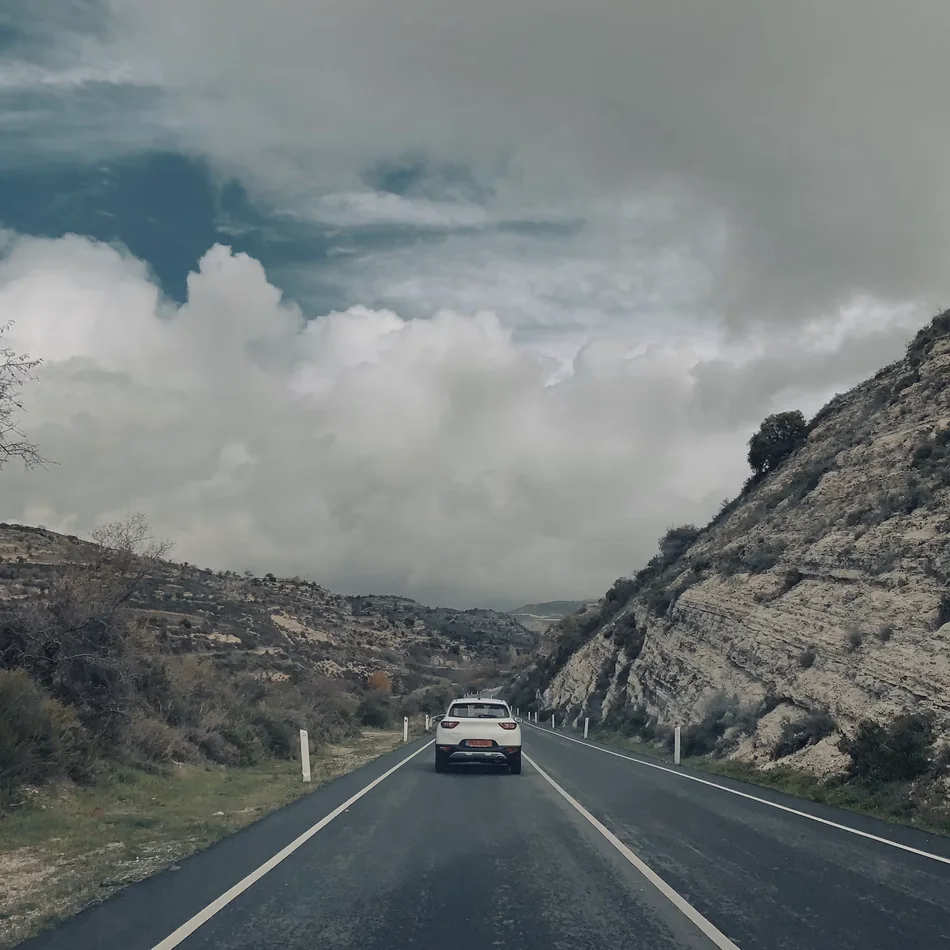
It is a major east–west road through towns, villages, industrial edges and the Olt/Transylvanian landscape with the Făgăraș Mountains often dominating the southern horizon.
That ordinary-road quality is useful.
Romania does not exist only at attractions.
Allow roughly 3 hours of clean driving plus stops, then add real-world margin for traffic, roadworks and town sections.
Do not turn a 140-kilometre regional road into motorway arithmetic.
The future motorway is not open yet
Construction of the A13 Sibiu–Făgăraș motorway is underway in 2026.
Current September reporting puts Lot 3 at roughly 48% completion, with work progressing but the wider project not expected to be fully complete until later in the decade. Current September 2026 construction reporting.
This matters because route planners and infrastructure headlines can create the impression that Brașov–Sibiu is already becoming a simple motorway transfer.
It is not.
Plan around the current DN1/E68 reality.
Făgăraș: the cleanest optional stop on the western leg
Făgăraș Fortress sits directly on the route and earns an optional stop because it requires very little itinerary violence.
Făgăraș is the road's most useful optional stop because the fortress sits directly on the Brașov–Sibiu corridor rather than demanding a mythology detour.
The fortress has medieval and early-modern layers and later political-prison history. It can justify an hour or several depending on museum interest.
If you are behind schedule, admire the exterior and continue.
The road does not punish you for skipping the inside.
This is the principle the entire route needs: a stop should fit the trip, not hold it hostage.
The Făgăraș Mountains are present even when you do not drive through them
On clear days, the mountain wall south of the Brașov–Sibiu corridor gives the road much of its visual identity.
That does not mean you should automatically divert to the Transfăgărășan.
The famous high road is seasonal, weather-dependent and an entirely different driving day. Access/opening conditions need to be checked live.
If the Transfăgărășan is your objective, build it as a separate route.
Do not attach it to Brașov → Sibiu because the road names share a mountain range.
Avrig and the Sibiu approach: stop only if the stop has a purpose
Avrig and other towns east of Sibiu can support accommodation, local visits or regional exploration.
Sibiu: stop the road before the city becomes a final photograph
Sibiu deserves daylight.
Sibiu is the reward for not overloading the transfer. Give the city daylight rather than arriving after a castle marathon and calling the square your final attraction.
Its squares, Saxon urban history, lower town and surrounding region are not a two-hour epilogue to a driving day.
Parking: solve it before the medieval streets begin
Both Brașov and Sibiu punish improvised old-town driving.
Historic cores mean one-way systems, pedestrian areas, resident restrictions, narrow streets and accommodation entrances that can look accessible until the final 300 metres.
Ask the hotel for specific parking instructions.
If parking is not included, choose a known public option rather than circling the heritage centre after a long road day.
A ten-minute walk from a legal parking space is better than twenty-five minutes of defensive driving around pedestrians.
Fuel and charging
Fuel access is straightforward along the main corridor.
Do not wait for a mountain tourist stop to fill a nearly empty tank when Ploiești, Brașov, Făgăraș and Sibiu all provide normal urban fuel infrastructure.
For EVs, Romania's charging network has grown substantially, but charger reliability, operator apps and hotel charging still deserve pre-trip checks. Treat fast charging as an itinerary element if range is tight.
A road trip should not require range anxiety theatre.
Know the next two realistic chargers before leaving the city.
Winter changes this route completely
Summer traffic is frustrating.
Winter creates different risk.
Snow, ice, fog, mountain weather and short daylight affect DN1 and the Brașov/Sibiu corridors. Romanian winter-equipment rules depend on road conditions, and rental companies may define tyre/equipment provision differently.
Do not assume an SUV substitutes for winter tyres.
Do not schedule the same number of stops in January that worked in June.
And if authorities advise against a mountain section, your hotel reservation is not a safety argument.
Three route versions
The efficient 3-night version
Bucharest completed → Sinaia/Peleș → Brașov (2 nights) → direct via Făgăraș → Sibiu (1 night minimum).
Good when time is limited and the cities matter more than castles.
Bucharest → Brașov → Zărnești/Piatra Craiului or other deliberate mountain base → western corridor → Sibiu.
Good when landscape is the reason and Dracula marketing is not.
What not to do
Do not leave Bucharest after 10:00 on a peak Saturday and assume Peleș plus Bran plus Brașov dinner will fit because Google said the pure driving time was short.
Do not drive to Bran only to take a façade photo and leave.
Do not call DN1 boring because it is not the Transfăgărășan.
Do not make Brașov an overnight car park between castles.
Do not arrive in Sibiu after dark and leave after breakfast.
And do not treat every village as a 'hidden Transylvanian gem' merely because an international tour bus is absent.
Ordinary places are allowed to be ordinary.
Final answer
Bucharest → Brașov → Sibiu is one of Romania's most obvious routes.
That is exactly why it needs less mythology.
The useful road is not a Dracula pilgrimage with cities attached.
It is a transition from the scale and traffic of Bucharest, through the Prahova mountain corridor, into Brașov's basin and then west along the Făgăraș range toward Sibiu.
Peleș can improve it.
Bran can improve it if you actually want Bran.
Făgăraș can improve it if time survives.
But the strongest itinerary protects the things with enough substance to deserve nights.