Sofia becomes coherent when you stop asking where the old town is and start reading the layers that replaced one another.
Where it is — and how to get there
Sofia is Bulgaria's capital in the west of the country, sitting in a high basin below Vitosha Mountain and relatively close to the Serbian and North Macedonian borders. That western position is why Belogradchik, Niš and Skopje make more natural road continuations than the Black Sea does.
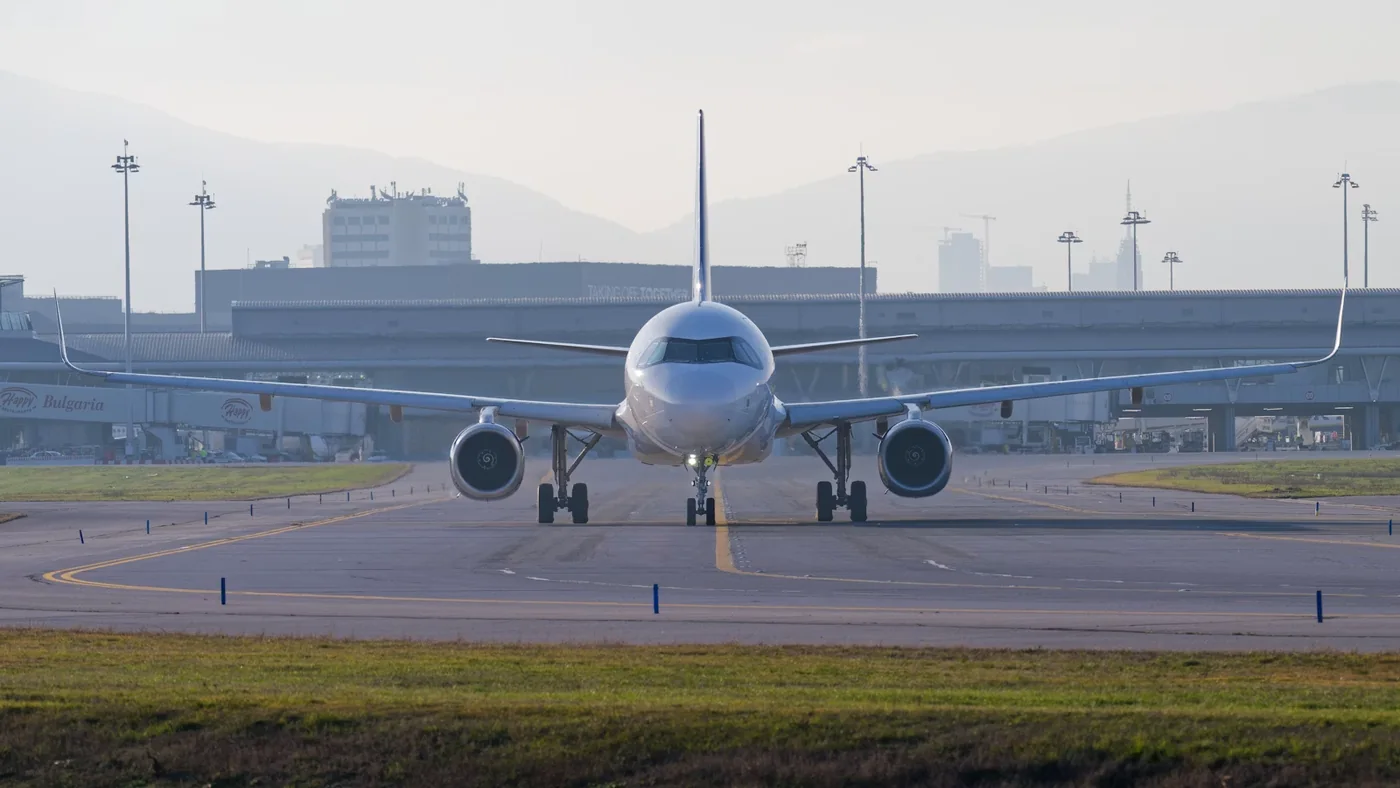
Sofia Airport sits east of the centre and Terminal 2 is directly connected to the M4 metro, making the public-transport arrival unusually painless. The main railway and bus stations are adjacent north of the centre for regional routes. Rent a car when leaving Sofia for the wider route, not for sightseeing inside it.
Sofia rewards travellers who enjoy discovering how different historical periods sit alongside one another. Roman remains survive beneath twentieth-century buildings; Orthodox churches share the centre with Ottoman-era traces, former government monuments and contemporary cafés. The Vitosha mountain backdrop is a constant presence, though its slopes are a separate outing rather than an extension of a quick walk downtown. The centre does not offer one compact, preserved old-town circuit, so a rewarding visit is built around a handful of connected neighbourhoods and cultural stops.
Sofia is not a collection of ruins with restaurants around it.
It is a functioning, uneven capital built on top of itself.
For the road beyond the city, continue with the other Bulgaria through Buzludzha and the Eastern Rhodopes.
Sofia in 60 seconds
Use these decisions before booking.
- Two full days are enough for the central layers and one substantial museum.
- Three days allow Vitosha Mountain or a slower district day.
- Stay around Serdika, NDK, Oborishte or lower Lozenets according to the kind of evening and transport you want.
- Do not rent a car for central sightseeing.
- Use the M4 metro from Terminal 2.
- Read the Largo and Serdika together.
- Choose one socialist-history site rather than photographing every ideological object without context.
- Treat Vitosha Boulevard as a useful spine, not as the city’s personality.
- Check mountain access and weather on the actual day.
- Bulgaria uses the euro since 1 January 2026.
- Leave Sofia for Buzludzha only after the city has had a real day of its own.

Serdika: Roman archaeology beneath the capital
Ancient Serdica occupied the ground around Sofia's modern Largo and Serdika metro station. Excavated streets, walls and building remains are visible among transport entrances, shops and later government buildings. The close physical overlap makes this one of the best places to understand how successive periods used the same central ground.
Start with the archaeological zone, then look toward Sveta Nedelya Church, the Largo, Banya Bashi Mosque, the former Central Mineral Baths and the synagogue area. From here, the commercial streets leading toward Vitosha Boulevard show how the historic centre continues to function as a modern city.
A useful first circuit is:
- the Serdika archaeological zone;
- Sveta Nedelya Church;
- the Largo;
- Banya Bashi Mosque;
- the Central Mineral Baths building;
- the synagogue exterior and surrounding market streets;
- then the walk south toward Vitosha Boulevard.
Rather than collecting isolated ruins, follow how the Roman remains sit beneath and between buildings created for very different purposes. That relationship gives the centre its particular character.
The Largo's socialist architecture and civic role
The monumental ensemble around Independence Square took shape in the early socialist period. The former Communist Party House was completed in the 1950s and later lost the red star that had crowned it. A national flag replaced the star, while the building continued to serve state functions.
The change is visible without leaving the square: the same imposing architecture has been adapted to a different political system. Sofia's official architectural overview explains that the building formerly housed the Bulgarian Communist Party's Central Committee and now contains offices of the National Assembly; the original red star is exhibited at the Museum of Socialist Art. Read the city's overview.
Spend a little time in Independence Square before returning to the excavated Roman streets below. Seen together, the two levels make the changing uses of Sofia's centre unusually tangible.

Alexander Nevsky Cathedral and the surrounding city
The Alexander Nevsky Cathedral is Sofia’s obvious monumental landmark.
Its domes, scale and position near the National Assembly make it the easiest image of the city to export.
Visit the cathedral interior when access allows, then walk around the surrounding square to see how the building relates to the rest of the civic centre. From here, continue towards the neighbouring streets and monuments rather than treating the cathedral as the whole itinerary. Other places worth understanding include:
- Ottoman Sofia;
- the Roman city;
- the communist centre;
- residential districts;
- Vitosha Mountain;
- the working texture around markets and transport hubs.
The surrounding area is more valuable when treated as a wider cultural block.
The National Gallery’s Kvadrat 500 sits nearby and holds Bulgarian and international art across a large collection. Check current exhibitions and opening information.
Doctor’s Garden, Sofia University and the streets toward Oborishte extend the visit beyond one religious monument.
A famous cathedral can anchor the morning.
It should not consume the city’s identity.

The Museum of Socialist Art and its statues
The Museum of Art from the Socialist Period sits outside the historic centre in Iztok.
Its sculpture park contains leaders, workers, partisans and ideological figures removed from their original public settings.
The red star from the Party House is part of the museum’s collection.
That displacement is the subject.
A statue designed to dominate a square behaves differently when placed among other retired symbols in a museum garden.
Do not visit only for ironic photographs.
Read the labels.
Notice which works glorify labour, military sacrifice, party leadership or an idealised future.
Notice how artistic quality and political purpose can coexist.
The National Gallery lists the museum at 7 Lachezar Stanchev Street in Iztok and publishes current visitor information through its official site. Check the museum before travelling.
Pair it with the Largo.
One shows state architecture still in use.
The other shows state imagery after removal.

The National Palace of Culture and its square
The National Palace of Culture (NDK) opened in 1981. Its monumental exterior, terraces, parkland and underground passages anchor the southern end of the central visitor axis. Vitosha Boulevard leads toward it, and nearby transport connections make the complex an easy point of orientation.
Skaters, commuters, families and event-goers use the surrounding public space, which gives the grand architecture an everyday purpose. Spend time here even if you are not attending a performance; the setting offers a different view of Sofia's twentieth-century development from its churches or archaeological sites.
NDK is also a practical junction for exploring: follow Vitosha Boulevard north toward the historic centre, head east toward Shishman's bar streets, continue south toward Lozenets, or look up toward Vitosha Mountain. Those routes connect the monument to the city around it.

Vitosha Boulevard: cafés, shopping and a first walk
Vitosha Boulevard is pedestrian, central, lined with restaurants and shops and framed by the mountain on a clear day.
It is convenient.
It is also the street most capable of producing the false conclusion that Sofia is simply an inexpensive continental city break with a mountain backdrop.
Use Vitosha for:
- an easy first walk;
- a meal when the group needs options;
- the route between the centre and NDK;
- people-watching;
- a low-risk evening opening.
Do not use it as proof that you found the most interesting food, nightlife or street life.
The visible visitor economy raises rents and standardises part of the offer.
One block away, the city often becomes more useful.
Walk parallel streets.
Cross toward Slaveykov Square and Shishman.
Continue north of the Largo into the market streets.
The boulevard is a spine.
A spine is not the whole body.

Where to stay for the Sofia you plan to explore
Serdika and the Largo
This is the strongest first-visit base when transport and orientation matter most.
You are close to the airport metro, the Roman complex, central institutions, Vitosha Boulevard and several tram lines.
The trade-off is noise, traffic, larger streets and a centre that can feel administrative after office hours.
Choose a hotel with reviewed soundproofing.
“Central” is not a room feature.
NDK and northern Lozenets
This area works when you want a more comfortable city base with metro access, restaurants and easier movement toward the mountain side.
Lower Lozenets can feel residential without becoming remote.
NDK keeps the centre walkable.
The trade-off is that some addresses marketed as Lozenets extend far enough south to turn every central walk into transport.
Check the exact pin.
Oborishte and Doctor’s Garden
This is the more elegant, quieter choice.
You remain near Alexander Nevsky, Sofia University, galleries and central restaurants without sleeping directly on the main visitor boulevard.
It suits travellers who want cafés, residential streets and a calmer evening return.
It is weaker for anyone whose plan revolves around the central station or daily departures by car.
Around Lions Bridge and the Women’s Market
This part of the centre is busier, rougher at the edges and often better value.
It also contains more traffic, visible deprivation and streets that change character quickly.
That does not make it a forbidden district.
It makes the exact block more important.
Inspect the hotel reviews for night noise, entrance, parking and the final walk from the metro.
Do not book only because the map says “centre”.
Studentski Grad
Studentski Grad has bars, clubs, restaurants and a large student population.
It is not the logical sightseeing base for most first visits.
Stay there when the district itself is the reason.
Otherwise, central Sofia gives you more reversible evenings and less daytime transport.
Sofia after dark is broader than one bar street
Sofia has cocktail bars, beer rooms, live venues, commercial clubs, electronic events, student nightlife and an adult-nightlife economy that polished city guides often omit.
The useful starting distinction is geographical.
The centre around Vitosha, Shishman and the surrounding streets is easiest for a flexible bar night.
NDK and the southern centre extend that circuit.
Studentski Grad is more concentrated, commercial and detached from the visitor core.
Electronic and live nights depend more on the current event than on a permanent district label.
Commercial adult venues and promoter-led clubs should be treated as their own category, with prices and payment understood before entry.
Sofia is large enough that a mediocre venue can waste an hour of movement.
Choose the function first.
Then check the event.
Use Sofia After Dark for current doors, programmes, late transport, commercial realities and the difference between a busy room and a useful night.
Vitosha Mountain access and weather realities
Vitosha Mountain rises directly south of Sofia.
On clear days it dominates the skyline.
That visual proximity creates an easy planning mistake: visitors assume the city has a permanent, simple cable-car system that will carry them from a central square to a mountain viewpoint.
Access is more operational than that.
Roads, buses, lift status, weather and weekend demand all matter.
Bus services reach areas including Aleko and Zlatnite Mostove, but temporary closures occur during severe weather. In January 2026, Sofia Municipality closed main mountain roads during strong winds while organising return services on buses 61 and 66. The incident is a useful reminder to check conditions on the day.
For a first mountain half-day, Zlatnite Mostove — the Golden Bridges stone river — is often more distinctive than forcing a summit.
For a serious hike, use proper route and weather information.
For a city trip in bad conditions, leave the mountain alone.
Vitosha is not a compulsory excursion.
It is Sofia’s biggest optional advantage.

The airport metro is unusually useful
Sofia Airport sits close enough to the city that arrival should be simple.
The M4 metro station is directly beside Terminal 2 and connects with Sofia University and Serdika in the centre. The normal trip is around half an hour, and service runs from early morning until around midnight. Use the current official airport transport page before arrival.
Terminal assignments and inter-terminal arrangements can change.
Check where the flight lands.
Late arrivals should use the authorised airport taxi arrangement rather than accepting an unsolicited driver inside the hall.
Roadtrip travellers should resist collecting a car merely because the rental desks are present.
A central Sofia hotel plus metro is easier than a central Sofia hotel plus an unused car.
Collect the vehicle when starting the Buzludzha and Eastern Rhodopes route.
Using Sofia's metro, trams and buses
Metro, tram, trolleybus and bus networks cover the city.
Contactless validation makes short visits easier than old ticket-booth descriptions suggest.
The metro is most useful for the airport, central interchanges, Iztok, Lozenets and longer cross-city moves.
Trams are often the better tool for understanding surface Sofia.
Use one card or device consistently when tapping so daily fare capping can work correctly where applicable.
Do not assume Google’s fastest suggestion has understood a temporary diversion.
Check the live local transport source when a connection matters.
The city is walkable in sections.
It is not compact enough to walk every relationship efficiently.
Driving and parking versus transit
A car is valuable for Buzludzha, the Rhodopes and regional routes.
It is friction inside central Sofia.
Paid Blue and Green Zones, time limits, SMS and app payment, one-way streets, traffic and hotel access complicate a vehicle that may sit still all day.
The 2025–26 parking reform created additional confusion: planned fee increases and zone expansion were ultimately halted pending the wider legal dispute. By March 2026, Bulgaria’s Supreme Administrative Court had definitively suspended the higher fees and expanded coverage. Read the current status rather than an old “new prices” article.
Parking tariffs are not timeless facts.
Read the street sign.
Check the Urban Mobility information.
Use a hotel garage when the car must stay central.
Photograph the parking confirmation.
Then stop thinking about it.
Bulgaria adopted the euro in 2026
Current euro-era Sofia offers a wide price range. A market lunch, neighbourhood café and transit journey can be good value, while boutique hotels and destination restaurants do not automatically undercut comparable European cities. Compare the actual euro prices rather than relying on an old 'cheapest EU capital' claim.
Bulgaria entered the euro area on 1 January 2026.
The former lev was converted at the fixed rate of €1 = 1.95583 BGN. Mandatory dual price display ran until 8 August 2026. The European Commission maintains the current changeover information.
That timing matters.
A large amount of travel content still quotes leva.
Some menus, signs or archived price pages may still show both currencies.
By late August 2026, the traveller’s working currency is euro.
Cards are widely practical in Sofia.
Keep some cash for small businesses, markets and the inevitable terminal that fails exactly when the coffee has already been made.
Realistic prices in euro-era Sofia
Sofia remains less expensive than many Western European capitals.
That does not mean every central room, cocktail or restaurant is automatically good value.
The city now contains:
- international hotel pricing;
- polished restaurant concepts;
- visitor-heavy terraces;
- ordinary neighbourhood food;
- legacy cafés;
- high-end bars;
- extremely cheap public transport.
These price layers coexist.
A traveller with a normal-to-comfortable budget should not optimise the whole visit around saving four euros on a hotel in the wrong district.
Spend on:
- the better-located room;
- soundproofing;
- a garage only when a car is actually necessary;
- one substantial museum;
- a proper meal outside the most obvious strip;
- transport when the final walk is the weak part of the night.
“Unpolished” does not require discomfort.
It requires knowing what the polish is hiding.

Winter exposes the city differently
Sofia’s mountain setting creates both beauty and environmental friction.
Snow on Vitosha can make the skyline extraordinary.
Cold air and the basin can also trap pollution.
Pavements become less forgiving.
The mountain day becomes weather-dependent.
Summer produces longer evenings, terraces and easier mountain access, but heat can make the broad central streets feel exposed.
Spring and autumn are the easiest urban seasons.
The year-round rule is simple:
- keep an indoor museum plan;
- check air and weather conditions;
- do not treat Vitosha as guaranteed;
- choose shoes for broken pavement as well as galleries;
- use the metro when the city has stopped rewarding the walk.
A practical half-day beyond Alexander Nevsky
A satisfying central Sofia walk connects very different parts of the city rather than repeating a monument circuit. Start in the Serdika archaeological zone, where Roman streets sit visibly below modern transport and administrative buildings. Walk through the Largo, continue toward the presidency and City Garden, then arrive at the Ivan Vazov National Theatre area for a coffee or a performance later in the trip. These are not detached historical tableaux: people still commute, meet, demonstrate and spend evenings in the same public spaces.
The National Gallery network offers one route into Bulgarian art beyond the familiar cathedral and Soviet monuments. Check which branch currently houses the exhibition you want; the Square 500 galleries and the Sofia City Art Gallery are very different choices. The collection that interests you matters more than buying the first museum ticket listed next to the cathedral.
On the other side of the centre, Women's Market / Zhenski Pazar is an everyday market with food, households and neighbourhood life rather than a carefully prepared tourist attraction. It is a useful walk from the central station direction into the city. Arrive during trading hours, mind the narrow walkways and photograph people only with their permission. A bread or produce stop is a better use of the market than treating it as scenery for a 'rough Sofia' story.
Vitosha on a real-weather day
Vitosha Mountain is a genuine reason to allow a third day, but choose a trip that works without assuming every cable car or chairlift will run. Mountain transport has had closures and investment debates; weather can turn a simple walk into an inappropriate outing. Check the current public route, path conditions, daylight and mountain access information shortly before you go.
On a clear day, even lower viewpoints and woodland paths reveal how unusual Sofia's geography is. On a polluted winter day or during a storm, use the extra time for a museum, theatre, food and city neighbourhoods instead. The advantage of a city with a mountain on its edge is optionality, not an obligation to stand on a summit.
Two days that work
Day one: the layered centre
Begin at Serdika.
Walk the archaeological complex and Largo together.
Continue toward Banya Bashi Mosque and the mineral-bath building.
Return through the central streets toward Alexander Nevsky.
Choose Kvadrat 500 or another substantial cultural stop.
Finish through Shishman and NDK rather than eating automatically on the first Vitosha Boulevard terrace.
Day two: the socialist city and the mountain decision
Visit the Museum of Socialist Art in Iztok.
Return toward NDK and read the complex as active infrastructure.
If weather and access are strong, use the afternoon for Vitosha.
If not, use the National History Museum, a longer neighbourhood walk or another gallery.
Do not force the mountain because the itinerary had a mountain emoji.
A third day should change scale
The third day has two good uses.
Stay in Sofia and explore a less central district, market streets, residential architecture and Vitosha properly.
Or begin the road.
The other Bulgaria route uses Buzludzha, Shipka, Dimitrovgrad and Madzharovo to turn the capital into the first layer of a much larger argument.
If the road points west instead, Belogradchik is the better first break before Serbia: fortress, rock landscape and one deliberately quiet night before Niš.
Do not use the extra day for a five-attraction bus tour unless those five places genuinely interest you.
Change scale.
Choosing the Sofia trip that suits you
Sofia works well for travellers who like:
- cities with visible contradictions;
- twentieth-century architecture;
- museums that complicate the public space outside;
- a mountain that can become a real day trip;
- inexpensive, practical transport;
- evenings that are broader than one tourist street;
- a capital that does not polish every edge.
It works less well for travellers who need:
- a preserved old town as the main event;
- a waterfront;
- one compact nightlife district;
- uniformly elegant streets;
- a guaranteed mountain ride;
- every landmark to photograph better than it reads.
Plovdiv is prettier faster.
Sofia explains more slowly.
That is not the same competition.
Bringing Sofia together
Sofia deserves two days before the road.
Not because every square is beautiful.
Because the city shows Bulgaria repeatedly rebuilding its centre without fully removing what came before.
Near the Largo, excavated streets from Roman Serdica sit beneath the government architecture of the socialist period. The former Party House now serves a different political system, while reminders of the old one remain in museum collections. Farther away, the National Palace of Culture (NDK) continues to function as a venue and public meeting point, with Sofia's yellow trams connecting these layers of the city.
Vitosha waits above the skyline and refuses to guarantee access.
Sofia is not pretty enough to organise the trip for you.
Once you stop asking it to, the city becomes much more interesting.