Kutaisi does not need to compete with Tbilisi. It needs travellers to stop treating a functioning western Georgian city as the corridor between baggage claim and somewhere else.
Where it is — and how to get there
Kutaisi is in western Georgia in the Imereti region, roughly halfway between Tbilisi and the Black Sea. The Rioni runs through the city; Tskaltubo, Gelati and several cave and canyon landscapes sit close enough to make Kutaisi a regional base rather than only an airport name.
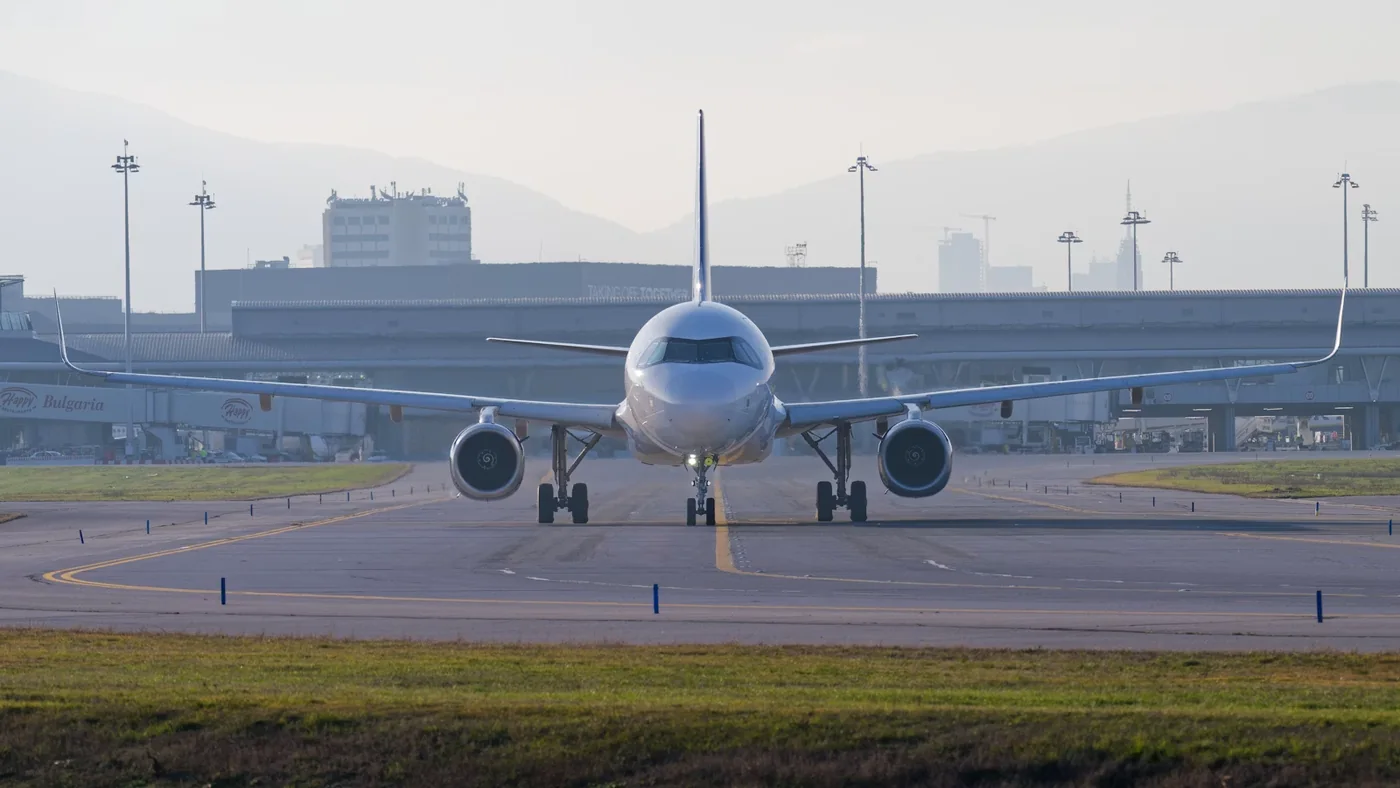
Kutaisi Davit Agmashenebeli International Airport is 14 km west of the city and functions as Georgia's main low-cost hub and a Wizz Air base. Airport shuttles, taxis and transfers connect it with Kutaisi, while road and coach links continue towards Tbilisi and Batumi. If you land here for a cheap Georgia fare, staying in Kutaisi before moving on usually adds less friction than treating the city as dead time.
Reality check: 26 September 2026. Airport access, club programmes and Gelati conservation are the parts of this guide most likely to change. Check the live sources linked below before building a tight itinerary around them.
Kutaisi has acquired a strange international identity.
For many European travellers, the name appears first in an airline search result.
The fare is cheap. The flight exists from somewhere unexpectedly convenient. Georgia suddenly looks closer. Then the planning begins and Kutaisi is treated as the administrative inconvenience between the plane and Tbilisi, Svaneti, Batumi or a rental car.
That is backwards.
The airport is outside the city. Kutaisi itself is an old regional capital on the Rioni with a cathedral above the centre, bridges that actually organise the walk, a market, theatres, ordinary residential streets, serious food, one of Georgia's most important monasteries nearby and a Soviet spa town close enough to become half the second day.
It does not need four nights.
It deserves not to be erased by the flight that brought you there.
Begin with Kutaisi's geography
Georgia's official tourism site describes Kutaisi Airport as the country's national low-cost hub and Wizz Air base. It sits 14 kilometres west of the city. Current airport overview.
That sounds trivial until you build the trip.
Kutaisi city is east of the airport. Tbilisi is much farther east. Batumi is south-west. The mountain routes turn north. If you land late, collect a car and immediately aim for somewhere three hours away, you are not "saving a night in Kutaisi". You are converting the first night into transport.
For a first visit, central accommodation gives you a better chance to experience Kutaisi between arrival and departure. Enjoy a meal, walk the streets around the river and market, and stay overnight before continuing your journey in daylight. That small change turns an airport transfer into an actual stop.
Georgia Travel currently gives roughly 3 hours 30 minutes by road from Tbilisi to the Imereti region and around 2 hours 20 minutes from Batumi. Imereti travel overview. Kutaisi therefore works as a genuine western base, not merely a regional airport attached to the capital.
The centre is small enough to understand without a plan
Central Kutaisi does not need an attraction spreadsheet.
Start around the Colchis Fountain and David Agmashenebeli Square.
The fountain is modern and unapologetically decorative: oversized gold-coloured figures based on archaeological objects associated with ancient Colchis. It would be easy to dismiss it as civic kitsch if it did not work so well as an orientation point.

From here, move towards the Rioni rather than completing every central street first.
Kutaisi's tourism identity can become very ancient very quickly: Colchis, medieval kings, monasteries, cathedrals.
The river fixes that.
It gives you bridges, apartment blocks, traffic, people crossing town and a city that exists between the heritage claims.
White Bridge and the Rioni riverbank
The White Bridge is one of those places that makes sense only after you stop demanding a ticketed attraction.
Cross it.
Look upstream and downstream.
Watch people use it.
Kutaisi is not spectacular here. That is exactly why the stop works.

The Red Bridge adds another layer. Built using French engineering, its metal structure gives the river crossing a more industrial texture than the cathedral photographs suggest.

A good first afternoon can therefore be almost embarrassingly simple:
central square → market → river → White Bridge → Red Bridge → food → Bagrati.
No day tour required.
Bagrati Cathedral and the skyline
Bagrati Cathedral sits above the city and gives Kutaisi the obvious high point.
The cathedral dates to the early eleventh century and has enormous symbolic importance in Georgian history. The reconstruction, however, has also been controversial enough that it should not be presented as an untouched medieval survivor.
Bagrati was once listed by UNESCO together with Gelati. After major reconstruction work, UNESCO removed Bagrati from the World Heritage property in 2017 while retaining Gelati.
That does not make Bagrati unimportant.
It makes the site more interesting.
You are looking at heritage, national symbolism and modern reconstruction occupying the same hill.
Go for the architecture and view.
Do not simplify the building into "1,000-year-old cathedral, perfectly preserved".
The city below is part of the visit.
Gelati Monastery and its ongoing conservation
Gelati Monastery is the more serious heritage excursion.
Founded in 1106 by David the Builder, it became a major religious, cultural and intellectual centre. It remains a UNESCO World Heritage Site.

But a 2026 guide has to say more than that.
UNESCO has been monitoring substantial conservation problems. Its current decision requested a joint monitoring mission in summer–autumn 2026 and an updated Georgian state-of-conservation report by 1 December 2026. Read the current UNESCO decision.
That does not mean "do not go".
It means check the present access and understand that restoration and protection work may affect what you see.
The useful attitude is neither outrage nor pretending scaffolding is invisible.
Gelati is important enough that its conservation problems belong in the travel information.
Tskaltubo's Soviet spa landscape
If Kutaisi gets two nights, Tskaltubo is the strongest argument for the second day.
The spa town sits close to Kutaisi and grew into a large Soviet health-resort system. Grand sanatoria, bath buildings, park planning and resort infrastructure were built on a scale that now creates irresistible photographs.
That has produced a second simplification.
Online, Tskaltubo often becomes "abandoned Soviet sanatorium town".
It is not.
It is a functioning Georgian town with operating spa facilities, residents, redevelopment, protected buildings and former resort structures in very different conditions.

Do not treat every open doorway as permission to enter.
Do not assume a place that was accessible in a five-year-old YouTube video is still abandoned, safe or publicly accessible.
The town is more interesting when the ruins are read beside the current spa economy rather than used as props for an urban-exploration fantasy.
Choosing one Imereti day trip
Kutaisi is surrounded by enough excursions that travel planning starts behaving badly.
You do not need all of them.
Sataplia is the easier mix of cave, protected area and dinosaur-footprint story.
Prometheus Cave is the larger tourist cave experience.
Tskaltubo gives the strongest twentieth-century cultural layer.
Gelati and Motsameta give the strongest monastery/history day.
Trying to combine cave + spa town + monastery + canyon because they appear under the same "Kutaisi day trips" heading creates a transport day with attractions attached.
Choose one argument.
For InstantTraveling, Tskaltubo + Gelati is the more distinctive combination if you have a car and two nights.
Imeretian dishes and regional wine
Kutaisi is in Imereti, and the region has its own food identity.
Look for Imeretian khachapuri, where the cheese is inside the bread rather than arriving with the dramatic Adjarian egg-and-butter presentation everybody photographs in Batumi.
Try local cheeses, lobio, vegetable dishes with walnut and herbs, mchadi, meat if you want it, and whatever a serious local restaurant is doing with seasonal produce.
The point is not to build a checklist of "ten Georgian foods".
It is to notice that Georgia changes regionally.
Kutaisi is one of the easiest places to taste that without converting every meal into a folklore show.
Kutaisi after dark: cafés, events and small venues
A weak guide would say Kutaisi is quiet at night.
A different weak guide would find one techno club and announce an underground nightlife capital.
Neither helps.
Kutaisi is a regional city. Most evenings are bars, restaurants, wine, cafés and people staying social later than the daytime tourist map suggests.
Then there is Reflector.
The club at 57 Tamar The Queen Street has become a serious part of Kutaisi's electronic-music scene. In 2026 its programme included Bassiani/Horoom-linked DJs, Ezo Festival artists and Vodkast Records nights. Current event listings show tickets around 40–50 GEL (about €13–17), 18+ policies and no-photo/video rules inside. A current 2026 Reflector event example. Another current 2026 programme listing.
That is not proof you should go there on a random Wednesday.
It is proof you should check the calendar.
A good Kutaisi night can therefore be very ordinary — dinner, wine, bars, walking around the centre — or unexpectedly serious if Reflector has the right event.
Do not import Tbilisi expectations.
Do not assume nothing happens either.
Where to stay
For a first visit, stay around the central square / Rioni / White Bridge side of the centre.
The city is walkable enough that a slightly imperfect hotel is often better than a supposedly superior property requiring taxis for every meal.
If your flight arrives very late or leaves painfully early, an airport-area stay can be logical.
For almost every other case, sleeping by the airport wastes the exact advantage Kutaisi gives you: a usable city between flights and road trips.
Give the city a food-and-river morning
Kutaisi's central market and the surrounding streets offer a far better first introduction than rushing from the airport directly to a cave. Start in the centre, pass the Colchis Fountain, and look for a market counter or bakery where residents are buying breakfast. The produce and spices, the language and the ordinary trade tell you something about Imereti before you start organising day trips.
Cross White Bridge and follow the Rioni to connect the centre's geography with the low hills around it. The river is striking, and the architecture has a worn everyday character rather than the stage-managed feel of a highly restored old town. For a longer view, climb toward Bagrati Cathedral, choosing a time when the light and temperature suit an uphill walk.
Food deserves more detail than a generic list of khachapuri. Try Imeruli khachapuri, pkhali, seasonal vegetable dishes, and Imeretian cheese in places that actually prepare them well. Ask about local wines if interested, without assuming every Georgian evening must become a large formal supra. An inexpensive lunch and a later café often provide a fuller picture of the city.
The Gelati decision in 2026
Gelati Monastery is a UNESCO World Heritage property and an extraordinary historic complex, but current conservation work matters. The UNESCO state-of-conservation decision requested a monitoring mission in summer–autumn 2026 and an updated Georgian progress report by 1 December 2026. The World Heritage description notes that parts of the historic paintings and buildings have been vulnerable. The site should not be advertised as a frictionless interior tour whose access is fixed in perpetuity.
Before leaving Kutaisi, confirm which chapels, sections and routes are accessible with a local official or monastery information source. Respect any conservation barriers. Even if parts are restricted, the complex's landscape, architectural context and history can still make the journey meaningful. Combine with other stops only if the latest access and transport permit.
Tskaltubo is a different kind of second day
Tskaltubo, west of Kutaisi, grew around Soviet-era sanatoriums and a spa economy. Its grand buildings, some abandoned or repurposed, attract photographers, but the area is neither an empty theme park nor a collection of buildings with automatic public access. Some structures are unsafe, privately controlled or still have residents. Stick to public streets, grounds and legitimately accessible spaces.
If you'd rather have nature, the Prometheus Cave visitor attraction or Sataplia nature reserve can be a better way to spend the afternoon. Their hours and guided-access arrangements vary by season. Select one main outside experience and plan the return to the city rather than trying to cross three sites before dinner. Two nights in Kutaisi work best when the actual city earns one of the evenings.
A two-night structure that earns the stop
Arrival day
Day one: Travel into central Kutaisi, explore the main square and market area, and walk along the Rioni River to White Bridge. Allow time for an Imeretian meal rather than treating dinner as an afterthought between bus connections.
Go out if the city gives you a reason.
Full day
Bagrati in the morning.
Then choose:
- Gelati + Motsameta for heritage;
- Tskaltubo for twentieth-century resort history;
- a cave/nature excursion if that is what the wider Georgia trip lacks.
Come back to Kutaisi for dinner rather than treating the city only as the parking lot for its surroundings.
Departure morning
Before departure, leave time for coffee, a market visit or one last walk beside the Rioni. From here you can head east towards Tbilisi, south-west towards Batumi, or north for the mountain roads when conditions and your itinerary allow. The city works particularly well as a comfortable turning point between those regions.
Why two nights in Kutaisi make sense
Kutaisi can also become a purposeful overnight stop on the way to Batumi, rather than only an airport transfer. The Batumi coastal city guide explains why its pebbly beach, very different hotel districts and strong summer seasonality should shape the next booking.
Stay if you:
- flew into Kutaisi anyway;
- want western Georgia to have an urban base;
- care about Soviet/resort history enough to use Tskaltubo properly;
- want Gelati without making it a rushed transfer stop;
- like cities that are easier to understand than capitals but still function as cities;
- want nightlife to be possible without needing it to justify the destination.
Keep moving after one night if Kutaisi is purely logistical and your real priority is a long mountain section.
Just do not pretend that leaving immediately was required.
The cheap airline ticket got you here.
The city deserves the chance to do something with the advantage.